Georgia's experience emerging from the recession as revenues increase after years of government belt tightening is common around the country. The question now: How to finance the improvements to the state's neglected transportation infrastructure?


"As the General Assembly gears up for 2015 legislative session, transportation appears to once again be the star of the show," according to a column by Saba Long.
Long addresses the talking points of opponents to increasing the gas tax in the state, namely "the government is too bloated" and "I am paying too much in taxes." In response to the idea of raising the gas tax, Long suggests that "we ought to consider other options as well; particularly considering strong support for pro-autonomous vehicles will lead to a potential boom for Georgia’s already popular electric vehicle market." Lucas adds that Oregon could provide a model for Georgia's future revenue streams: "Georgia, too, could pursue a pilot to deem the merits of VMT, rather than going for a knee-jerk 'no.'"
Read the full story: Despite anti-tax push-back, Georgia needs more money for transportation


What Will Replace Gas Taxes?
States are developing a variety of mechanisms for replacing dwindling gas tax revenue, which most rely on for the majority of their transportation funding.

California Commission Recommends Infrastructure Improvements
The state’s Transportation Commission outlined three major programs that should receive gas tax funding.
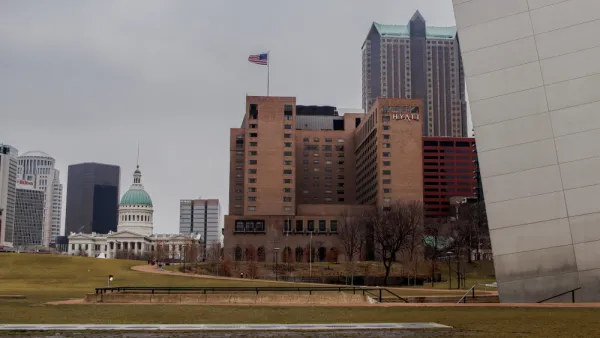
Road Projects Face COVID-Induced Delays in Missouri
Missouri is taking stock of its construction program as gas taxes and sales taxes plummet.

Planetizen Federal Action Tracker
A weekly monitor of how Trump’s orders and actions are impacting planners and planning in America.

‘Going backwards:’ Baltimore mayor, students rally against state's transit funding plan
Maryland's proposed six-year plan provides no funding for Baltimore’s BMORE bus program and reduces its road maintenance funding.

Detroit to transform waterfront with $2.2 billion investment
Developers will convert about 18 acres of unused parking lot space into civic spaces.

Newsom vetoes high-speed rail supervision bill after agency receives condemnatory audit
The audit found the CHSRA approved almost $600,000 in unallowable travel expenses.

Nation sees first electric plane-boat hybrid take off in public demo
The Viceroy Seaglider can fly at speeds of 180mph for up to 180 miles.

One of nation’s poorest counties to receive $6 billion data center
The developers estimate the project will create 200 permanent jobs and 1,000 temporary construction jobs.

FREE Course: Walkable City 1: Why Walkability?
After describing his path towards focusing on walkability as the essence of good planning, Jeff Speck marches through his five principal reasons for making more walkable places.
Reinventing Malls: Planning Alchemy—Turning Gray Fields Into Gold
The course focuses on the opportunities and imperatives that shape reinvention of mall sites.

City of Thousand Oaks
City of Wisconsin Rapids
Harvard University Graduate School of Design
The Architects Foundation
University of Cincinnati Online
Northern Illinois Transit Authority (NITA)
The Pocatello Development Authority
The Urban Renewal Agency of the City of Pocatello