A PeopleforBikes post explains why the crowdfunding model made sense for a proposed project by the Downtown Denver Partnership to create a protected bike lane on Arapahoe Street.


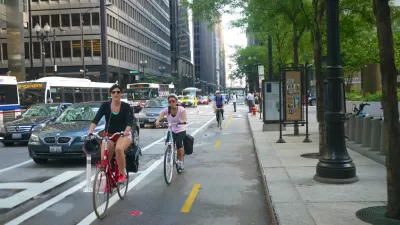
Michael Anderson reports on a campaign by the Downtown Denver Partnership "to raise $36,000 online from corporate and individual donors to help pay for planning and design of a protected bike lane on Arapahoe Street."
Denver is following in the footsteps of Memphis, which crowdfunded $70,000 for a protected bike lane in 2013. Given the recent trend of crowdfunding campaigns to support bike infrastructure investments, Anderson cites a few key points about why the crowdsourcing model works for such projects. A sample of the key points:
- The lane being crowdfunded is relatively uncomplicated
- Crowdfunding is as much about creating a narrative as it is about raising money
- Organizers framed the campaign as a benefit for the whole city
Read the full story: HOW DENVER GOT AN OIL COMPANY TO HELP CROWDFUND A PROTECTED BIKE LANE


Denver Could Add Bike Lanes to Major Streets
City planners say limiting protected bike infrastructure to smaller streets isn’t enough to create a safe, connected bikeway network that reaches all parts of the city.
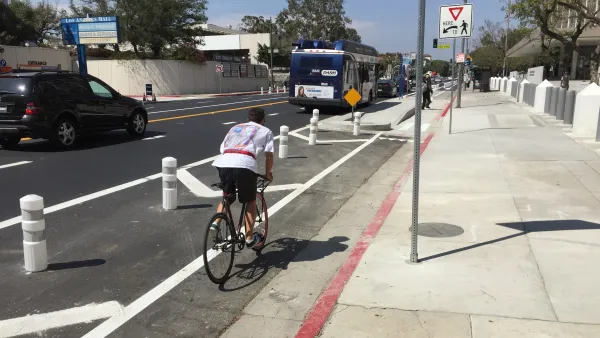
Less Paint, More Barriers, Make for Better Urban Cycling
New research from the University of Colorado Denver and the University of New Mexico sheds light on how to make cities safer for cyclists and other road users and refutes some assumptions about bike safety, such as "safety-in-numbers."

Las Vegas is building its first protected bike lane
The new lane connects Henderson and the Las Vegas Raiders headquarters via Starr Avenue.

Planetizen Federal Action Tracker
A weekly monitor of how Trump’s orders and actions are impacting planners and planning in America.

‘Going backwards:’ Baltimore mayor, students rally against state's transit funding plan
Maryland's proposed six-year plan provides no funding for Baltimore’s BMORE bus program and reduces its road maintenance funding.

Detroit to transform waterfront with $2.2 billion investment
Developers will convert about 18 acres of unused parking lot space into civic spaces.

Newsom vetoes high-speed rail supervision bill after agency receives condemnatory audit
The audit found the CHSRA approved almost $600,000 in unallowable travel expenses.

Nation sees first electric plane-boat hybrid take off in public demo
The Viceroy Seaglider can fly at speeds of 180mph for up to 180 miles.

One of nation’s poorest counties to receive $6 billion data center
The developers estimate the project will create 200 permanent jobs and 1,000 temporary construction jobs.

FREE Course: Walkable City 1: Why Walkability?
After describing his path towards focusing on walkability as the essence of good planning, Jeff Speck marches through his five principal reasons for making more walkable places.
Reinventing Malls: Planning Alchemy—Turning Gray Fields Into Gold
The course focuses on the opportunities and imperatives that shape reinvention of mall sites.

City of Thousand Oaks
City of Wisconsin Rapids
Harvard University Graduate School of Design
The Architects Foundation
University of Cincinnati Online
Northern Illinois Transit Authority (NITA)
The Pocatello Development Authority
The Urban Renewal Agency of the City of Pocatello