Electric cars are expected to play a key role in reducing the greenhouse gas emissions caused by the country's transportation system. Recent trends around the country indicate increasing adoption of the technology.


"Officials from eight states say the United States is on track to have 3.3 millions zero emission vehicles on the road by 2025," reports Richard Irwin. "That will include 1.5 million in California alone."
The officials convened recently in California as part of the multi-state electric vehicle task force. The article provides details of the efforts of task force members like Massachusetts, Connecticut, Maryland, California, and Oregon to encourage the adoption of electric cars in their states. Created in 2013, the task force also includes New York, Rhode Island, and Vermont. Some of those states are encouraging the use of EVs through tax rebate programs and the like, while other states have made large infrastructure investments, like the West Coast Electric Highway.
Read the full story: Officials see 3.3 million zero emission vehicles on road by 2025
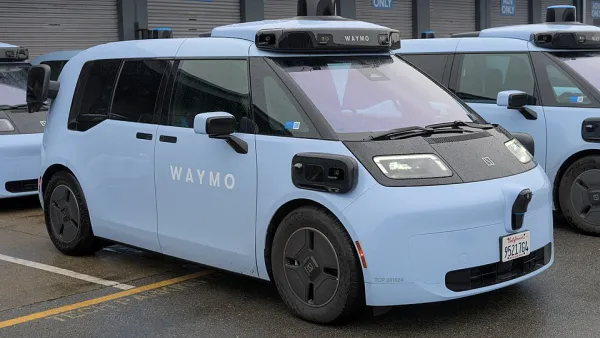
Waymo’s Ojai robotaxis from China now able to pick up all riders
Steep tariffs and tight federal laws haven’t stopped Waymo from purchasing over 3,200 vehicles from Zeekr, a Chinese manufacturer.

Swapping your gas car for an EV is greener than keeping it, research shows
An EV repays the 'carbon debt' caused by building it after 4,400 miles.
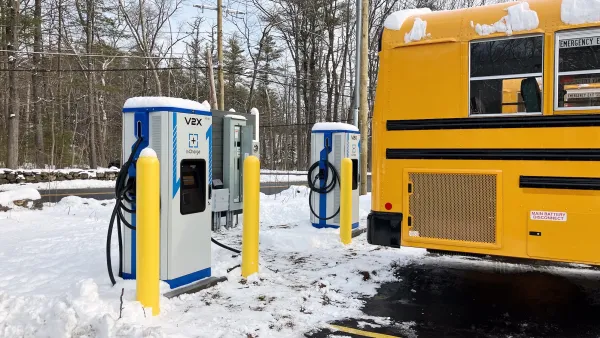
Massachusetts program pays EV owners to put power back into the grid
A pilot program could pave the way for more vehicle-to-grid installations in the United States.

Planetizen Federal Action Tracker
A weekly monitor of how Trump’s orders and actions are impacting planners and planning in America.

Eastern Nebraska is running out of electricity
Data centers and electrification are straining eastern Nebraska’s grid, throttling economic development.

Study reveals best places in the U.S. for cycling, walking
New research from Streetlight Data examines bicycle and pedestrian miles per capita in the 100 largest U.S. cities by population.

Federal government nominates new FTA administrator
Mark Aesch is currently the founder and CEO of a transportation management consulting firm.

Developers reveal $10 billion stadium plan as ‘Hail Mary’ to keep Bears in Chicago
The plan would also boast a public park, high- and mid-rise buildings and a youth sports complex.

As Texas embraces carbon storage, a Black community questions the risks
Texas now issues permits for companies to store carbon dioxide underground. East Texas residents fear safety risks, and skeptics doubt the climate benefits.

FREE Course: Walkable City 1: Why Walkability?
After describing his path towards focusing on walkability as the essence of good planning, Jeff Speck marches through his five principal reasons for making more walkable places.
Reinventing Malls: Planning Alchemy—Turning Gray Fields Into Gold
The course focuses on the opportunities and imperatives that shape reinvention of mall sites.

City of Rosemead
Rutgers University, Edward J. Bloustein School of Planning and Public Policy
One Hundred Miles
University of Michigan School for Environment and Sustainability (SEAS)
Hunter College, City University of New York (CUNY)
The Architects Foundation
City of Cambridge
The Pocatello Development Authority
The Urban Renewal Agency of the City of Pocatello