As Texas embraces carbon storage, a Black community questions the risks
Texas now issues permits for companies to store carbon dioxide underground. East Texas residents fear safety risks, and skeptics doubt the climate benefits.
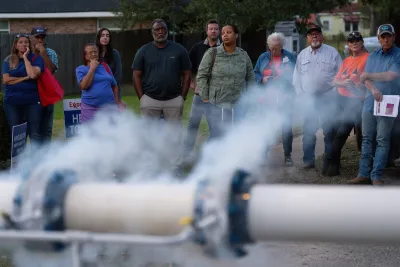
People watch as carbon dioxide is vented during a safety demonstration outside Nome City Hall in Jefferson Co. on Oct. 29, 2026.
|
Jon Shapley
This story was originally published in the Texas Tribune.
CHEEK — On a rural road outside Beaumont, a Texas energy giant is preparing to pump carbon dioxide underground to permanently store it and keep the gas from contributing to global warming. The project could be the first of its kind to start operating in the state.
It’s a long-awaited milestone for the oil and gas industry, which has touted carbon capture and storage as an important tool for cleaning up industry emissions. Texas lawmakers threw their support behind the technology, while state regulators spent years seeking permitting authority from the federal government to try to clear projects faster.
The Texas Railroad Commission, which oversees the oil and gas industry, won that authority late last year and approved this ExxonMobil project in September. But the nearby community of Cheek has asked commissioners to reconsider the permit decision.
The area close to the project is predominantly Black, and many residents are working class or elderly. People there don’t trust the company’s assurances that it will keep residents and their groundwater safe.
Only a small number of carbon storage wells have been permitted so far across the United States, and some CO2-related accidents have already happened. Experts and community advocates have warned of the risk for pipeline accidents and potential underground leaks. Leaders in Cheek are concerned the injected carbon dioxide could contaminate groundwater or get into the air and suffocate them. They worry emergency responders won’t be equipped to rescue them.
“We’re just shocked that they would want to do this so close to homes,” said Douglas Cormier, the 67-year-old president of the Cheek Texas Community Association, who grew up in the rural town and lives there with his wife near his daughters and grandkids.
Residents explained they don’t want to be the test subjects for the technology, and some experts argue it’s more distracting than effective in fighting climate change. Harvard University History of Science Professor Naomi Oreskes, who studies disinformation and climate change, has called carbon capture and storage “mostly a dangerous distraction.”
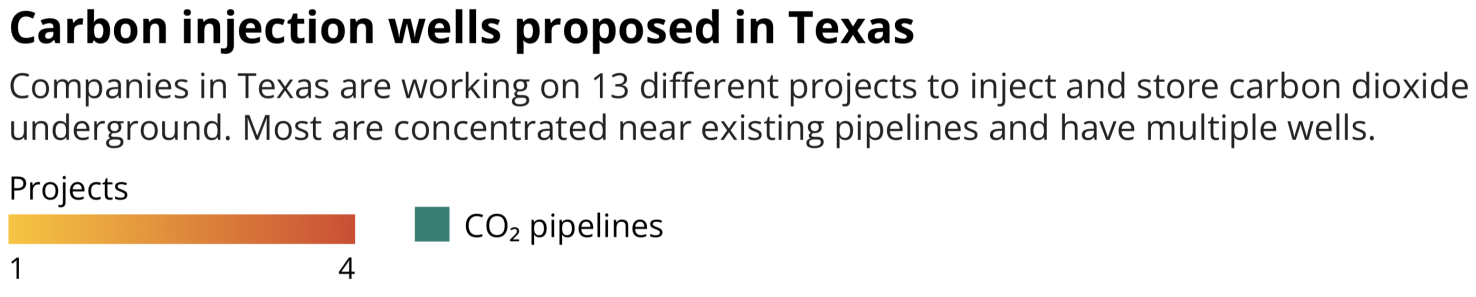
A recent investigation by Drilled and ProPublica showed it would take more resources than feasible for carbon capture and storage to reduce emissions enough to avoid extreme warming. Companies have canceled or paused nearly a third of 19 proposed carbon storage projects in Texas so far.
But carbon capture supporters argue that storing emissions is an important part of an “all of the above” approach to fighting climate change. Federal tax credits support carbon capture projects. Locally, East Texas remains attractive because of its existing carbon dioxide pipeline network (owned by ExxonMobil), its geology and nearby industrial facilities that might pay for their carbon to be stored.
ExxonMobil has seven agreements with companies to store the greenhouse gas. The volume of carbon dioxide injected underground through those agreements will equal emissions from 2 million cars.
“The community’s concerns around safety of any sort of an injection project are valid and real and need to be taken seriously,” said Nichole Saunders, senior director and lead counsel for energy transition with the Environmental Defense Fund. “At the same time, the need for more carbon management infrastructure to get to where we want to go on climate is also real.”
So far, the case has raised questions about whether companies and the Railroad Commission are doing enough to address community concerns as a backlog of projects awaits approval.
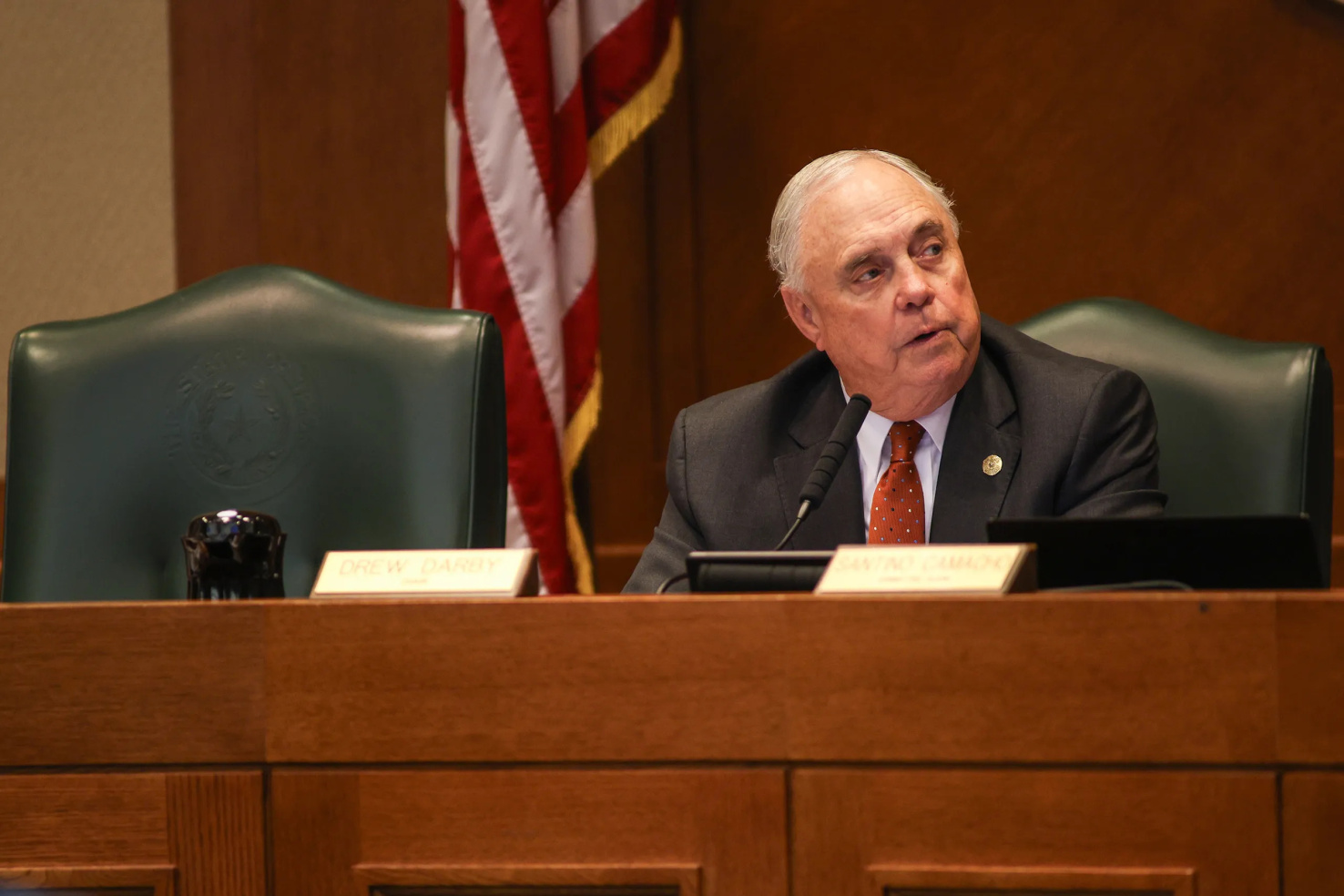
Agency watchdogs say the commission has a history of failing to keep communities safe from industry risks. It’s also facing pressure from state Rep. Drew Darby, leader of the House’s energy resources committee, who told the agency at a September hearing that carbon-capture projects needed to be moving at “utmost pace while protecting the public.”
State Rep. Drew Darby, R-San Angelo, speaks to panelists at a House Energy Resources Committee meeting regarding carbon storage at the Capitol in Austin on Sept. 14, 2026. Multiple panels made arguments for and against carbon storage and how Texans can utilize the technology. | Jacob Lujan/The Texas Tribune
In a statement to the Tribune, Railroad Commission spokesperson Bryce Dubee said the organization has a record of protecting drinking water while regulating injection wells. Winning the authority to regulate carbon storage “speaks volumes to this expertise,” Dubee said.
New rules from the US Environmental Protection Agency to regulate greenhouse gas emissions from fossil fuel-fired power plants survived an attempt by 25 Republican-led states to block their implementation while their case is litigated.
The publication in the Federal Register on May 9 of the Environmental Protection Agency's New Source Performance Standards for Greenhouse Gas Emissions from new power plants triggered the filing of 25 lawsuits from Republican-led states.
Texas now issues permits for companies to store carbon dioxide underground. East Texas residents fear safety risks, and skeptics doubt the climate benefits.
After describing his path towards focusing on walkability as the essence of good planning, Jeff Speck marches through his five principal reasons for making more walkable places.