The proposed rewrite would also strip legal leverage from Tribal nations and state governments.


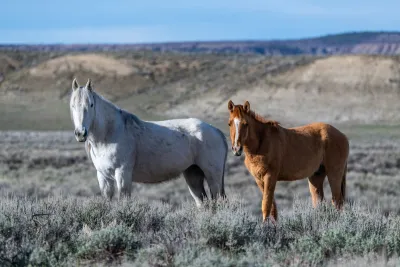
The U.S. Bureau of Land Management has proposed a rewrite of “some of the most foundational regulations for managing more than 245 million acres of public land across the American West,” Katie Jackson writes for The Trek. The new plan would limit public feedback on projects and weaken environmental protections, but may accelerate project approvals, according to officials from the Department of the Interior. If passed, the BLM’s proposed changes would likely be the most significant overhaul of these rules since 1979.
Under the proposed changes, the BLM would no longer have to prepare an Environmental Impact Statement — which evaluates the harm proposed extraction, grazing and recreation could bring to public land — each time it writes or revises a Resource Management Plan. The proposed rules also slash the mandatory comment period on BLM plans from 90 days to 30, and allows the BLM to replace comment periods with public meetings “when adequate notice to the public is provided.”
“At the intergovernmental level, the proposal ends the requirement that BLM land-use plans maintain consistency with Tribal governments and other federal agency plans, while cutting a state governor’s final consistency review window from 60 days to 30 days and eliminating the governor’s right to appeal a rejection to the BLM Director. These changes strip away the legal leverage that Tribal nations, neighboring federal agencies, and state governors currently use to work with the BLM to align on land-use decisions,” The Trek reports.
Read the full story: Sweeping New BLM Proposal Would Limit Public Comment and Weaken Environmental Protections for American West
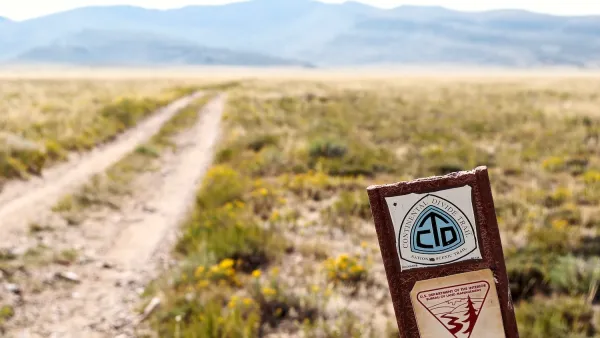
BLM To Rescind Public Lands Rule
The change will downgrade conservation, once again putting federal land at risk for mining and other extractive uses.

Industry Groups Sue BLM Over Public Lands Rule
Farmers, ranchers, and others are challenging a policy change that puts conservation on the same footing as other land uses.
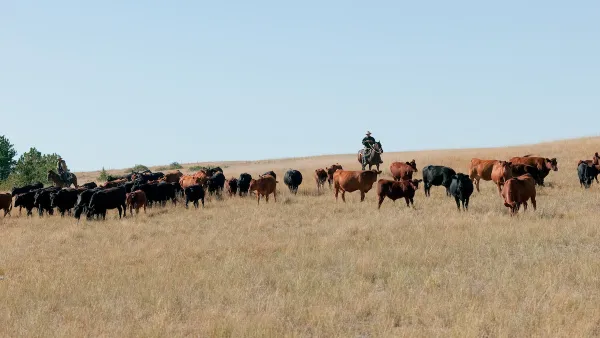
BLM Grazing Lands Largely Fail Health Assessment
Grazing lands under the agency’s management are not meeting its own criteria for ecosystem conservation and sustainable use.

Planetizen Federal Action Tracker
A weekly monitor of how Trump’s orders and actions are impacting planners and planning in America.

Eastern Nebraska is running out of electricity
Data centers and electrification are straining eastern Nebraska’s grid, throttling economic development.

Study reveals best places in the U.S. for cycling, walking
New research from Streetlight Data examines bicycle and pedestrian miles per capita in the 100 largest U.S. cities by population.

New BLM proposal would slash public comment periods, environmental protections
The proposed rewrite would also strip legal leverage from Tribal nations and state governments.

DSA members accuse Mamdani of 'abandoning values' over housing redevelopment
New York City's mayor plans to replace about 2,000 units of public housing with private, mixed-income housing.

All sides of BRT debate unhappy with CDOT’s most recent move
The Colorado Department of Transportation is no longer considering center-running bus lanes for Colorado Boulevard.

FREE Course: Walkable City 1: Why Walkability?
After describing his path towards focusing on walkability as the essence of good planning, Jeff Speck marches through his five principal reasons for making more walkable places.
Reinventing Malls: Planning Alchemy—Turning Gray Fields Into Gold
The course focuses on the opportunities and imperatives that shape reinvention of mall sites.

City of Rosemead
Rutgers University, Edward J. Bloustein School of Planning and Public Policy
One Hundred Miles
University of Michigan School for Environment and Sustainability (SEAS)
Hunter College, City University of New York (CUNY)
The Architects Foundation
City of Cambridge
The Pocatello Development Authority
The Urban Renewal Agency of the City of Pocatello