The publication in the Federal Register on May 9 of the Environmental Protection Agency's New Source Performance Standards for Greenhouse Gas Emissions from new power plants triggered the filing of 25 lawsuits from Republican-led states.


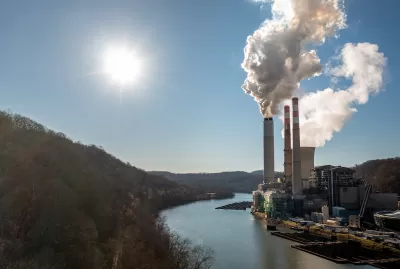
On April 25, the U.S. Environmental Protection Agency issued four separate rules directed at power plants that “effectively moved to end the use of coal to keep the lights on in America,” reported Coral Davenport and Lisa Friedman for The New York Times last month.
The most consequential of the new rules is aimed at nearly eliminating carbon dioxide emissions from the coal plants.
On May 9, that rule, known as the New Source Performance Standards for Greenhouse Gas Emissions from New, Modified, and Reconstructed Fossil Fuel-Fired Electric Generating Units, along with two related measures:
- Emission Guidelines for Greenhouse Gas Emissions From Existing Fossil Fuel-Fired Electric Generating Units; and
- Repeal of the Affordable Clean Energy Rule
were published in the Federal Register. Meris Lutz, who covers climate, the environment, and the economy for The Atlanta Journal-Constitution, reports (in the source article) on the lawsuit filed that day in the United States Court of Appeals for the District of Columbia Circuit:
Twenty-five Republican-led states, including Georgia, filed a legal challenge Thursday to new federal regulations on air pollution from power plants that generate electricity.
“The new regulations include costly and unattainable emissions standards, such as unrealistic compliance timelines, in an attempt to kill coal-fired units while endangering the construction of natural gas plants,” states a press release from the Office of the Attorney General of the State of Georgia on May 9.
The rule also disregards a prior opinion from the U.S. Supreme Court in West Virginia v. EPA, which warned that the EPA should not use a narrow regulatory provision to force coal-fired power plants into retirement.
“The appeal itself is only about a page long and makes no detailed argument against the rule other than to say it is 'arbitrary, capricious, an abuse of discretion, and not in accordance with law,'” adds Lutz, referring to the filing by Attorney General Chris Carr.
But Gudrun Thompson, a senior attorney with the Southern Environmental Law Center, said the new regulation stands on “firm legal footing.”
Carbon capture requirement
The New Source Performance Standards Rule for power plants, initially proposed on May 11, 2023 and finalized on April 25, 2024, “requires all existing coal plants planning to operate past 2039 to capture 90% of their CO2 emissions, which effectively requires them to install carbon capture technology,” reported Jason Fargo for S&P Global Commodity Insights on May 10. “In addition, new natural gas combined-cycle plants will face the same limit.”
Fargo notes that the 25 state attorneys general are being led by West Virginia's Patrick Morrisey, known for the aforementioned landmark Supreme Court case in 2022, West Virginia v. Environmental Protection Agency, limiting the power of the EPA to regulate greenhouse gas emissions.
West Virginia v. EPA, Round 2
Furthermore, the cases will be consolidated with others challenging the Mercury and Air Toxics Standards rule finalized by the EPA last month, reports Sonal Patel for Power Magazine on May 9.
On Thursday, a coalition of 23 states led by North Dakota and West Virginia filed a petition for review of the EPA’s final MATS rules...
The D.C. Circuit on Thursday afternoon consolidated that case—State of West Virginia, et. al. v. EPA (No. 24-1120)—with a separate petition for review filed jointly earlier in the day by the states of Ohio and Kansas, which challenged the EPA’s GHG rule.
In addition, the court consolidated two industry petitions for review of the GHG rule into the case State of West Virginia, et al. v. EPA: one filed by the National Rural Electric Cooperative Association (NRECA) and another jointly filed by the National Mining Association (NMA) and America’s Power.
Existing natural gas power plants
As for natural gas power plants that provided about 43 percent of the nation's power last year, the EPA chose not to address their emissions, other than requiring them “to comply with best practice emissions limits based on efficiency,” wrote Julia Attwood for Bloomberg NEF on May 2, to “address the threat of litigation from gas power producers.”
“That is a big disappointment,” Jennifer A Dlouhy, who reports on energy and environmental issues for Bloomberg News, told the PBS NewsHour on April 25.
There are environmentalists who are really concerned about getting at not just the new gas plants that will be built, but a huge source of pollution coming from the existing fleet. And, for now, they're going to have to wait at least another year for that to be completed, for that process to be finished.
FULL STORY: GOP states, including Georgia, sue to stop power plant pollution rules

Power Plants: A Win for the EPA
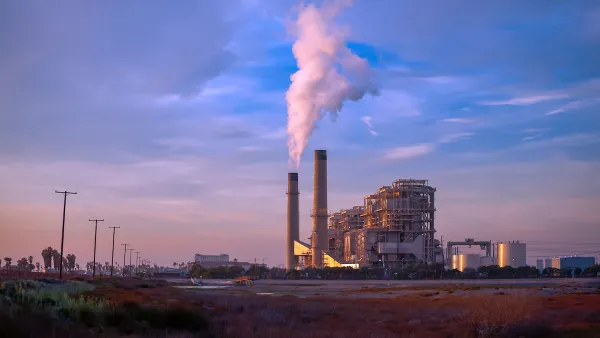
New rules from the US Environmental Protection Agency to regulate greenhouse gas emissions from fossil fuel-fired power plants survived an attempt by 25 Republican-led states to block their implementation while their case is litigated.

Federal Fuel Economy Rules Take Different Path than Emission Standards
The traditional approach for federal fuel economy and emissions standards is for the U.S. Department of Transportation and the Environmental Protection Agency to propose regulations simultaneously. This year is different.
It's Official: Obama's Clean Power Plan Has Been Replaced by the Trump Administration
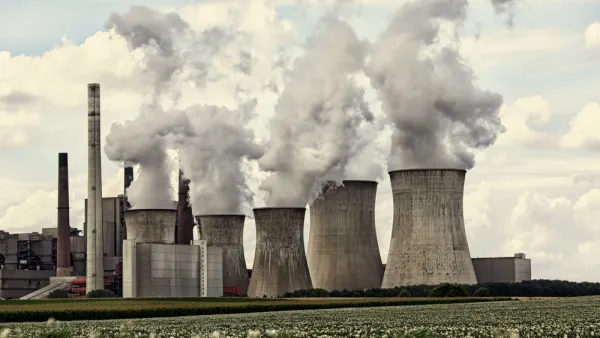
It took less than a year for the EPA to finalize the Affordable Clean Energy rule, which will allow older coal-burning plants to continue operating, in the Trump administration's most consequential environmental rollback accomplished to date.

Planetizen Federal Action Tracker
A weekly monitor of how Trump’s orders and actions are impacting planners and planning in America.

The state-sanctioned urbicide of Austin
People don’t kill cities. Freeways do.

US to reduce Colorado River water deliveries to Mexico
A new Colorado Treaty amendment reduces Mexico’s Colorado River water allocation by 250,000 acre feet.

5 New England states march closer to 800 megawatt wind energy project
Securing federal approval for the project may be complicated under the Trump administration, which has historically been hostile towards domestic wind power.

Baltimore to break ground on $50 million Transit Priority Project
The project will bring faster bus trips, safer streets and better bike connections to Baltimore.

Airbnb launches $250 million 'last-dollar financing' housing accelerator, makes first investment in Austin
The company will put $6.4 million towards affordable housing development in Texas’ capital.

FREE Course: Walkable City 1: Why Walkability?
After describing his path towards focusing on walkability as the essence of good planning, Jeff Speck marches through his five principal reasons for making more walkable places.
Reinventing Malls: Planning Alchemy—Turning Gray Fields Into Gold
The course focuses on the opportunities and imperatives that shape reinvention of mall sites.

Eagle County Government
Harvard University Graduate School of Design
Nashville Planning Department
The Architects Foundation
University of Cincinnati Online
The Pocatello Development Authority
The Urban Renewal Agency of the City of Pocatello
Journal of the American Planning Association