Ben Wellington teaches a statistics course based on NYC Open Data at the Pratt Institute’s City & Regional Planning program, and is the founder of the quirky data blog "I Quant NY."


In a recent interview with Noah Davis on Pacific Standard, Ben Wellington discusses his blog, I Quant NY, which stemmed from his Pratt Institute course on NYC Open Data. Posting his discoveries on the website, which can range from the farthest Brooklyn apartment to a subway stop to the fire hydrant that brought in the most ticket revenue for the city, Wellington's findings have not only received substantial media attention but have also influenced policy.
In the interview, Wellington shares how his discoveries are led by asking the right questions, and do not involve complex algorithms or high-level statistical knowledge. He says, "If you look through Freakanomics, they aren’t doing the fanciest analysis. They are looking at one variable, but they are looking at it from a new angle. For the most part, all my work is just counts and means. The fanciest thing is a correlation."
As a utilizer of open data, Wellington believes that this new powerful tool "plays two roles. You’re leveraging the power of people who are passionate to find things... On the other hand, it’s also a bit of a watchdog with transparency and accountability."
Read the full story: The Man Who’s Quantifying New York City


NYC’s ‘Rare and Comprehensive’ Public Data Reveals Congestion Pricing's Success
The Metropolitan Transportation Authority’s analytics and data team maintains over 180 regularly updated datasets about the city’s transportation system.

New Interactive Mapping Tool Tracks all of NYC's Infrastructure Projects, Housing Permits, and City Facilities
The New York Department of City Planning has taken its open data practices to a new level with the launch of the Capital Planning Explorer.
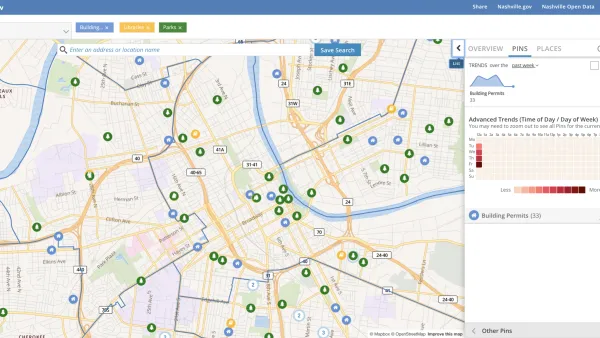
Presenting Municipal Data in an Interactive Map, Nashville Style
The city of Nashville launched the NashView interactive data map earlier this month.

Planetizen Federal Action Tracker
A weekly monitor of how Trump’s orders and actions are impacting planners and planning in America.

California plans to bury El Niño’s downpour
If the state plays its cards right, it may be able to store a billion acre-feet of El Niño’s water in aquifers.

Chicago breaks ground on $3 billion megadevelopment
The new neighborhood, titled Foundry Park, will one day host 3,700 residences.

California High-Speed Rail Authority CEO resigns after $600,000 scandal
Under Ian Choudri, the authority used taxpayer dollars to fund first class flights and trips to nightclubs.

Want to study the Missouri River? Soon, you may need unanimous approval from 10 states
Legislation would require 10 governors’ permission to study or build projects moving water outside the basin.

Desperate measures: Advocates weigh draining Lake Powell to fill Colorado River
Draining the reservoir could reduce evaporation losses by a couple hundred thousand acre-feet.

FREE Course: Walkable City 1: Why Walkability?
After describing his path towards focusing on walkability as the essence of good planning, Jeff Speck marches through his five principal reasons for making more walkable places.
Reinventing Malls: Planning Alchemy—Turning Gray Fields Into Gold
The course focuses on the opportunities and imperatives that shape reinvention of mall sites.

City of Rosemead
Rutgers University, Edward J. Bloustein School of Planning and Public Policy
One Hundred Miles
Hunter College, City University of New York (CUNY)
The Architects Foundation
University of Cincinnati Online
City of Cambridge
Montrose County
The Pocatello Development Authority