If you're not familiar with the world of emojis, bravo for holding out against the widely adopted trend. But now that (most) people have adopted pictographs for communication, could the shift in communication produce new kinds of landscapes?


The Sapir–Whorf hypothesis—that language shapes our thoughts—opens this examination by Sam Jacobs Studio of the potential impact of emojis (or pictographs to use the historic term) on how we think: "Now that we’ve begun scattering pictures amongst the traditional structures of letters, words, grammar, punctuation and so on, what kind of new thoughts might be forming in our minds?"
The post is especially concerned with how pictographs might change the way we describe and make places: "Just as Wordsworth, through written language, shaped a romantic understanding of the Lake District’s landscape so powerfully that it still frames our own vision, perhaps the emoji characters will become building blocks of new kinds of landscape that could never have been conceived without them."
Read the full story: Emojiopolis

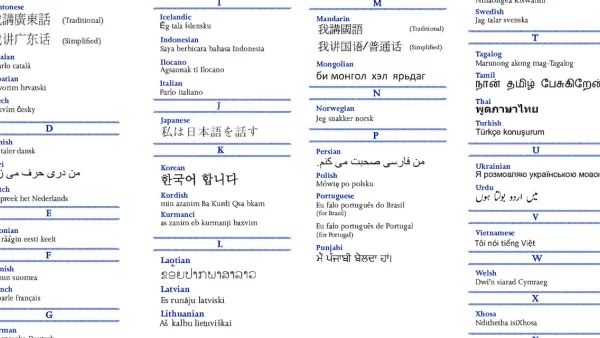
Language Matters: Addressing Communication Gaps in Disaster Response
A UCLA study reveals that language barriers left many Asian residents in Los Angeles County without critical wildfire evacuation and recovery information, highlighting the need for more inclusive emergency communication strategies.

Friday Eye Candy: AI Envisions Solutions to the Challenges Facing Cities
Phoenix reimagined for shade. Los Angeles as a place where everybody walks. San Francisco with affordable housing. AI makes a vision of the future possible.

Friday Eye Candy: 20 AI-Generated Cityscapes
AI-generated images are creating new landscapes and cityscapes, capable of inspiring awe or fear.

Planetizen Federal Action Tracker
A weekly monitor of how Trump’s orders and actions are impacting planners and planning in America.

California plans to bury El Niño’s downpour
If the state plays its cards right, it may be able to store a billion acre-feet of El Niño’s water in aquifers.

Chicago breaks ground on $3 billion megadevelopment
The new neighborhood, titled Foundry Park, will one day host 3,700 residences.

One of Denver’s busiest corridors to gain BRT
The project will span 18 miles and contain 74 bus rapid transit stations.

275,000 bus trips are at stake on Seattle's ballot
If passed, the Seattle Transit Measure would trigger a 0.3% sales tax and raise an average of $138 million per year to maintain and expand Seattle’s bus services.

Texas may pay Israeli company billions to ease water woes
Texas awarded IDE Technologies the contract for its Harbor Island project, which is slated to become the Western Hemisphere's largest desalination plant.

FREE Course: Walkable City 1: Why Walkability?
After describing his path towards focusing on walkability as the essence of good planning, Jeff Speck marches through his five principal reasons for making more walkable places.
Reinventing Malls: Planning Alchemy—Turning Gray Fields Into Gold
The course focuses on the opportunities and imperatives that shape reinvention of mall sites.

City of Rosemead
Rutgers University, Edward J. Bloustein School of Planning and Public Policy
One Hundred Miles
Hunter College, City University of New York (CUNY)
The Architects Foundation
University of Cincinnati Online
City of Cambridge
Montrose County
The Pocatello Development Authority