Language
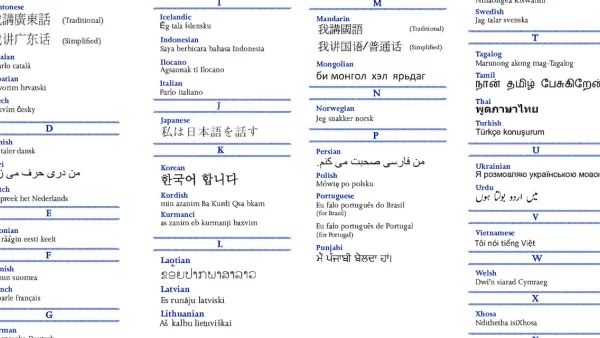
Language Matters: Addressing Communication Gaps in Disaster Response
A UCLA study reveals that language barriers left many Asian residents in Los Angeles County without critical wildfire evacuation and recovery information, highlighting the need for more inclusive emergency communication strategies.
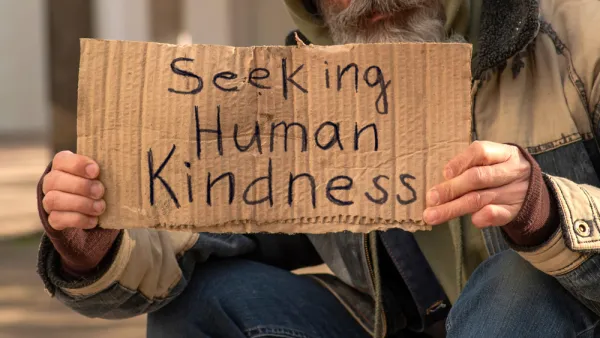
How We Talk About Homelessness: Why Language Matters
Terminology referring to people living without permanent housing changes frequently. Today, the term 'unhoused' is gaining ground among advocates. Why, and why does it matter?
The 'Garbage Language' of Planning
The language we use as planners can serve many purposes and often hinders good communication rather than fostering it.
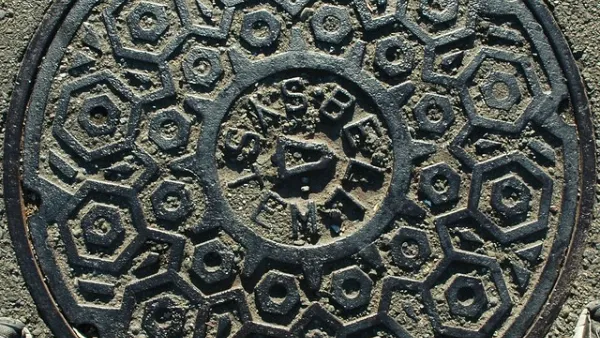
No More 'Manholes' in Berkeley
In removing all gendered language from its civil code, the city of Berkeley is tossing out some familiar nomenclature.
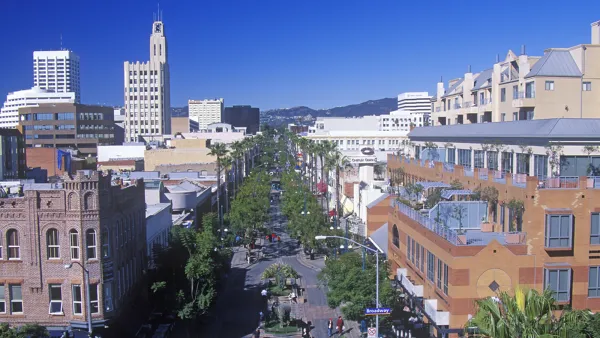
Wanted: A Language to Reflect the Diversity of Suburbia
The suburb/city distinction is too general and prone to exceptions.
Friday Eye Candy: Behold the 'Emojiopolis'
If you're not familiar with the world of emojis, bravo for holding out against the widely adopted trend. But now that (most) people have adopted pictographs for communication, could the shift in communication produce new kinds of landscapes?
Escaping the Pitfalls of Professional Discourse
Kaid Benfield returns to his popular blog at the NRDC's Switchboard site after a three-week hiatus, with thoughts on the purpose of his writings and how "overly familiar vocabulary can lead to overly familiar thinking."
The Implications of Transit Lingo
What do you think of when you think of the word "route" in relation to transit? What about the word "line"? Jarrett Walker argues that the language used to describe transit can influence how people think about it.
US Planning Isolationism
Recently, the new Journal of the American Planning Association editor Randall Crane circulated a message to US planning academics in which he asked for new submissions: "A reminder that JAPA is interested in your best work in any aspect of planning scholarship -- quantitative or qualitative, foreign or domestic -- that informs practice. We would particularly like to broaden subject content over the next few years." Temple Uni urban studies prof Ben Kohl replied: "For years I have wished that JAPA would show some interest in the lessons that ‘foreign’ planners and planning experience might have to offer.
Sorting Out The Jargon of Planning
So what exactly is "sustainability"? Well, then, how about "civic engagement"? "smart growth”? Bill Barnes of the National League of Cities says that planning is overrun by verbiage with vague definitions, to the detriment of the process.

FREE Course: Walkable City 1: Why Walkability?
After describing his path towards focusing on walkability as the essence of good planning, Jeff Speck marches through his five principal reasons for making more walkable places.
Reinventing Malls: Planning Alchemy—Turning Gray Fields Into Gold
The course focuses on the opportunities and imperatives that shape reinvention of mall sites.

City of Rosemead
Rutgers University, Edward J. Bloustein School of Planning and Public Policy
One Hundred Miles
Hunter College, City University of New York (CUNY)
The Architects Foundation
University of Cincinnati Online
City of Cambridge
Montrose County
The Pocatello Development Authority









