Supporters and practitioners of the playable city movement will gather this week at a conference in Bristol, UK called Making the City Playable.



Julian Baggini writes for Guardian Cities in anticipation of the Making the City Playable event by telling of the recent, conspicuous efforts of the movement as well as the underlying ethos behind playable city installations and events: "Although their work is in many ways disparate, three key ideas bring them together. First, that cities create problems of living that can only be addressed by collective action. Second, the sense that the well-being of communities cannot be left to local authorities; citizens need to take control of their own surroundings. Third, an optimism that we can do more than just tackle problems one by one. By encouraging public activities that actively bring joy, we can create a happier, more cohesive urban future."
The article includes a lot more insight into the motivations and politics of playable city efforts, such as the critical observation: "[for] the playable city to thrive, it requires cooperation from local authorities." The article also includes multiple examples of the various shapes playable city efforts can adopt. For instance, the winner of the 2014 Playable City award, called Shadowing, which will activate on September 11, 2014 in Bristol.
Read the full story: Playable Cities: the city that plays together, stays together

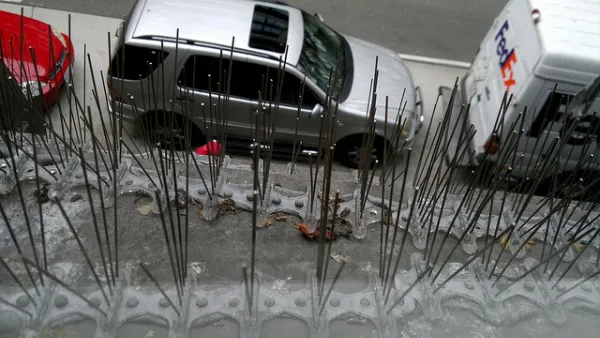
Pigeon Spikes…on Trees
A developer in Bristol installed pigeon spikes on trees to keep bird droppings off cars.
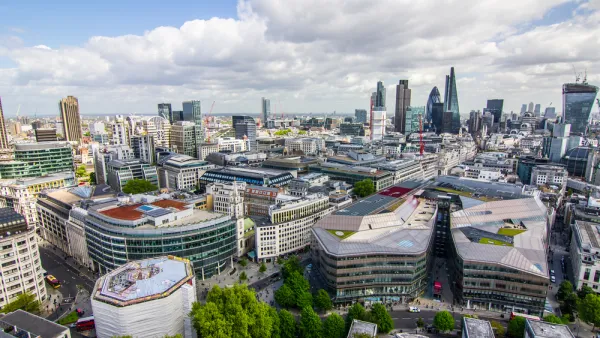
U.K.'s New Urban Churches Promote ‘Renewal’
Progressive churches are attracting "younger, trendier demographics" to U.K. city centers.
Population Declining, Aging in Southwest Virginia
While Washington D.C. and its surrounding counties is in the midst of a population, development, and infrastructure investment boom, the region farther south and west in the state of Virginia is bleeding population.

Planetizen Federal Action Tracker
A weekly monitor of how Trump’s orders and actions are impacting planners and planning in America.

Amtrak, CN end decades-long dispute with eight-year agreement
The new operating agreement establishes an updated framework for the companies to work together, including processes to resolve disputes.

Judges permit Denver to divert 77,000 acre feet from the Colorado River for reservoir expansion
Overuse and climate change have caused the Colorado River’s water levels to plummet.

Boston has spent millions making the Green Line more accessible — and there’s no end in sight
While the city has invested millions into expanding and adding platforms to the Green Line to make it more accessible, new train cars set to arrive next year will be too tall for disabled passengers to board without raising the current platforms.

Idaho may see an 18% drop in federal surface transit funding — the largest estimated cut in the US
Transit systems in rural communities are much more reliant on federal funding to provide their services.

How ‘post-disaster gentrification’ alters neighborhoods after natural calamities
After hurricanes, fires or other calamities, the original residents of a community are often replaced by younger, wealthier residents.

FREE Course: Walkable City 1: Why Walkability?
After describing his path towards focusing on walkability as the essence of good planning, Jeff Speck marches through his five principal reasons for making more walkable places.
Reinventing Malls: Planning Alchemy—Turning Gray Fields Into Gold
The course focuses on the opportunities and imperatives that shape reinvention of mall sites.

City of Wisconsin Rapids
Harvard University Graduate School of Design
KFH Group Inc.
The Architects Foundation
University of Cincinnati Online
The Pocatello Development Authority
The Urban Renewal Agency of the City of Pocatello