With a vote last week by the Minneapolis City Council, the final local consent was granted the proposed Southwest light rail project. Despite that benchmark political action, the project will not be without challenges moving forward.


"The last local approval needed for the Southwest light rail project fell into place Friday morning [August 29] with a vote from the Minneapolis City Council," reports Eric Roper.
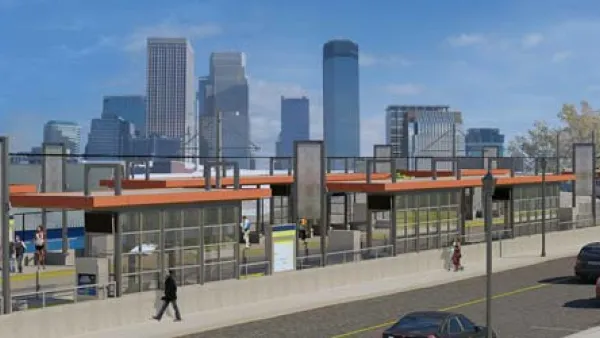
"The $1.6 billion line, expected to open in 2019, would run from Eden Prairie to downtown Minneapolis. Click here to take a ground-level tour of the Minneapolis stops. Half of the funding is expected to come from the federal government." Roper coverage also provides more insight into the discussion and politics that surrounded the city council's vote.
In a separate article, Peter Callaghan reports on the next steps for the light rail and the region's cities as it prepares for the new project, including the realistic threat of lawsuits and the next steps in project engineering and funding. On that latter issue, "the project will submit its application for funding through the Federal Transit Administration’s New Starts program" next year.
Read the full story: Minneapolis provides final local consent for Southwest light rail

Minneapolis LRT Facing Delays, Cost Increases
Construction on the Kenilworth Tunnel has been plagued by problems and threatens the foundation of a nearby condo complex.
Contractors in Limbo While Southwest LRT Waits for Federal Funding Promise
More evidence that the Federal Transit Administration under the Trump Administration isn't interested in capital investments.
Barrier Wall Could Delay Southwest Light Rail in Twin Cities
A proposed 1.4 mile safety barrier may require additional review, and could further delay the project

Planetizen Federal Action Tracker
A weekly monitor of how Trump’s orders and actions are impacting planners and planning in America.

‘Going backwards:’ Baltimore mayor, students rally against state's transit funding plan
Maryland's proposed six-year plan provides no funding for Baltimore’s BMORE bus program and reduces its road maintenance funding.

Detroit to transform waterfront with $2.2 billion investment
Developers will convert about 18 acres of unused parking lot space into civic spaces.

Newsom vetoes high-speed rail supervision bill after agency receives condemnatory audit
The audit found the CHSRA approved almost $600,000 in unallowable travel expenses.

Nation sees first electric plane-boat hybrid take off in public demo
The Viceroy Seaglider can fly at speeds of 180mph for up to 180 miles.

One of nation’s poorest counties to receive $6 billion data center
The developers estimate the project will create 200 permanent jobs and 1,000 temporary construction jobs.

FREE Course: Walkable City 1: Why Walkability?
After describing his path towards focusing on walkability as the essence of good planning, Jeff Speck marches through his five principal reasons for making more walkable places.
Reinventing Malls: Planning Alchemy—Turning Gray Fields Into Gold
The course focuses on the opportunities and imperatives that shape reinvention of mall sites.

City of Thousand Oaks
City of Wisconsin Rapids
Harvard University Graduate School of Design
The Architects Foundation
University of Cincinnati Online
Northern Illinois Transit Authority (NITA)
The Pocatello Development Authority
The Urban Renewal Agency of the City of Pocatello