After initial designs were critiqued as inauthentic to the Seattle experience, the park's designers are reaching out to the region's Native American population for advice on how to improve the plans for a new waterfront park.


According to an article by Lynn Thompson, "with the Alaskan Way Viaduct slated for demolition and the city planning for a new waterfront park from Pioneer Square to the Olympic Sculpture Park, city officials have begun reaching out to local Indian tribes to involve them in the design and to incorporate their history and culture into the finished park."
"Involving the tribes and finding ways to tell their histories also could go a long way to answering critics who say the early design drawings seem too polished, more like San Diego than Seattle," adds Thompson.
The outreach effort marks the first occasion in the waterfront park's design process that the city has reached out for input into the design of the waterfront park. After Mayor Ed Walsh took office in January, he created the Office of the Waterfront "to coordinate the $1 billion in proposed investments that include the seawall, the currently stalled excavation of the Highway 99 tunnel, the viaduct removal and design of the new park where Alaskan Way now runs."
Read the full story: Seattle’s waterfront park to reflect region’s rich tribal heritage
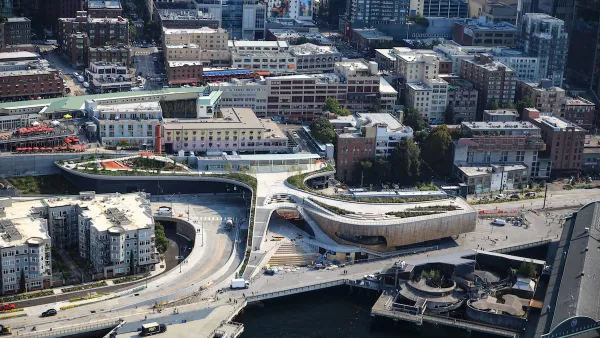
Seattle’s New Overlook Walk Offers Ample Park Space Near Pike Place Market
The elevated park and event space replaces part of the demolished Alaskan Way Viaduct, connecting the city’s famous Pike Place Market to the waterfront.
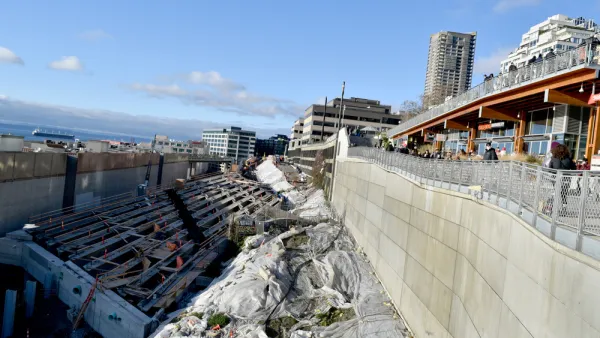
A Permanent Decline in Revenue Forecasted for the Tunnel Bertha Built in Seattle
Public transit isn't the only mode struggling to attract the expected number of users in 2022. State Route 99 in Downtown Seattle is also failing to live up to expectations and struggling to make ends meet.
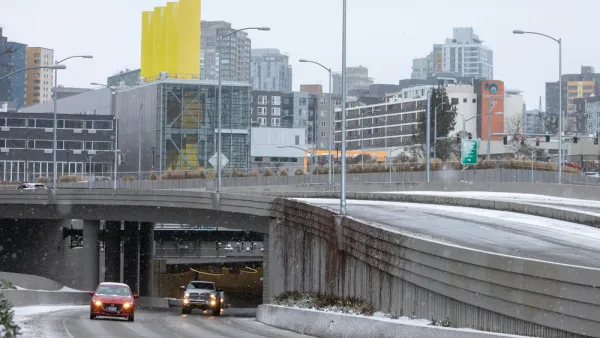
Seattle Emerges From Tolled Tunnel Unscathed
Promises of congestion and thousands of cars spilling on to quiet residential streets proved unfounded after the first week with tolls on the Highway 91 tunnel in Seattle.

Planetizen Federal Action Tracker
A weekly monitor of how Trump’s orders and actions are impacting planners and planning in America.

California plans to bury El Niño’s downpour
If the state plays its cards right, it may be able to store a billion acre-feet of El Niño’s water in aquifers.

Desperate measures: Advocates weigh draining Lake Powell to fill Colorado River
Draining the reservoir could reduce evaporation losses by a couple hundred thousand acre-feet.

Post election, Texas is no longer Musk’s 'AI oasis'
Elon Musk dolled out $446 million on the 2026 midterms, the most ever spent by a non-canidate.

Chicago voters approve permanent festival grounds, penalty for vacant property owners
Currently, major summer and fall festivals take over public parks for weeks at a time, drawing criticism from nearby residents

NYC votes to cut outdoor dining red tape, speed up permitting
New York City also voted to allow the Department of Transportation to begin work on urgent projects before notifying elected officials.

FREE Course: Walkable City 1: Why Walkability?
After describing his path towards focusing on walkability as the essence of good planning, Jeff Speck marches through his five principal reasons for making more walkable places.
Reinventing Malls: Planning Alchemy—Turning Gray Fields Into Gold
The course focuses on the opportunities and imperatives that shape reinvention of mall sites.

City of Rosemead
Rutgers University, Edward J. Bloustein School of Planning and Public Policy
One Hundred Miles
Hunter College, City University of New York (CUNY)
The Architects Foundation
University of Cincinnati Online
City of Cambridge
Montrose County
The Pocatello Development Authority