A recent article by Bill Lucia explains the reasons to be cautiously optimistic about a proposed park that will replace a demolished Alaskan Viaduct on Seattle’s waterfront.


The details of the park, which would span 26 blocks and 20 acres between the Stadium District and Belltown, sound lovely: “There would be viewing platforms that reveal vistas of Elliott Bay and the Olympic Mountains. And cantilevered walkways made partially from glass, which would transmit sunlight to migrating salmon as they travel along the bay’s seawall. A small beach would extend west from Pioneer Square, with water lapping the nearby sidewalk at high tide.”
The design for the park is by James Corner Field Operations—the design firm of New York City High Line fame. But the park’s grand plans still come with a lot of caveats.
First there is the delayed project to build a new tunnel or Highway 99 to replace the capacity of the Alaskan Way viaduct. Then there is the ongoing question of funding, which has has remained unresolved for the park plans since inception.
Read the full story: Seattle's waterfront: Visions of hottubs & gardens, but where's the cash?
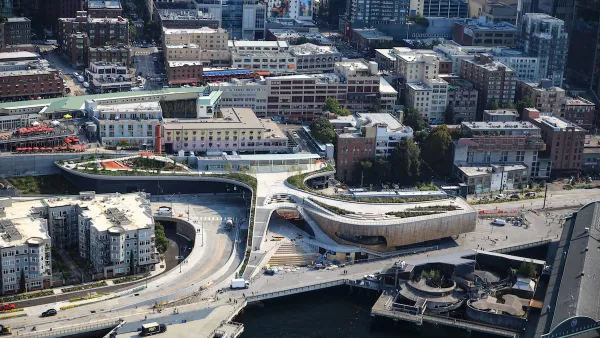
Seattle’s New Overlook Walk Offers Ample Park Space Near Pike Place Market
The elevated park and event space replaces part of the demolished Alaskan Way Viaduct, connecting the city’s famous Pike Place Market to the waterfront.
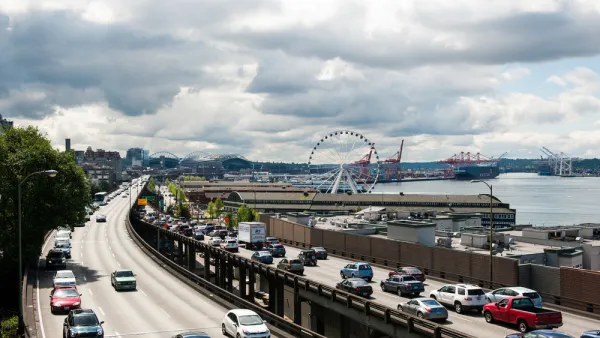
Tax Deal Clears the Way for Seattle's Grand Waterfront Park Plans
A proposed waterfront plan has secured the necessary funding to move forward in Seattle, pending City Council approval.
Seattle Unveils Grand Plans for Its Waterfront, But Who's Going to Pay for it?
Last week, landscape architect James Corner presented a transformative vision for remaking Seattle's waterfront after the removal of the Alaskan Way Viaduct. Lynn Thompson describes Corner's plan, and its accompanying funding challenges.

Planetizen Federal Action Tracker
A weekly monitor of how Trump’s orders and actions are impacting planners and planning in America.

Eastern Nebraska is running out of electricity
Data centers and electrification are straining eastern Nebraska’s grid, throttling economic development.

Study reveals best places in the U.S. for cycling, walking
New research from Streetlight Data examines bicycle and pedestrian miles per capita in the 100 largest U.S. cities by population.

DSA members accuse Mamdani of 'abandoning values' over housing redevelopment
New York City's mayor plans to replace about 2,000 units of public housing with private, mixed-income housing.

All sides of BRT debate unhappy with CDOT’s most recent move
The Colorado Department of Transportation is no longer considering center-running bus lanes for Colorado Boulevard.

Massachusetts bogs generate both power, and cranberries
Putting solar panels above farmland is one way Massachusetts is advancing toward its goal of net-zero carbon emissions by 2050.

FREE Course: Walkable City 1: Why Walkability?
After describing his path towards focusing on walkability as the essence of good planning, Jeff Speck marches through his five principal reasons for making more walkable places.
Reinventing Malls: Planning Alchemy—Turning Gray Fields Into Gold
The course focuses on the opportunities and imperatives that shape reinvention of mall sites.

City of Rosemead
Rutgers University, Edward J. Bloustein School of Planning and Public Policy
One Hundred Miles
University of Michigan School for Environment and Sustainability (SEAS)
Hunter College, City University of New York (CUNY)
The Architects Foundation
City of Cambridge
The Pocatello Development Authority
The Urban Renewal Agency of the City of Pocatello