A post by Sustainatlanta reacts to the recent study that predicted massive, sprawling growth in the South in the next 50 years. The post's concern is that sprawl will "eviscerate' the Southern lifestyle.


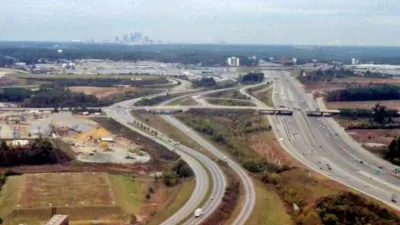
"The South, for many years now, has served as a refuge from the blunt, fast-paced Northeast, offering all the charms of the city at a much more leisurely pace," according to Sustainatlanta. But if the findings of a recent study, called "The Southern Megalopolis" and written by researchers at the U.S. Geological Survey and North Carolina State University, are prescient, "[the] massive urban sprawl predicted for the Southeast could eviscerate that leisurely lifestyle, that southern hospitality, and that beautiful forestry that has come to define the region."
The post goes on to detail the negative externalities of the South's predicted sprawl, including increased infrastructure expenses, destruction of the environment, and loss of quality of life.
Read the full story: The Death of the American South

Modeling the Explosive Growth of the Southern Megalopolis
A new study, "The Southern Megalopolis: Using the Past to Predict the Future of Urban Sprawl in the Southeast U.S." predicts urban sprawl and warns of its possible consequences over the next 50 years.
Planning for Congestion Relief
The third and final installment of Planetizen's examination of the role of the planning profession in both perpetuating and solving traffic congestion.

How Planning Fails to Solve Congestion
Solutions for congestion are never as simple and easy as armchair planners and engineers would like you to believe—especially those who suggest that congestion can be solved by forever building more roadway capacity.

Planetizen Federal Action Tracker
A weekly monitor of how Trump’s orders and actions are impacting planners and planning in America.

Amtrak, CN end decades-long dispute with eight-year agreement
The new operating agreement establishes an updated framework for the companies to work together, including processes to resolve disputes.

Judges permit Denver to divert 77,000 acre feet from the Colorado River for reservoir expansion
Overuse and climate change have caused the Colorado River’s water levels to plummet.

NYC DOT wants faster, more permanent street upgrades
The city is examining ways to build more concrete infrastructure without getting entangled in 'decades-long' projects.

'Something we’ve never seen before:' rising utility rates could strain city finances nationwide
Data centers, climate change and other factors have caused utility rates in the United States to increase by 38% since 2020.

Trump to overrule local leaders, lease millions of acres of America’s Pacific Island territories’ seafloors to mining companies
International law says that the Indigenous people of America’s territories have a right to prior and informed consent regarding projects that impact their countries.

FREE Course: Walkable City 1: Why Walkability?
After describing his path towards focusing on walkability as the essence of good planning, Jeff Speck marches through his five principal reasons for making more walkable places.
Reinventing Malls: Planning Alchemy—Turning Gray Fields Into Gold
The course focuses on the opportunities and imperatives that shape reinvention of mall sites.

Harvard University Graduate School of Design
KFH Group Inc.
Greater Baltimore Committee
The Architects Foundation
University of Cincinnati Online
The Pocatello Development Authority
The Urban Renewal Agency of the City of Pocatello