A new study, "The Southern Megalopolis: Using the Past to Predict the Future of Urban Sprawl in the Southeast U.S." predicts urban sprawl and warns of its possible consequences over the next 50 years.


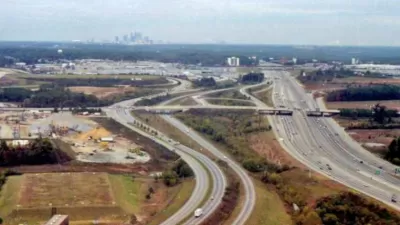
Laura Bliss shares details of a new study that predicts expansive growth of urban areas in the South: "Basing their model on past growth patterns and locations of existing road networks, researchers at North Carolina State University projected the region’s [urban footprint] to grow 101 percent to 192 percent."
As for the policy and land use implications of the region's growth, Bliss adds this call to action: "The South's explosive population growth over the past 60 years can only be expected to continue....And more likely than not, so will its typical development pattern of sprawling, automobile-dependent suburbs. Planners and city leaders should start acting now to managing infrastructure and natural resources in the area."
Read the full story: By 2060, the American South Could Be Three Times as Urbanized

Sprawl and the 'Death of the American South'
A post by Sustainatlanta reacts to the recent study that predicted massive, sprawling growth in the South in the next 50 years. The post's concern is that sprawl will "eviscerate' the Southern lifestyle.

Learning loss and urban schools, part 2
Did test scores in progressive cities drop more post-COVID than test scores in moderate ones?
Planning for Congestion Relief
The third and final installment of Planetizen's examination of the role of the planning profession in both perpetuating and solving traffic congestion.

Planetizen Federal Action Tracker
A weekly monitor of how Trump’s orders and actions are impacting planners and planning in America.

Chicago breaks ground on $3 billion megadevelopment
The new neighborhood, titled Foundry Park, will one day host 3,700 residences.

This MA town is drowning in its own sewage — and residents like it that way
Susan Murcott, a waste water expert, said if Carlisle didn't address their leaking sewage, the problem could turn “deadly.”

California plans to bury El Niño’s downpour
If the state plays its cards right, it may be able to store a billion acre-feet of El Niño’s water in aquifers.

With no reauthorization bill in sight, Texas slashes $6.6 billion from transportation budget
An official said the program may receive additional funding when a federal reauthorization bill passes.

Chicago’s new transit authority has ‘unprecedented’ land development power
The Northern Illinois Transit Authority is allowed to buy and develop land for reasons unrelated to transit, a power that is fairly unique among transit authorities.

FREE Course: Walkable City 1: Why Walkability?
After describing his path towards focusing on walkability as the essence of good planning, Jeff Speck marches through his five principal reasons for making more walkable places.
Reinventing Malls: Planning Alchemy—Turning Gray Fields Into Gold
The course focuses on the opportunities and imperatives that shape reinvention of mall sites.

City of Rosemead
Rutgers University, Edward J. Bloustein School of Planning and Public Policy
One Hundred Miles
The Architects Foundation
University of Cincinnati Online
Montrose County
The Pocatello Development Authority
The Urban Renewal Agency of the City of Pocatello