The construction boom in Downtown Los Angeles has had the unintended, and largely unregulated, consequence of closing access to sidewalks. The practice might be illegal under federal law.


"So many sidewalks have been closed to accommodate construction that pedestrians are walking into the streets — amid traffic — to get around. In the South Park district of downtown, east of Staples Center, 11 sidewalks are closed in a 24-block area, and some will continue to be for as long as three years," reports Catherine Saillant. Moreover, "a dozen additional major projects are in the pipeline for the same neighborhood, with the potential to close 29 more sidewalks."
The blocked sidewalks raise questions about pedestrian safety, regulations of construction sites, and the access of individuals with special needs for access and mobility.
"The Los Angeles building code has a mechanism for officials to order covered walkways, but it's not often used….In practice, it's often left up to developers and site contractors to decide if a temporary walkway is needed." That's compared to cities such as Washington, Boston, and Chicago, which "require contractors to construct covered walkways on the existing sidewalk, or to create a clearly marked alternate walkway nearby."
Read the full story: Construction boom is creating obstacle courses for L.A. pedestrians


The Tough Legal Path to ADA Compliance
Next City examines the fruits of a Department of Justice effort to force cities to bring their sidewalks and other public spaces into compliance with the Americans with Disabilities Act.

West Hollywood makes delivery robots paying road users
Cities are looking for creative ways to regulate food delivery robots, in some cases putting them to work gathering data for ADA compliance or collecting revenue for sidewalk maintenance.
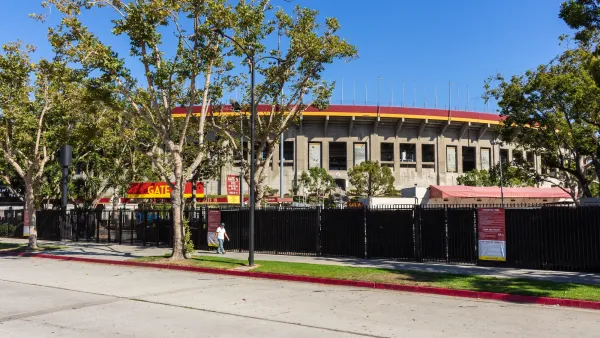
LA authorizes $9.5M for sidewalk repairs around Olympic venues
The city is hosting the Olympic and Paralympic Games in 2028.

Planetizen Federal Action Tracker
A weekly monitor of how Trump’s orders and actions are impacting planners and planning in America.

The state-sanctioned urbicide of Austin
People don’t kill cities. Freeways do.

Colorado’s Largest Data Center Could Rise Next to Homes — Without a Public Hearing
The proposed campus would consume 11 times the power of Denver International Airport; as it has across the country, opposition mounts.

Judges permit Denver to divert 77,000 acre feet from the Colorado River for reservoir expansion
Overuse and climate change have caused the Colorado River’s water levels to plummet.
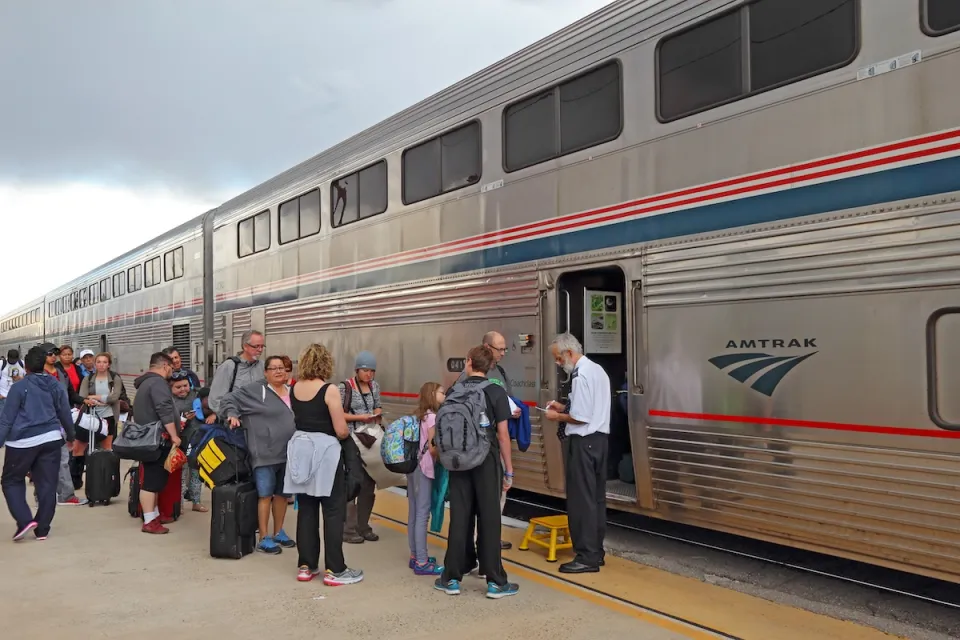
Amtrak, CN end decades-long dispute with eight-year agreement
The new operating agreement establishes an updated framework for the companies to work together, including processes to resolve disputes.

Raised interest rates may kill financially vulnerable construction projects
The chief economist at ConstructConnect warns that if construction project owners are negatively impacted by the raised rates, it could result in delayed payments to contractors.

FREE Course: Walkable City 1: Why Walkability?
After describing his path towards focusing on walkability as the essence of good planning, Jeff Speck marches through his five principal reasons for making more walkable places.
Reinventing Malls: Planning Alchemy—Turning Gray Fields Into Gold
The course focuses on the opportunities and imperatives that shape reinvention of mall sites.

KFH Group Inc.
Greater Baltimore Committee
Eagle County Government
The Architects Foundation
University of Cincinnati Online
The Pocatello Development Authority
The Urban Renewal Agency of the City of Pocatello