Part innovative urban design solution, part historic and simple design solution, the city of Baltimore's trash-collecting water wheel has been an unmitigated success at mitigating the trash in the Jones Fall River.


"Before May 2014, Baltimore was just one city whose harbor was cluttered with trash and debris caused by runoff from the Jones Falls River. Originally, the city collected the trash using crab nets – costing them a lot of time without making much of an impact," explains Mark LeChevallier. That is, until John Kellett designed a water wheel "which would collect trash that flowed from the mouth of the Jones Falls River using power from storm runoff."
"Now the water wheel has collected over 40 tons of trash from the Baltimore harbor since it began turning in May. Talk about taking out the trash!"
For LeChevallier, the Jones Fall River's water wheel is a model to emulated in other cities: "The success that the water wheel has brought to Baltimore, I hope, is a sign of more exciting things to come in the world of environmental innovation and design. I believe these results have the ability to create positive change in not only water pollution cleanup, but also other city issues."
For those interested in more details about the creation of the water wheel, see coverage by Julia Botero for NPR.
Read the full story: A Water Wheel In Baltimore Keeps The Harbor Moving
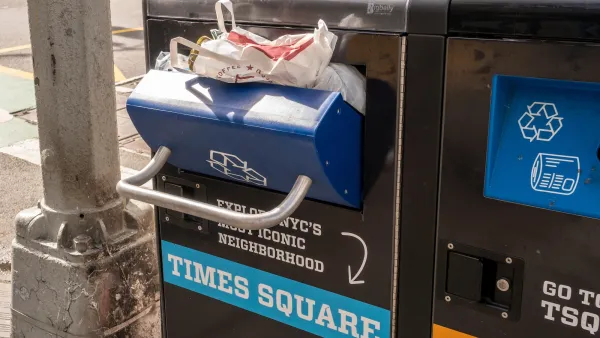
Why is Public Sanitation so Hard?
U.S. cities struggle to keep streets and sidewalks clean. Some are turning to high-tech trash cans to help.
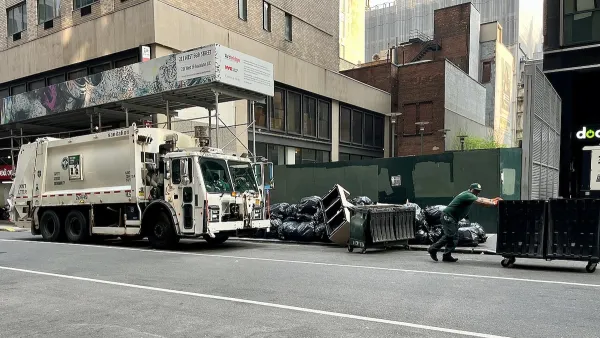
Parked Cars Hamper NYC Trash Containerization Effort
Sanitation workers must manually collect bags from containers blocked by parked cars, slowing a process that is meant to be safer and more efficient.

A Clever Way to End Cigarette Litter
Chicago smokers will soon be able to vote on matters of pop culture importance with their butts.

Planetizen Federal Action Tracker
A weekly monitor of how Trump’s orders and actions are impacting planners and planning in America.

California plans to bury El Niño’s downpour
If the state plays its cards right, it may be able to store a billion acre-feet of El Niño’s water in aquifers.

Desperate measures: Advocates weigh draining Lake Powell to fill Colorado River
Draining the reservoir could reduce evaporation losses by a couple hundred thousand acre-feet.

US buildings threatened, destroyed by fires set to triple by 2060
Researchers found a high fire risk for socioeconomically vulnerable neighborhoods in the American West.

LA residents may be allowed to paint their own crosswalks
Councilwoman Katy Yaroslavsky put out a motion instructing the Los Angeles Department of Public Transportation to study the feasibility of allowing volunteers to paint crosswalks.

Dallas moves to overhaul its zoning code
The city's zoning reform will allow more multi-family and mixed-use developments.

FREE Course: Walkable City 1: Why Walkability?
After describing his path towards focusing on walkability as the essence of good planning, Jeff Speck marches through his five principal reasons for making more walkable places.
Reinventing Malls: Planning Alchemy—Turning Gray Fields Into Gold
The course focuses on the opportunities and imperatives that shape reinvention of mall sites.

City of Rosemead
Rutgers University, Edward J. Bloustein School of Planning and Public Policy
One Hundred Miles
Hunter College, City University of New York (CUNY)
The Architects Foundation
University of Cincinnati Online
City of Cambridge
Montrose County
The Pocatello Development Authority