"A DC Council committee voted…to require developers to include affordable housing any time they buy land from the city for residential development," reports Jenny Reed.


Reed, writing for the DC Fiscal Policy Institute, urges the council to approve the bill: "The Disposition of District Land for Affordable Housing Act of 2013…would allow DC land to be sold below market value to subsidize the costs of the affordable housing. This is a smart approach because it would use land value – rather than needing to use tax dollars – and because it would create mixed-income communities throughout DC."
A few of the details of the proposed bill, scheduled for consideration by the full council on Monday, July 14:
- "30 percent of the new housing would need to be affordable if it is built within a one-half mile of a metro stop, or one-quarter of a mile from a bus priority corridor or streetcar line. In other areas, 20 percent of the units would need to be affordable."
- "In housing built as rental, one-fourth of the low-cost units would be for residents making 30 percent or less of area median income (AMI) or $29,000 for a family of three. The rest of the affordable units would be for residents making 50 percent of AMI, or $48,300 for a family of three."
Read the full story: Maximizing DC’s Public Lands for Affordable Housing
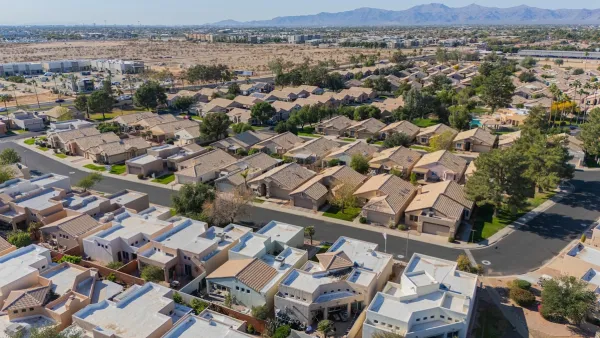
HUD Announces Plan to Build Housing on Public Lands
The agency will identify federally owned parcels appropriate for housing development and streamline the regulatory process to lease or transfer land to housing authorities and nonprofit developers.
Planning Trends for 2025: Creative Housing Solutions, Ongoing Transit Woes, and the Ever-Creeping Tentacles of AI
Urban planners have no shortage of urgent issues to delve into, from a deepening housing crisis to an increasingly unpredictable climate to a new federal administration bent on slashing key funding for everything from electric cars to housing assistance.
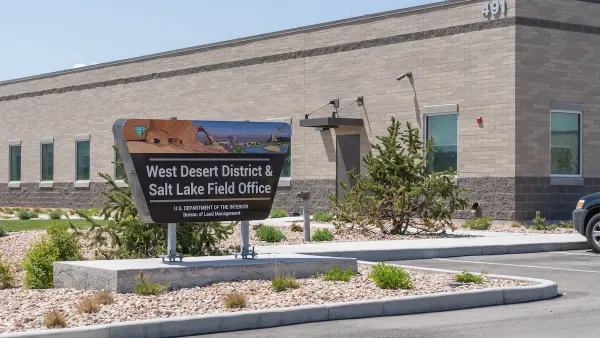
Public Lands Can Help Us Tackle the Housing Crisis in the West
The U.S. owns more than 650 million acres of public lands, and it has the power to sell or lease limited parcels for affordable housing. But mass disposal of public lands, as some legislators have proposed, is not the answer.

Planetizen Federal Action Tracker
A weekly monitor of how Trump’s orders and actions are impacting planners and planning in America.

Eastern Nebraska is running out of electricity
Data centers and electrification are straining eastern Nebraska’s grid, throttling economic development.

Study reveals best places in the U.S. for cycling, walking
New research from Streetlight Data examines bicycle and pedestrian miles per capita in the 100 largest U.S. cities by population.

Why does it take an emergency for the U.S. to expedite infrastructure projects?
In June 2023, Philadelphia repaired a melted interstate in 12 days thanks to an emergency order.

Federal government nominates new FTA administrator
Mark Aesch is currently the founder and CEO of a transportation management consulting firm.

Developers reveal $10 billion stadium plan as ‘Hail Mary’ to keep Bears in Chicago
The plan would also boast a public park, high- and mid-rise buildings and a youth sports complex.

FREE Course: Walkable City 1: Why Walkability?
After describing his path towards focusing on walkability as the essence of good planning, Jeff Speck marches through his five principal reasons for making more walkable places.
Reinventing Malls: Planning Alchemy—Turning Gray Fields Into Gold
The course focuses on the opportunities and imperatives that shape reinvention of mall sites.

City of Charlotte
City of Rosemead
Rutgers University, Edward J. Bloustein School of Planning and Public Policy
University of Michigan School for Environment and Sustainability (SEAS)
Hunter College, City University of New York (CUNY)
The Architects Foundation
City of Cambridge
The Pocatello Development Authority
The Urban Renewal Agency of the City of Pocatello