Recent reports reveal that a Chinese Internet search company known as Baidu is developing a bicycle that will ride itself. The technology could be game changer in Asia—China, for instance, has 551 million bike riders.


"Google’s driverless cars might be the talk of the town in the west, but Chinese search giant Baidu just flabbergasted Asia with its recently revealed development of unmanned autonomous bicycles," according to Paul Bischoff, who shares news reported on the Chinese language site TechWeb (Google translate is not exactly doing its finest work on that site, so beware).
"Details are sparse, and Baidu hasn’t officially confirmed the bike’s development so far. In theory, rider-less bikes should undergo less scrutiny than driver-less cars when it comes to road safety and legalities."
While we wait for the details of how the driverless bikes bike, er ride, er work, we're probably going to have to develop new verbs if this product indeed does come to market.
Read the full story: Baidu is secretly developing unmanned self-driving bicycles for China: report

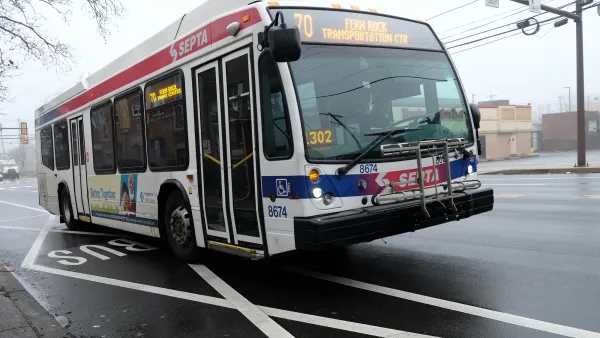
Pennsylvania lawmaker wants to ban fully self-driving buses
State Rep. Ben Waxman's proposed bill would require autonomous buses to have a licensed driver on board.

Amazon's steering wheel- and brake pedal-less Zoox robotaxis receive nation's first go-ahead for paid public rides
The NHTSA is giving a temporary permit to some autonomous cars that don't meet current safety standards as it develops a new framework for self-driving vehicles.
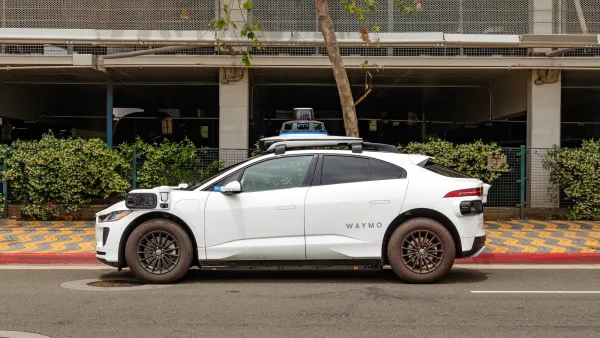
Austin Waymos rack up nearly $10k in parking tickets
The robotaxis have been cited for parking in tow zones and double parking, among other violations.

Planetizen Federal Action Tracker
A weekly monitor of how Trump’s orders and actions are impacting planners and planning in America.

‘Going backwards:’ Baltimore mayor, students rally against state's transit funding plan
Maryland's proposed six-year plan provides no funding for Baltimore’s BMORE bus program and reduces its road maintenance funding.

Detroit to transform waterfront with $2.2 billion investment
Developers will convert about 18 acres of unused parking lot space into civic spaces.

U.S.-Iran war may have ‘devastating’ impact on cost to warm homes
Vermont and Maine residents may see a 76% increase in the cost of warming their homes this winter.

Senate bill would ‘overhaul’ environmental permitting laws
Under the proposed act, government agencies would also not be able to suspend or rescind permits after granting them.

Exemption applications for NYC’s pied-à-terre tax see 55% success rate
The city sent nearly 40% of its initial pied-à-terre tax warnings erroneously.

FREE Course: Walkable City 1: Why Walkability?
After describing his path towards focusing on walkability as the essence of good planning, Jeff Speck marches through his five principal reasons for making more walkable places.
Reinventing Malls: Planning Alchemy—Turning Gray Fields Into Gold
The course focuses on the opportunities and imperatives that shape reinvention of mall sites.

One Hundred Miles
County of Mendocino
planning NEXT
The Architects Foundation
University of Cincinnati Online
Montrose County
Northern Illinois Transit Authority (NITA)
The Pocatello Development Authority