Ilana Preuss writes for Smart Growth America about the opportunity to integrate small-scale industrial uses into development—what's called mixed-use industrial real estate.


According to Preuss, cities are "seeing a resurgence of small, local producers who are harnessing low-cost technology and changing markets to sell hundreds and thousands of locally produced consumer products."
"These small-scale manufacturing business owners generally need dedicated production space of less than 5,000 square feet (often as little as 1,000 sq. ft), use clean technologies (think laser cutters), but need affordable, dedicated industrial/production space. They do not fit into office space because of noise, and most retail space is too expensive. So they often find marginal, cheap space at the fringes of our cities and survive on short-term leases or move far out into the suburbs."
"The time is ripe for policy change and private sector investment to create this kind of development. The demand for small-scale consumer goods and locally made custom goods are growing, while access to tools and technology gets cheaper. We need to provide affordable space for our local producers to grow their businesses in our city neighborhoods."
The article goes on to describe two current examples defining the mixed-use industrial business model, the benefits of the model, and some of the policy changes that building mixed-use industrial will require.
Read the full story: Economic Opportunity & Small-Scale Manufacturing
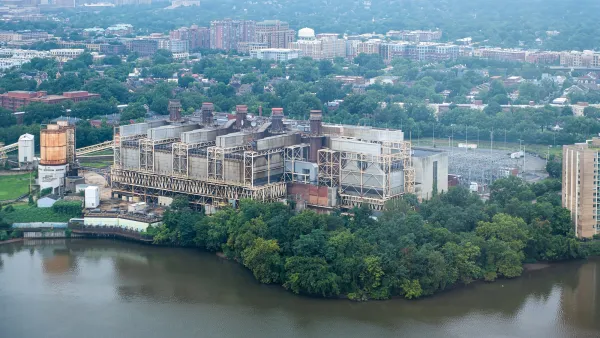
Former power plant in Alexandria to become walkable waterfront neighborhood with 800 homes
The Potomac River Generating Station was once the biggest source of air pollution in northern Virginia.
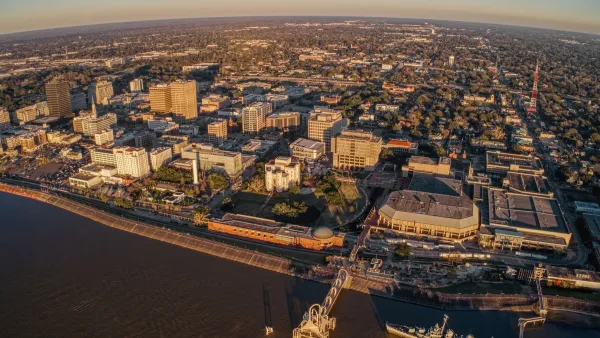
Baton Rouge master plan aims to triple downtown population
The Louisiana capital wants to entice developers to its riverfront district.
Five simple zoning changes that any city can make to increase housing affordability
Zoning for more affordable housing is not rocket science, says Donald Elliot, author of "An Even Better Way to Zone." Here’s his five-step guide to getting started.

Planetizen Federal Action Tracker
A weekly monitor of how Trump’s orders and actions are impacting planners and planning in America.

California plans to bury El Niño’s downpour
If the state plays its cards right, it may be able to store a billion acre-feet of El Niño’s water in aquifers.

Desperate measures: Advocates weigh draining Lake Powell to fill Colorado River
Draining the reservoir could reduce evaporation losses by a couple hundred thousand acre-feet.

Los Angeles just elected an urban planner as its mayor
Transportation analysts are optimistic that Raman will be more aggressive in addressing transit issues than Bass.

Mamdani’s pied-à-terre tax survives legal challenge
A panel of judges found that the plaintiffs failed to demonstrate injury as a result of New York City's implementation of the tax.

Eastern Nebraska is running out of electricity
Data centers and electrification are straining eastern Nebraska’s grid, throttling economic development.

FREE Course: Walkable City 1: Why Walkability?
After describing his path towards focusing on walkability as the essence of good planning, Jeff Speck marches through his five principal reasons for making more walkable places.
Reinventing Malls: Planning Alchemy—Turning Gray Fields Into Gold
The course focuses on the opportunities and imperatives that shape reinvention of mall sites.

City of Rosemead
Rutgers University, Edward J. Bloustein School of Planning and Public Policy
One Hundred Miles
University of Michigan School for Environment and Sustainability (SEAS)
Hunter College, City University of New York (CUNY)
The Architects Foundation
City of Cambridge
Montrose County
The Pocatello Development Authority