A forecast of likely trends in urban design and architecture.


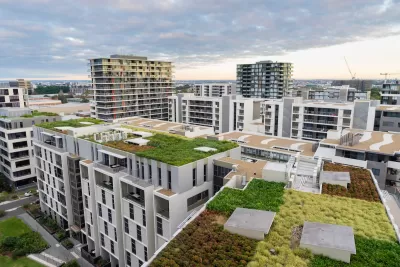
A design forecast from building firm Gensler highlights potential trends that will drive the development sector in 2024. Ryan Haines and Kristin Jensen describe the forecast in the Daily Journal of Commerce.
One emerging trend is the push for adaptive reuse, particularly as office vacancies remain high and developers look to other ways to repurpose buildings. Governments around the country are incentivizing the conversion and retrofitting of older buildings.
The forecast also asserts that sustainable design has become “non-negotiable,” noting that “Higher standards for products and materials, the adaptive reuse of existing buildings, net zero energy strategies, and regenerative design principles will define our sustainable future.”
Other likely trends include a diminishing focus on return-to-office metrics, a growing focus on the design and architecture needs of older people, a shift to mixed-use districts as an approach to revitalization. “Planners are reimagining downtowns to respond to the evolving and varied needs of those living there, starting with public safety, and focusing on uses that provide activity beyond the workday.”
Read the full story: Eight trends shaping design for cities in 2024

From SoHo to SoDoSoPa
How zoning made great neighborhoods illegal to build, and preordained gentrification.

Office Conversions Have Increased Every Year This Decade
Since the pandemic, office vacancy rates remain high, leading many cities to adjust zoning codes to accommodate adaptive reuse.
Downtown Los Angeles Gears Up for Growth
A new report highlights Downtown L.A.’s ongoing revival through major housing projects, adaptive reuse, hospitality growth, and preparations for global events in the years ahead.

Planetizen Federal Action Tracker
A weekly monitor of how Trump’s orders and actions are impacting planners and planning in America.

The state-sanctioned urbicide of Austin
People don’t kill cities. Freeways do.

US to reduce Colorado River water deliveries to Mexico
A new Colorado Treaty amendment reduces Mexico’s Colorado River water allocation by 250,000 acre feet.

Nation's most wind-powered state turns to coal as data centers increase energy demand
For the first time in decades, Iowa has increased its generation of coal power.

NYC cools commuters with city's first rain garden above a bus stop
New York City officials say the plants in the rain garden can absorb 16 gallons of rainwater during heavy storms.

Brightline West’s future may rely on $6 billion federal loan
The company has until Nov. 2 to make a $400 million equity investment into its proposed high-speed rail line.

FREE Course: Walkable City 1: Why Walkability?
After describing his path towards focusing on walkability as the essence of good planning, Jeff Speck marches through his five principal reasons for making more walkable places.
Reinventing Malls: Planning Alchemy—Turning Gray Fields Into Gold
The course focuses on the opportunities and imperatives that shape reinvention of mall sites.

Greater Baltimore Committee
Eagle County Government
Harvard University Graduate School of Design
The Architects Foundation
University of Cincinnati Online
The Pocatello Development Authority
The Urban Renewal Agency of the City of Pocatello
Journal of the American Planning Association