Atlanta's efforts to attract new cargo traffic to its airport will require new facilities on site as well as new facilities for industries nearby.


Jim Burress writes about the difficult, but lucrative, prospect of generating more cargo traffic at airports—a current goal of Hartsfield-Jackson Atlanta International Airport. Although Atlanta's airport is the world busiest for passenger traffic, it doesn't crack the top 30 in cargo, a list populated by Louisville, Anchorage, and Indianapolis.
While traditional cargo markets are stagnant, the airport is looking to create facilities that cater to a unique sector of cargo: perishable goods, like pharmaceuticals and fresh flowers.
Burress also speaks with Enno Osinga who runs cargo operations at Amsterdam’s Schiphol airport and serves as Vice Chair of Vice-Chair of The International Air Cargo Association. Here are Osinga's telling words about airports and their relationship to the surrounding city: "An airport, if you look at it unkindly, is a bit of concrete. It’s got runways. It’s got aprons…They’re all the same."
Adds Burress: "The key to bolstering cargo operations, Osinga says, is to convince industry to build nearby."
Read the full story: The new growth engine for airports: cargo

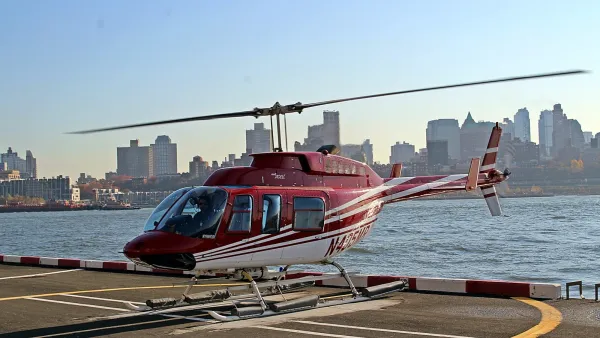
The Elite Helicopter Commutes of N.Y.C.
Helicopters are an exclusive mode that lets those who can afford it avoid the time and inconveniences of on-the-ground travel. But, say critics, it just highlights the gap between the city's haves and have-nots.
The Best and the Worst Airports to Access
If you want great access to an airport, go overseas—that's the main finding of a study by Golden Gateway Alliance, a Manhattan-based airport advocacy organization. Tied for dead-last in terms of access is Denver and a certain New York airport.
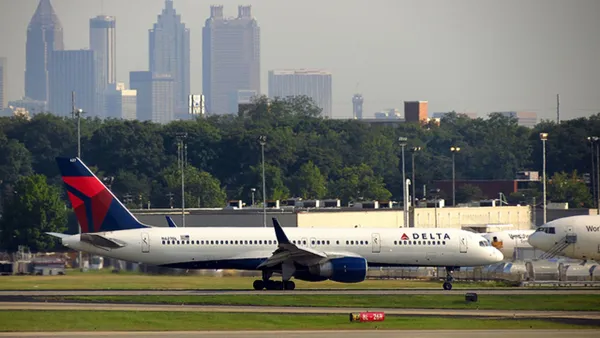
RFQ Released for Atlanta's Planned 'Airport City'
The city of Atlanta is moving forward with a plan to upgrade the world's busiest airport to "Airport City" status.

Planetizen Federal Action Tracker
A weekly monitor of how Trump’s orders and actions are impacting planners and planning in America.

Amtrak, CN end decades-long dispute with eight-year agreement
The new operating agreement establishes an updated framework for the companies to work together, including processes to resolve disputes.

Judges permit Denver to divert 77,000 acre feet from the Colorado River for reservoir expansion
Overuse and climate change have caused the Colorado River’s water levels to plummet.

NYC DOT wants faster, more permanent street upgrades
The city is examining ways to build more concrete infrastructure without getting entangled in 'decades-long' projects.

'Something we’ve never seen before:' rising utility rates could strain city finances nationwide
Data centers, climate change and other factors have caused utility rates in the United States to increase by 38% since 2020.

Trump to overrule local leaders, lease millions of acres of America’s Pacific Island territories’ seafloors to mining companies
International law says that the Indigenous people of America’s territories have a right to prior and informed consent regarding projects that impact their countries.

FREE Course: Walkable City 1: Why Walkability?
After describing his path towards focusing on walkability as the essence of good planning, Jeff Speck marches through his five principal reasons for making more walkable places.
Reinventing Malls: Planning Alchemy—Turning Gray Fields Into Gold
The course focuses on the opportunities and imperatives that shape reinvention of mall sites.

Harvard University Graduate School of Design
KFH Group Inc.
Greater Baltimore Committee
The Architects Foundation
University of Cincinnati Online
The Pocatello Development Authority
The Urban Renewal Agency of the City of Pocatello