The city of Los Angeles has been searching for years for a fiscal solution to the deplorable conditions of its streets and sidewalks, but a recent proposal to increase sales taxes by a half-cent to 9.5 percent is now dead.


"Two Los Angeles lawmakers on Tuesday abandoned the effort to put a half-cent sales tax hike for street and sidewalk repairs on the November ballot," reports David Zahniser.
"Councilmen Joe Buscaino and Mitchell Englander had spent the last three months reviewing a plan to generate $4.5 billion in new tax revenue, money that would go toward fixing the city's most deteriorated roads and walkways. It was the second time in two years that they had worked on a street tax proposal only to table it."
"More than 35% of L.A.'s streets, or 8,200 lane miles, are considered to be failing or near failing, receiving grades of D and F, according to a recent analysis. City officials said 40% of the city's sidewalks may be in need of repair."
Read the full story: L.A. half-cent tax proposal for street, sidewalk repair is pulled

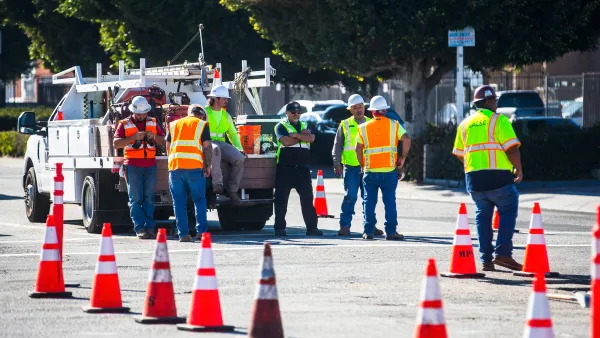
Commentary: LA’s ‘Large Asphalt Repair’ Policy Privileges Drivers, Endangers Others
A new policy to perform spot repairs rather than resurfacing entire streets lets the city skirt requirements to install accessibility and pedestrian infrastructure.
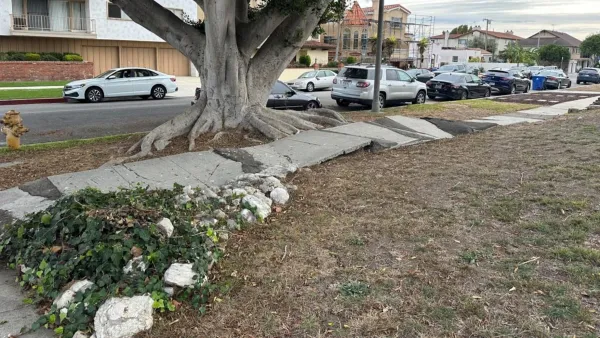
The City of Broken Sidewalks
Can Los Angeles fix 4,000 miles of broken sidewalks before the city hosts the 2028 Olympic Games?

Los Angeles Metro Releases First Quality of Life Report
Metro's first Quality of Life report measures the impact of the agency's transit investments since 2008.

Planetizen Federal Action Tracker
A weekly monitor of how Trump’s orders and actions are impacting planners and planning in America.

Data reveals that NYC’s bet on congestion pricing has paid off
After almost two years of the program, reports show positive impacts on traffic and air quality and no disruptions to parking.

HUD modernizes 50-year-old manufactured housing framework
The Next Generation Manufactured Housing Action Plan establishes new energy-efficiency standards for manufactured homes, and new guidelines for anchoring them.

Small single-family homes are illegal in most of MA. Voters can change that
Most land zoned for single-family housing in Massachusetts requires at least 40,000 square feet of land per house.

Public steps inside U.S.’s first battery-powered train
Metra’s groundbreaking train feature modern seats and a futuristic battery car.

Companies show off AI technology, new innovation hubs at APTA Expo
Nearly 700 companies attended the American Public Transportation Association’s Expo last week, which happens once every three years.

FREE Course: Walkable City 1: Why Walkability?
After describing his path towards focusing on walkability as the essence of good planning, Jeff Speck marches through his five principal reasons for making more walkable places.
Reinventing Malls: Planning Alchemy—Turning Gray Fields Into Gold
The course focuses on the opportunities and imperatives that shape reinvention of mall sites.

One Hundred Miles
County of Mendocino
planning NEXT
The Architects Foundation
University of Cincinnati Online
Montrose County
Northern Illinois Transit Authority (NITA)
The Pocatello Development Authority