Anna Griffin, reporting for the Oregonian, produced a pair of recent articles examining the process of gentrification in Portland—a city that recent saw gentrification controversy spark over the location of a Trader Joe’s.


Ann Griffin surveys the examples of gentrification and displacement in Portland—starting from the post-World War II example of inner Northeast Portland and to the urban renewal efforts of the 1970s.
Griffin goes onto cite the example of Los Angeles’ MacArthur Park as a neighborhood that revitalized without the negative impacts of displacement along racial lines. The secret to MacArthur Park’s success, according to Griffin: inclusionary coning and a Latino political influence. But Oregon prohibits inclusionary zoning and “African American activists, due in part to the small percentage of black voters in Portland, carry little day-to-day influence at City Hall.”
Earlier in the week, Griffin published the transcript from an interview with State Rep. Lew Frederick, who described his take on the African-American experience of gentrification in Portland. He noted, for example, the hidden qualities of gentrification in Portland: “Most of the folks in Portland, the white folks, really do not interact with African Americas at all. When you start talking about this as a problem they go, “Where?” because they don’t see it. They have no clue. That’s one of the issues that Portland has that’s going to be different than Boston or Philadelphia or Washington D.C.”
Read the full story: Gentrification: In Portland, as in Spike Lee's Brooklyn, a complicated question of race and class

Kids and Urbanization
The question of whether there is space for children in rapidly changing cities was under investigation in two recent studies with somewhat contradictory findings.
10 U.S. Cities Launch Anti-Displacement Network
More than half of American tenants are rent-burdened, putting them at risk of displacement. A national collaboration with PolicyLink hopes to help.
Study: Economic Displacement Is Bad for Transit Ridership
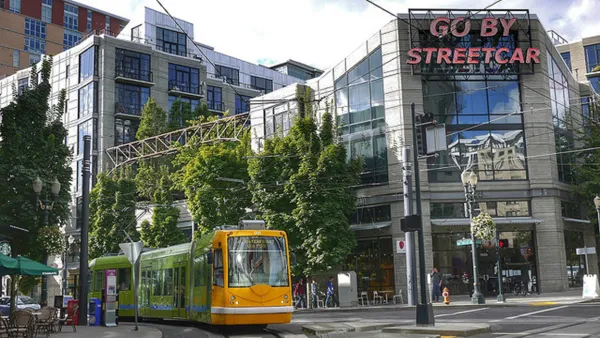
A TriMet transit agency analysis has identified a culprit in the decline of transit ridership in Portland: gentrification and displacement.

Planetizen Federal Action Tracker
A weekly monitor of how Trump’s orders and actions are impacting planners and planning in America.

California plans to bury El Niño’s downpour
If the state plays its cards right, it may be able to store a billion acre-feet of El Niño’s water in aquifers.

Desperate measures: Advocates weigh draining Lake Powell to fill Colorado River
Draining the reservoir could reduce evaporation losses by a couple hundred thousand acre-feet.

Los Angeles just elected an urban planner as its mayor
Transportation analysts are optimistic that Raman will be more aggressive in addressing transit issues than Bass.

Mamdani’s pied-à-terre tax survives legal challenge
A panel of judges found that the plaintiffs failed to demonstrate injury as a result of New York City's implementation of the tax.

Eastern Nebraska is running out of electricity
Data centers and electrification are straining eastern Nebraska’s grid, throttling economic development.

FREE Course: Walkable City 1: Why Walkability?
After describing his path towards focusing on walkability as the essence of good planning, Jeff Speck marches through his five principal reasons for making more walkable places.
Reinventing Malls: Planning Alchemy—Turning Gray Fields Into Gold
The course focuses on the opportunities and imperatives that shape reinvention of mall sites.

City of Rosemead
Rutgers University, Edward J. Bloustein School of Planning and Public Policy
One Hundred Miles
University of Michigan School for Environment and Sustainability (SEAS)
Hunter College, City University of New York (CUNY)
The Architects Foundation
City of Cambridge
Montrose County
The Pocatello Development Authority