Baltimore Magazine’s annual “Best Places to Work” list factors in in salaries, benefits, and workplace perks—but not commuting. In the Washington, DC metro area, that’s no small thing.


Blogger Jeff La Noue took a closer look at the top 25 companies on this year’s list, and found that only eight had a walkscore over 70. But, as La Noue points out, other area employers take their workers’ commutes seriously. Johns Hopkins, with multiple transit options and a Live Near Your Work program, is one.
“As employers and office developers across the region make decisions about where to locate and to build, it is time to give employees choices about transport,” writes La Noue. “There should be no more LEED-rated, “green” buildings in the middle of auto-oriented sprawl that costs employees their time, money, and health.”
Read the full story: Do Baltimore Magazine's "Best Places To Work" promote gridlock?

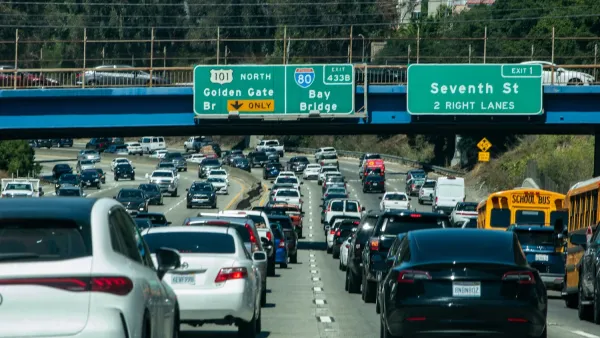
US Commuters Lost 8 Workdays to Traffic in 2024
As more employers call workers back to the office, commute times are growing — and costing drivers in time and money.

From 9-to-5 to Anytime: How Telecommuting Changes the Traffic Game
Not all cities have benefited equally from congestion relief brought on by shifting commuting patterns.

Study: Half of Global Commutes Made by Car; Rates Vary Widely
The United States is conspicuously consistent in its high rates of car usage, a new analysis finds.

Planetizen Federal Action Tracker
A weekly monitor of how Trump’s orders and actions are impacting planners and planning in America.

Amtrak, CN end decades-long dispute with eight-year agreement
The new operating agreement establishes an updated framework for the companies to work together, including processes to resolve disputes.

Judges permit Denver to divert 77,000 acre feet from the Colorado River for reservoir expansion
Overuse and climate change have caused the Colorado River’s water levels to plummet.

Atlanta City Council unanimously backs $3.5 billion Beltline light rail project
The resolution was drafted after Atlanta Mayor Andre Dickens pulled support for the Atlanta Streetcar extension last year.

SEPTA to bring nearby frequent transit to over 1 million new riders as part of decade-long plan
The agency's Accelerate plan will also bring frequent transit to twice the amount of jobs that are currently located near it.

NYC plants over 18,000 trees, the most new foliage in a decade
Many of the trees were planted in communities vulnerable to extreme heat.

FREE Course: Walkable City 1: Why Walkability?
After describing his path towards focusing on walkability as the essence of good planning, Jeff Speck marches through his five principal reasons for making more walkable places.
Reinventing Malls: Planning Alchemy—Turning Gray Fields Into Gold
The course focuses on the opportunities and imperatives that shape reinvention of mall sites.

City of Thousand Oaks
City of Wisconsin Rapids
Harvard University Graduate School of Design
The Architects Foundation
University of Cincinnati Online
The Pocatello Development Authority
The Urban Renewal Agency of the City of Pocatello