The proposed Ashland Bus Rapid Transit line in Chicago, the latest effort in an ambitious multi-modal transportation investment plan by Mayor Rahm Emanuel and former Chicago DOT Commissioner Gabe Klein, is a game changer for an already unique city.


Matt Dellinger’s analysis begins with a description of Chicago’s unique qualities as an urban metropolis. First of all, Chicago is both car-oriented and transit-friendly, which explains why its recent plan for bus-rapid transit along Ashland Avenue became controversial. And, “[the] planned 16-mile Ashland BRT would affect a cross-section of Chicago that contains all of the city's ethnicities, income levels, and zoning types.”
The benefits of the line are to provide a north-south transit corridor to connect the L lines without passing through downtown. The BRT proposal is a low-cost alternative to “a new rail link, the ‘Circle Line,’ which would have required new subway and elevated track at a cost of over a billion dollars,” reports Dellinger.
Most of Dellinger’s copy is devoted to sharing the voices of the project’s many proponents and opponents; both sides are reacting from an assumption that the proposed BRT would effect a fundamental change in the city of Chicago.
Read the full story: Chicago's Big Bet on the Bus

Op-Ed: Put Chicago on a Road Diet
"The city should consider road diets for all streets with excess car capacity, although they're not always politically easy," writes John Greenfield.
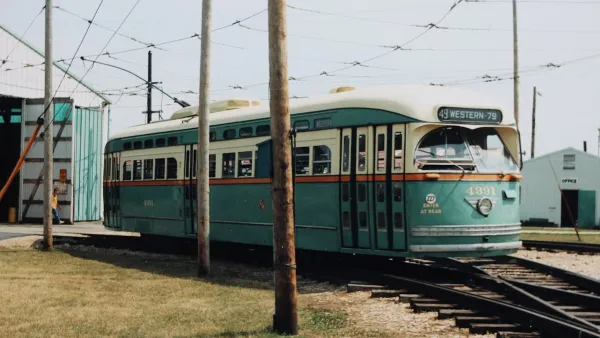
Chicago’s Ghost Rails
Just beneath the surface of the modern city lie the remnants of its expansive early 20th-century streetcar system.
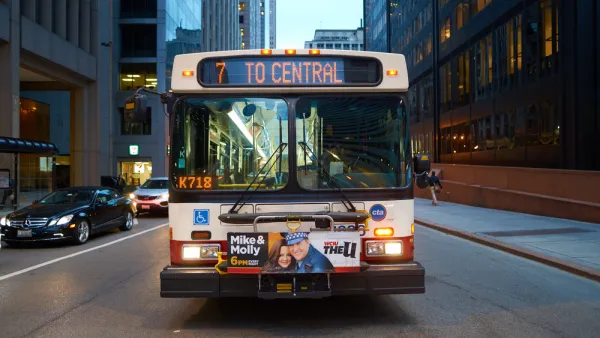
Chicago Pumps the Brakes on BRT
City officials say funding for dedicated bus lanes could take years, but other improvements could speed up bus service.

Planetizen Federal Action Tracker
A weekly monitor of how Trump’s orders and actions are impacting planners and planning in America.

Amtrak, CN end decades-long dispute with eight-year agreement
The new operating agreement establishes an updated framework for the companies to work together, including processes to resolve disputes.

Judges permit Denver to divert 77,000 acre feet from the Colorado River for reservoir expansion
Overuse and climate change have caused the Colorado River’s water levels to plummet.

Atlanta City Council unanimously backs $3.5 billion Beltline light rail project
The resolution was drafted after Atlanta Mayor Andre Dickens pulled support for the Atlanta Streetcar extension last year.

SEPTA to bring nearby frequent transit to over 1 million new riders as part of decade-long plan
The agency's Accelerate plan will also bring frequent transit to twice the amount of jobs that are currently located near it.

NYC plants over 18,000 trees, the most new foliage in a decade
Many of the trees were planted in communities vulnerable to extreme heat.

FREE Course: Walkable City 1: Why Walkability?
After describing his path towards focusing on walkability as the essence of good planning, Jeff Speck marches through his five principal reasons for making more walkable places.
Reinventing Malls: Planning Alchemy—Turning Gray Fields Into Gold
The course focuses on the opportunities and imperatives that shape reinvention of mall sites.

City of Thousand Oaks
City of Wisconsin Rapids
Harvard University Graduate School of Design
The Architects Foundation
University of Cincinnati Online
The Pocatello Development Authority
The Urban Renewal Agency of the City of Pocatello