The mayor of Aurora has lofty ambitions for a new “Main Street” along its forthcoming 10-mile light rail route, but will the market deliver, especially with the rise of real estate prices?


A new 10.5-mile RTD light rail line is already getting built through Aurora, a suburb of Denver, but will mixed-use development come? The new stretch connects major destinations, including the Aurora City Center, the Anschutz/Fitzsimons Medical Campus and Denver International Airport, so the ingredients are there for solid ridership numbers.
But the city’s goals for the project go beyond good ridership, according to an article by Ryan Parker. “Plans at some stops call for vertical development, whether higher-end condos in seven- or eight-story buildings or similar office buildings. A mix of retail and commercial within a quarter- or half-mile of the station will mean people can live, work and play all in a walkable area.”
"It's an opportunity for Aurora to stop accepting average and start shooting for the stars," says Aurora Mayor Steve Hogan in the article.
Less optimistic city leaders, however, point to the unrealistic expectations for the cost of real estate near the station could sink the city's lofty TOD ambitions. Old concerns about how much the city's zoning code prohibits the type of high-rise, mixed-use development are still present, as well.
Read the full story: Aurora has high hopes for light-rail development


A Transit and Land Use Planning Shift in Federal Way, Washington
Federal funding for Sound Transit's Federal Way Link extension and a new transit-oriented land use plan are changing the future of Federal Way.
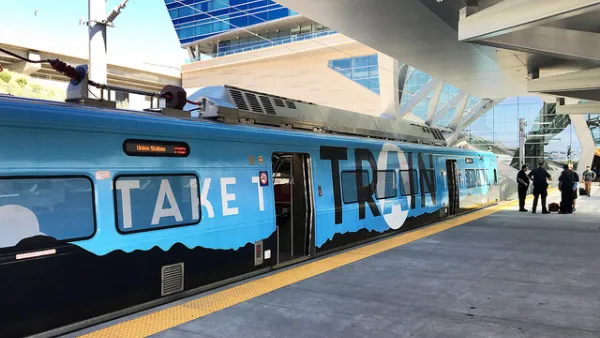
Denver's New R Line Light Rail Open to the Public Today
New to Denver today: 22 miles of light rail, two new system connections, and service to 16 stations. The Regional Transportation District's (RTD) new R Line will also be offering free rides on its first day of service.
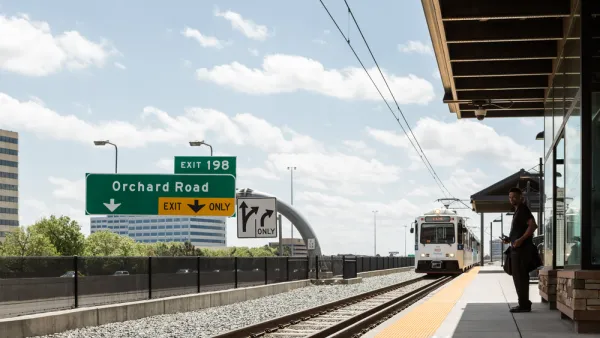
A Planning Controversy of the Transit Oriented Variety in Suburban Denver
A controversy has erupted over a proposed vision for transit oriented mixed in a Denver suburb.

Planetizen Federal Action Tracker
A weekly monitor of how Trump’s orders and actions are impacting planners and planning in America.

The state-sanctioned urbicide of Austin
People don’t kill cities. Freeways do.

Colorado’s Largest Data Center Could Rise Next to Homes — Without a Public Hearing
The proposed campus would consume 11 times the power of Denver International Airport; as it has across the country, opposition mounts.

Judges permit Denver to divert 77,000 acre feet from the Colorado River for reservoir expansion
Overuse and climate change have caused the Colorado River’s water levels to plummet.

Amtrak, CN end decades-long dispute with eight-year agreement
The new operating agreement establishes an updated framework for the companies to work together, including processes to resolve disputes.
Raised interest rates may kill financially vulnerable construction projects
The chief economist at ConstructConnect warns that if construction project owners are negatively impacted by the raised rates, it could result in delayed payments to contractors.

FREE Course: Walkable City 1: Why Walkability?
After describing his path towards focusing on walkability as the essence of good planning, Jeff Speck marches through his five principal reasons for making more walkable places.
Reinventing Malls: Planning Alchemy—Turning Gray Fields Into Gold
The course focuses on the opportunities and imperatives that shape reinvention of mall sites.

Greater Baltimore Committee
Eagle County Government
Harvard University Graduate School of Design
The Architects Foundation
University of Cincinnati Online
The Pocatello Development Authority
The Urban Renewal Agency of the City of Pocatello
Journal of the American Planning Association