Cities around the country are implementing alley improvement programs as a tool for neighborhood revitalization, with benefits to the economy and the environment. A recent article celebrates the strides cities have made in reclaiming alley spaces.


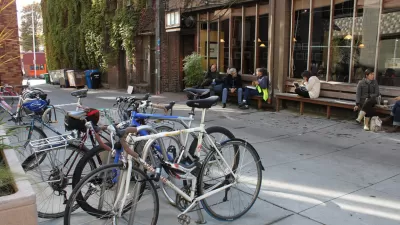
Michael Scott writes of the growing prominence of projects that transform “gritty alleyways into attractive, functional spaces.” Scott especially notes that “the hope is to attract pedestrian activity and turn what are otherwise seen as dark and dangerous passages into catalysts for civic and economic vibrancy.”
For some of the more prominent, big city examples of successful alley projects, Smith mentions Seattle’s Nord Alley, San Jose’s Paseo de San Antonio, and San Francisco’s Belden Place. Smaller cities like Ferndale, Michigan, also receive praise for their adaptive reuse of downtown alleys.
In keeping with the breadth of the survey, Smith also mentions some of the problems that arise from reprised alleys: “One big roadblock often is the logistics of converting what has been a vehicular arterial into a path amenable to foot traffic. As is the norm in dense environments, local drivers use alleys as cut-throughs to avoid traffic. In commercial districts, alleys are an access point for trash haulers or trucks making deliveries to merchants whose stores back up to the alley.”
Read the full story: Blind Alleys of Urban Branding by Michael Scott

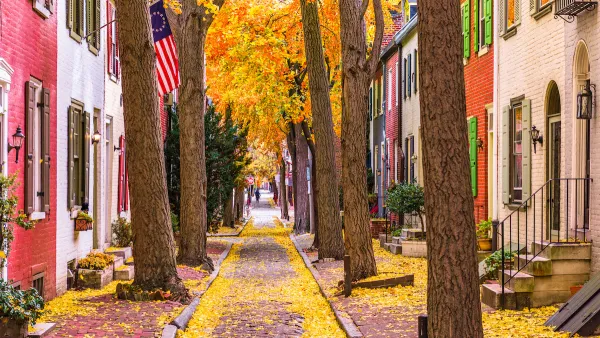
Video: A ‘European-Style’ Street in Philadelphia
With its narrow lanes and mature trees, Philadelphia’s Quince Street illustrates what’s possible.
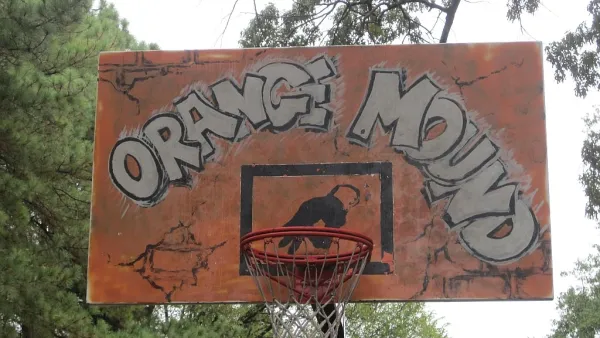
Memphis Targets Adaptive Reuse of Historic School for Neighborhood Benefits
A plan to rehabilitate the vacant former location of Melrose High School in Memphis' Orange Mound neighborhood "recalls many other recent initiatives aimed at elevating and investing in Black urban history."
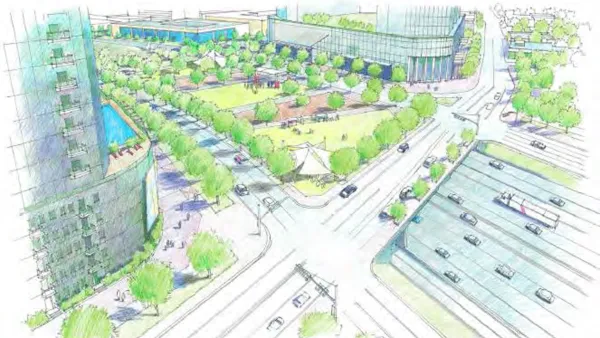
TxDOT Promises to Reverse Some of the Damage Caused by Urban Freeways in Dallas
The Texas Department of Transportation (TxDOT) is in the early stages of planning for two projects that could leverage plans to rebuild two freeways in the city with plan to reconnect the neighborhoods they severed.

Planetizen Federal Action Tracker
A weekly monitor of how Trump’s orders and actions are impacting planners and planning in America.

Colorado’s Largest Data Center Could Rise Next to Homes — Without a Public Hearing
The proposed campus would consume 11 times the power of Denver International Airport; as it has across the country, opposition mounts.

US to reduce Colorado River water deliveries to Mexico
A new Colorado Treaty amendment reduces Mexico’s Colorado River water allocation by 250,000 acre feet.

Judges permit Denver to divert 77,000 acre feet from the Colorado River for reservoir expansion
Overuse and climate change have caused the Colorado River’s water levels to plummet.
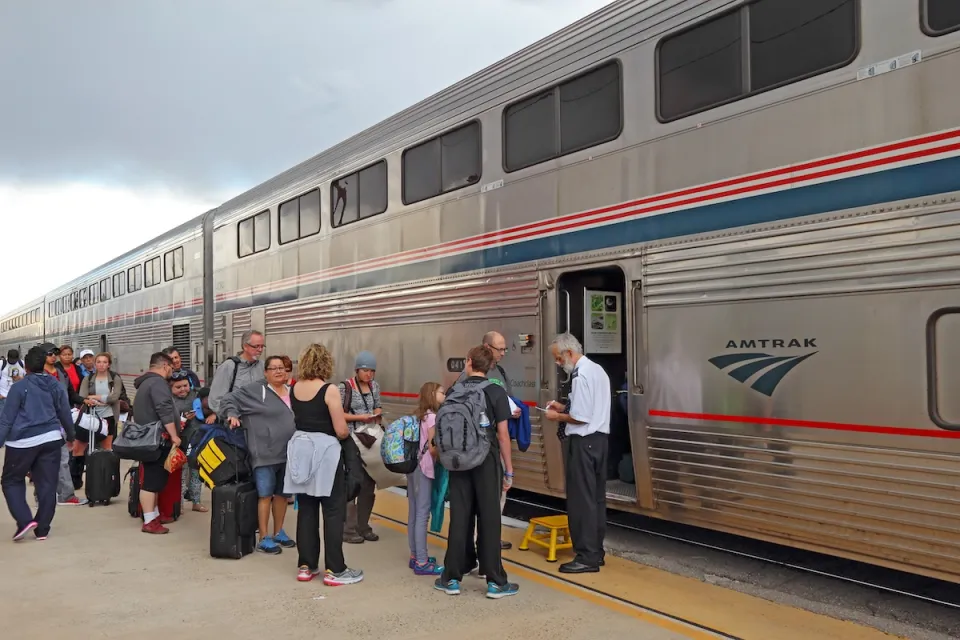
Amtrak, CN end decades-long dispute with eight-year agreement
The new operating agreement establishes an updated framework for the companies to work together, including processes to resolve disputes.
Raised interest rates may kill financially vulnerable construction projects
The chief economist at ConstructConnect warns that if construction project owners are negatively impacted by the raised rates, it could result in delayed payments to contractors.

FREE Course: Walkable City 1: Why Walkability?
After describing his path towards focusing on walkability as the essence of good planning, Jeff Speck marches through his five principal reasons for making more walkable places.
Reinventing Malls: Planning Alchemy—Turning Gray Fields Into Gold
The course focuses on the opportunities and imperatives that shape reinvention of mall sites.

KFH Group Inc.
Greater Baltimore Committee
Eagle County Government
The Architects Foundation
University of Cincinnati Online
The Pocatello Development Authority
The Urban Renewal Agency of the City of Pocatello