With driving and oil consumption declining across many developed countries due to long-term structural shifts, Nick Butler sees reason to believe the world will soon reach peak oil demand.


Economists and energy industry observers have long warned of the consequences of peak oil production based on limited supply. But according to Butler, declining demand based on structural changes in the U.S., Europe, and Japan - and the unlikelihood that China and India will fill the gap - will result in the world hitting peak oil consumption this decade.
"When I wrote a few months ago that I thought global oil consumption would peak before 2020 at a level below 100 mbd several readers suggested, with different degrees of politeness that I was off my head. Maybe, but I will stick to my prediction."
"As the detailed evidence is beginning to show the period of inexorable oil demand growth is coming to an end."
Read the full story: Peak oil? The trend to watch is peak car

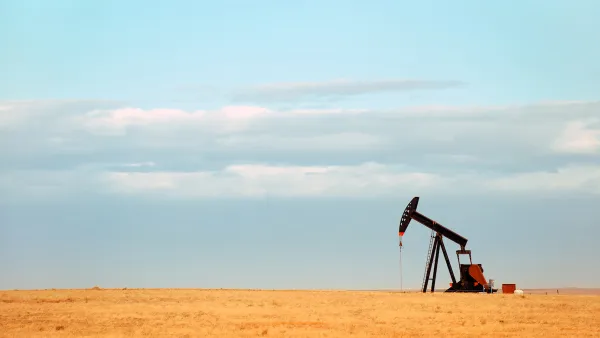
Do Environmentalists Confuse Oil Production With Oil Demand?
Samantha Gross, the director of the Energy Security and Climate Initiative at the Brookings Institution, argues that the key to reducing emissions is to do the hard work of reducing oil demand rather than focusing on ending U.S. oil drilling.

OPEC Plus Decision to Reduce Oil Output Could Lead to Global Recession
A decision earlier this month by a group of the world's largest oil exporters to drastically reduce oil production to stem the decline in oil prices could be a ‘tipping point’ for a global recession, says the International Energy Agency.

Just What the Planet Needs: More Oil Production
A surge of oil from four countries—Norway, Guyana, Canada and Brazil—will more than compensate for slowing growth of U.S. oil production. The new sources might cause oil prices to dip to $50 a barrel and slow the transition to electric vehicles.

Planetizen Federal Action Tracker
A weekly monitor of how Trump’s orders and actions are impacting planners and planning in America.

California plans to bury El Niño’s downpour
If the state plays its cards right, it may be able to store a billion acre-feet of El Niño’s water in aquifers.

Chicago breaks ground on $3 billion megadevelopment
The new neighborhood, titled Foundry Park, will one day host 3,700 residences.

One of Denver’s busiest corridors to gain BRT
The project will span 18 miles and contain 74 bus rapid transit stations.

275,000 bus trips are at stake on Seattle's ballot
If passed, the Seattle Transit Measure would trigger a 0.3% sales tax and raise an average of $138 million per year to maintain and expand Seattle’s bus services.

Texas may pay Israeli company billions to ease water woes
Texas awarded IDE Technologies the contract for its Harbor Island project, which is slated to become the Western Hemisphere's largest desalination plant.

FREE Course: Walkable City 1: Why Walkability?
After describing his path towards focusing on walkability as the essence of good planning, Jeff Speck marches through his five principal reasons for making more walkable places.
Reinventing Malls: Planning Alchemy—Turning Gray Fields Into Gold
The course focuses on the opportunities and imperatives that shape reinvention of mall sites.

City of Rosemead
Rutgers University, Edward J. Bloustein School of Planning and Public Policy
One Hundred Miles
Hunter College, City University of New York (CUNY)
The Architects Foundation
University of Cincinnati Online
City of Cambridge
Montrose County
The Pocatello Development Authority