Rowan Moore looks at the multiple layers that are conspiring to make a maturing Miami the "new Most Exciting City in America". Diverse cultural offerings and branded architecture are attracting international investors.


Managing to outgrow its reputation for "riots, urban blight, drug dealing," and a busted housing market, Miami is taking on a new role: leading global destination.
"The city has become a drop-off point for the migrant tribe of global super-rich, who feel the need to keep homes in London, New York, perhaps Moscow or an Asian city, and now Miami," observes Moore. "Hence a sprouting of towers and blocks designed by celebrity architects such as Norman Foster, Richard Meier, John Pawson, Herzog and de Meuron, and the Mexican Enrique Norten as well as Zaha Hadid."
"From here, Miami can go in two directions. It can do what almost every other aspirational city has done in the past 15 years, which is to behave like a teenager let loose with a platinum credit card in a luxury store," he concludes. "Or it can invent new ways to renew itself, as yet unknown, based on its inimitable fusion of South and North America, each of which has powerful and distinct ideas about how to make cities."
Read the full story: Miami's new vice – an addiction to star architects

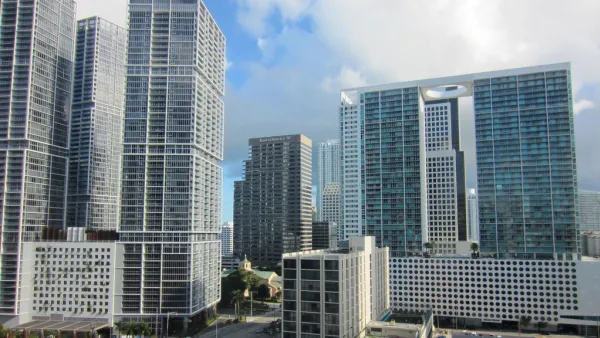
Miami's High-Rise Orthodoxy Hides a Better Way
Alastair Gordon lambasts Miami's high-end architectural extremes. A horizontal, nature-inspired urbanism might better address contradictions between breezy luxury and inland poverty.
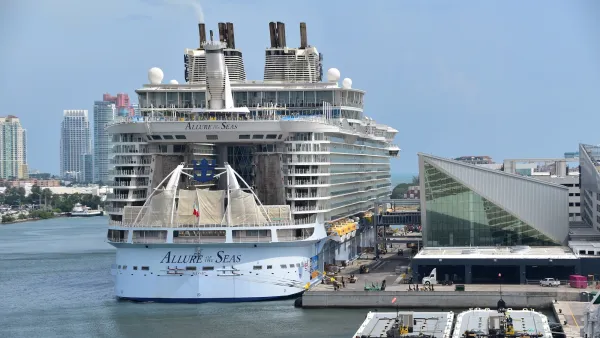
Miami Considers Airport-to-Port Train to Ease Cruise Ship Traffic
Miami’s port is one of the world’s busiest cruise ship terminals.
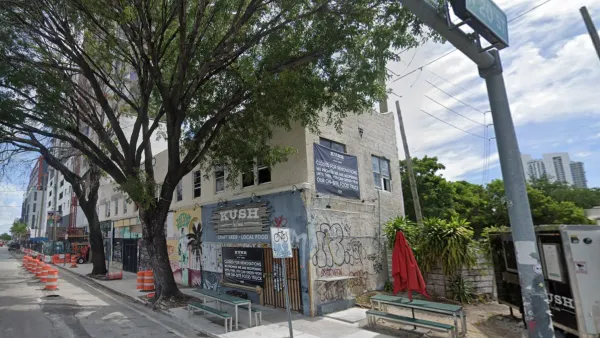
Miami Restaurant Rebuild Includes 10 Units of Affordable Workforce Housing
The restaurant’s owner worked with a local community redevelopment agency to preserve a historic building.

Planetizen Federal Action Tracker
A weekly monitor of how Trump’s orders and actions are impacting planners and planning in America.

‘Going backwards:’ Baltimore mayor, students rally against state's transit funding plan
Maryland's proposed six-year plan provides no funding for Baltimore’s BMORE bus program and reduces its road maintenance funding.

Detroit to transform waterfront with $2.2 billion investment
Developers will convert about 18 acres of unused parking lot space into civic spaces.

U.S.-Iran war may have ‘devastating’ impact on cost to warm homes
Vermont and Maine residents may see a 76% increase in the cost of warming their homes this winter.

Senate bill would ‘overhaul’ environmental permitting laws
Under the proposed act, government agencies would also not be able to suspend or rescind permits after granting them.

Exemption applications for NYC’s pied-à-terre tax see 55% success rate
The city sent nearly 40% of its initial pied-à-terre tax warnings erroneously.

FREE Course: Walkable City 1: Why Walkability?
After describing his path towards focusing on walkability as the essence of good planning, Jeff Speck marches through his five principal reasons for making more walkable places.
Reinventing Malls: Planning Alchemy—Turning Gray Fields Into Gold
The course focuses on the opportunities and imperatives that shape reinvention of mall sites.

One Hundred Miles
County of Mendocino
planning NEXT
The Architects Foundation
University of Cincinnati Online
Montrose County
Northern Illinois Transit Authority (NITA)
The Pocatello Development Authority