What's the best way to get people to bike? "[M]ake clear the costs of not biking, in minutes saved or dollars not spent," writes Emily Badger. A new tool developed by Zach Rausnitz uses Google Maps data to compare travel times of alternative modes.


A new tool for bike-share users in Washington, D.C. developed by Fierce Government editor Zach Rausnitz takes the comparative approach of Google Maps' direction service to point out how using a bicycle can save both time and money compared to other modes of transportation.
"Rausnitz has used historic data from actual Capital Bikeshare member trips to calculate the average time a ride takes between any two stations in the system (he threw out the crazy outliers in his calculations)," explains Emily Badger.
"This comparison is so powerful – and this is the kind of data any bike-share system needs – for one big reason. It's not enough to make it possible for people to bike. What advocates really need to do is make clear the costs of not biking, in minutes saved or dollars not spent."
Read the full story: The Simplest Way to Get People Biking

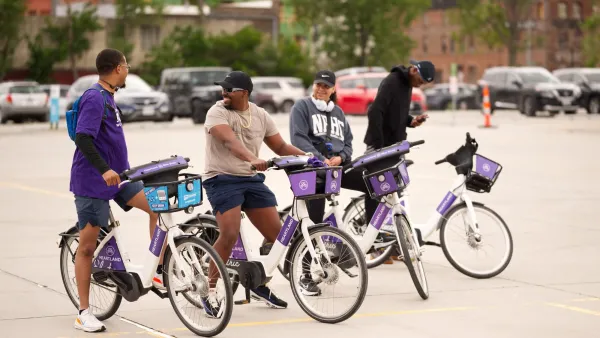
Omaha's 400 shared e-bikes are now free to all residents
Before eliminating fares for locals, the Heartland system only recovered 10%-15% of its operating costs through fare revenue.
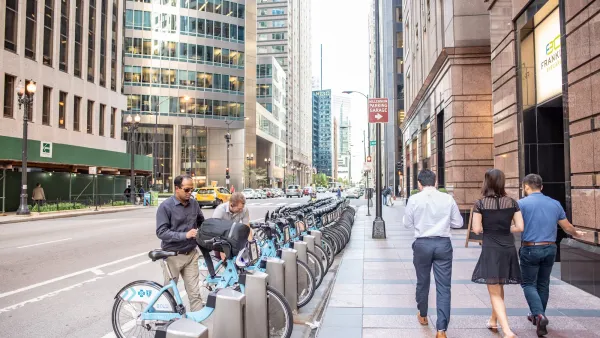
Chicago to Add or Upgrade 200 Bike Share Stations
The Divvy bike share system saw its highest ridership ever in 2025 with 6.8 million trips.
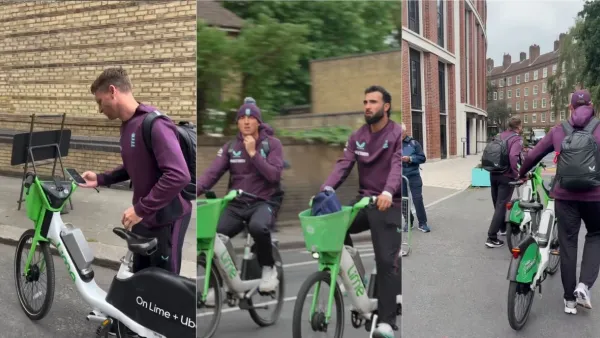
Bikeshare for the Win: Team Pedals to London Cricket Match, Beats Rivals Stuck in Traffic
While their opponents sat in gridlock, England's national cricket team hopped Lime bikes, riding to a 3-0 victory.

Planetizen Federal Action Tracker
A weekly monitor of how Trump’s orders and actions are impacting planners and planning in America.

California plans to bury El Niño’s downpour
If the state plays its cards right, it may be able to store a billion acre-feet of El Niño’s water in aquifers.

Desperate measures: Advocates weigh draining Lake Powell to fill Colorado River
Draining the reservoir could reduce evaporation losses by a couple hundred thousand acre-feet.

In Texas, data centers are swallowing promised parkland
Residents who moved to Taylor, Texas for a rural community now have to contend with three data centers in their backyard.

How a Chicago-sized wind farm beat the odds and powered on
The project spanned five presidential administrations and a standoff with a U.S. military base.

MTA gives itself 30 days to transform pit into basketball court
The site has been under construction since 2022; the city originally estimated it would finish the court in 2024.

FREE Course: Walkable City 1: Why Walkability?
After describing his path towards focusing on walkability as the essence of good planning, Jeff Speck marches through his five principal reasons for making more walkable places.
Reinventing Malls: Planning Alchemy—Turning Gray Fields Into Gold
The course focuses on the opportunities and imperatives that shape reinvention of mall sites.

City of Rosemead
Rutgers University, Edward J. Bloustein School of Planning and Public Policy
One Hundred Miles
Hunter College, City University of New York (CUNY)
The Architects Foundation
University of Cincinnati Online
City of Cambridge
Montrose County
The Pocatello Development Authority