In a recent column in The Times, Thomas Friedman exalted America's metropolitan revolution. But in cities like Chicago, the 'most exciting innovations in governance' have failed to improve the quality of life for hundreds of thousands of residents.


In a recent column in The New York Times, "Friedman may indeed have been standing on his head when his optimism spilled out of him," writes Steve Bogira. "He'd just read an 'important new book'—The Metropolitan Revolution, by a pair of Brookings Institution scholars, Bruce Katz and Jennifer Bradley. In it, they wax rhapsodic about cities and metro areas."
"A revolution is stirring in America," Katz and Bradley declare. "Empowered by their economic strength and driven by demographic dynamism, cities and metros are positioning themselves at the cutting edge of reform, investment, and innovation."
"They must have started this revolution without us," bemoans Bogira. "Chicago, like many big cities, is suffering. I'm not even talking about the city's major budget problems. I'm talking about the quality of life for hundreds of thousands of Chicagoans."
"Until it becomes reality, celebrating the shiny new metropolis is, to put it mildly, premature," he demurs. "And it's smug to talk about remade communities—'quality, affordable, and sustainable'—when misery and inequality are still rampant in so many urban areas."
Read the full story: Should we be giddy about our cities when so many are suffering in them?
West Side Chicago Votes to Tax Itself to Fund Mental Health Services
After the city's government cut funding to mental health services, closing many of the city's clinics, residents of Chicago's West Side voted overwhelmingly to tax their properties to reverse that trend.
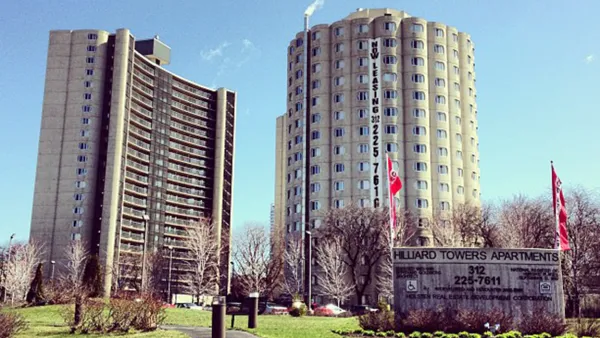
Chicago's Hilliard Homes Succeed Despite Trend Away From High-Rise Projects
The Hilliard Homes avoided the wrecking ball for 50 years, even while other high-rise projects were knocked down. A Chicago Reader pierce suggests the design and management of these buildings could make them a model for future High-rise projects.

Fresno's Troubled Housing History
The crisis facing many Fresno renters is nothing new. A history of housing in the city shows how, since the late 19th century, poor housing conditions have been "ingrained in Fresno's culture."

Desperate measures: Advocates weigh draining Lake Powell to fill Colorado River
Draining the reservoir could reduce evaporation losses by a couple hundred thousand acre-feet.

Eastern Nebraska is running out of electricity
Data centers and electrification are straining eastern Nebraska’s grid, throttling economic development.

Malls are becoming the midtowns of the future
Mall and office park redevelopments are a generational opportunity to create new nodes of urbanity.

NYC breaks ground on anti-flooding infrastructure project
New York City's new system will reduce stormwater flows to local sewers by 90%.

One Kentucky town’s secret to affordable housing
The Smoketown Community Land Trust has already built seven affordable homes for community members.

Houston gains petal-shaped cooling infrastructure to make streets more ‘delightful’
The city has installed the pavilions along 15 blocks in Houston.

FREE Course: Walkable City 1: Why Walkability?
After describing his path towards focusing on walkability as the essence of good planning, Jeff Speck marches through his five principal reasons for making more walkable places.
Reinventing Malls: Planning Alchemy—Turning Gray Fields Into Gold
The course focuses on the opportunities and imperatives that shape reinvention of mall sites.

City of Rosemead
Rutgers University, Edward J. Bloustein School of Planning and Public Policy
One Hundred Miles
University of Michigan School for Environment and Sustainability (SEAS)
Hunter College, City University of New York (CUNY)
The Architects Foundation
City of Cambridge
Montrose County
The Pocatello Development Authority