At the same time that vehicular fatalities have ridden a decade-long decline in the U.S., a troubling trend has seen pedestrian fatalities increase. A $2 million U.S. DOT grant program will target 22 cities with acute pedestrian safety problems.


The percentage of total traffic fatalities involving pedestrians has been on the rise in the U.S., increasing from 11 to 14 percent between 2001-2011. "According to the latest National Highway Traffic Safety Administration statistics [PDF], this suggests a pedestrian is killed in America in a traffic crash every two hours, and injured every eight minutes," notes Emily Badger.
"Citing this data, new Secretary of Transportation Anthony Foxx unveiled a federal initiative today with a little grant money behind it to try to roll back the rise in pedestrian fatalities (perhaps pedestrian safety will be to Anthony Foxx what distracted driving was to Ray LaHood?). The messaging campaign is built around a line that alternative transportation advocates will find familiar: Whether you drive a car, ride the train, or bike to work, at some point everyone is a pedestrian."
"As for the money part: The DOT is offering $2 million in new grant money for 22 cities with pedestrian-fatality records worse than the national average to try out new education and enforcement initiatives," she adds. "That's not a lot of money to divide many ways. But new federal initiatives with dollars attached are certainly better than PSA campaigns alone."
Read the full story: A Pedestrian Is Killed in a Traffic Crash in the U.S. Every 2 Hours
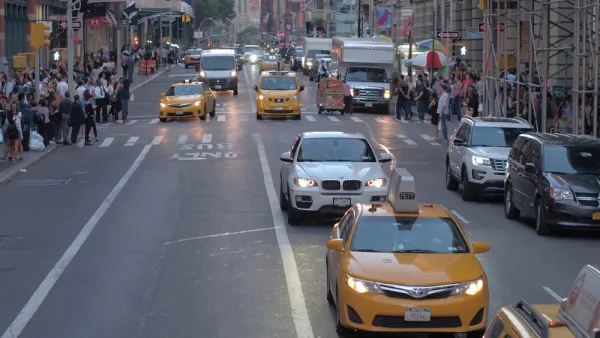
Despite Reports, Federal Safety Officials Didn't Act on Danger of SUVs to Pedestrians
A 2015 NHTSA report showed that pedestrians were multiple times more likely to die if struck by SUVs, but that information was neither shared nor acted upon.

Big Cities Make Pedestrian Safety a Priority
New data released Dec. 19 by NHTSA shows increased safety for those traveling by car, but pedestrian fatalities are 15% higher than in 2009. Plans by San Francisco, Los Angeles, New York, and Chicago to increase ped safety are described by the WSJ.
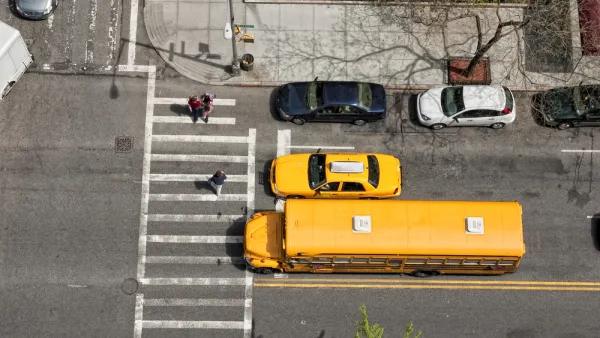
NHTSA Could Expand Safety Requirements to Include Pedestrians
In a radical shift from prior policy that singled out passenger safety, new cars could be required to include more features that protect people outside the vehicle.

Desperate measures: Advocates weigh draining Lake Powell to fill Colorado River
Draining the reservoir could reduce evaporation losses by a couple hundred thousand acre-feet.

Eastern Nebraska is running out of electricity
Data centers and electrification are straining eastern Nebraska’s grid, throttling economic development.

Move over, LA: St. Louis gears up for Olympics, invests millions in downtown redevelopment
The Missouri city will host the 2028 Olympic soccer group stage and knockout matches.

Officials claim feds 'rushed' Amtrak environmental review
Amtrak plans to move their Chicago maintenance facility from an industrial area to a residential one.

NYC breaks ground on anti-flooding infrastructure project
New York City's new system will reduce stormwater flows to local sewers by 90%.

One Kentucky town’s secret to affordable housing
The Smoketown Community Land Trust has already built seven affordable homes for community members.

FREE Course: Walkable City 1: Why Walkability?
After describing his path towards focusing on walkability as the essence of good planning, Jeff Speck marches through his five principal reasons for making more walkable places.
Reinventing Malls: Planning Alchemy—Turning Gray Fields Into Gold
The course focuses on the opportunities and imperatives that shape reinvention of mall sites.

City of Rosemead
Rutgers University, Edward J. Bloustein School of Planning and Public Policy
One Hundred Miles
University of Michigan School for Environment and Sustainability (SEAS)
Hunter College, City University of New York (CUNY)
The Architects Foundation
City of Cambridge
Montrose County
The Pocatello Development Authority