Could the Hamptons have a new rival for New Yorkers seeking a little fun in the sun? With $7 million allocated, plans to transform Lower Manhattan's desolate, trash-strewn waterfront into a 'premier staycation destination' are moving forward.


Brooklyn Bridge Beach, a key piece of Manhattan Borough President Scott Stringer's “Blueway Plan” to create a continuous greenway along the East River Waterfront, is on its way to becoming a reality. “The area — 11,000 square feet at low tide — will feature sand, terraced seating, a kayak launch, a spot for fishing, tree-lined walkways and concession stands,” Erin Durkin reports, “all just minutes from Wall Street in the shadow of the Brooklyn Bridge.”
The proposed beach site not only provides much-needed public access to the waterfront, but also storm mitigation measures through the creation of offshore salt marshes. “We’re bringing New Yorkers closer to the water, and we’re also protecting our city against future storms,” said Stringer.
“While the city will transform the land, there is not much that can be done with the polluted East River, and so the beach will lack one crucial ingredient — the ability to jump in and swim,” says Durkin. Officials hope to address this in the project's coming phases, which will require additional funding.
Brooklyn Bridge Beach is expected to be complete in three years.
Read the full story: Brooklyn Bridge Beach plan brings sand and surf to lower Manhattan

Manhattan Plans to Expand its Waterfront Renaissance
Not to be outdone by its neighboring boroughs across the East River, Manhattan is hoping to embark on an upgrade to its eastern waterfront. Tyler Silvestro has the details.
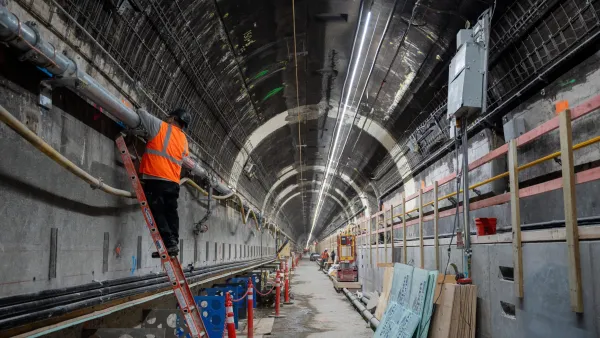
Amtrak reopens New York’s East River Tunnel
The reopening marks the halfway point of rehabilitation efforts at Penn Station in the wake of Superstorm Sandy.
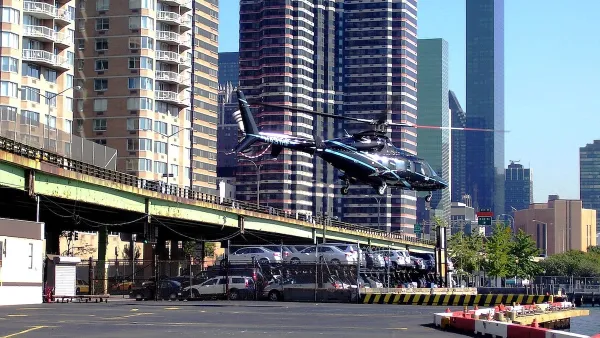
Manhattan Waterfront Parking Lot to Become Public Park
A lot that has served as parking for decades will add a much-needed public amenity to the East River waterfront.

Planetizen Federal Action Tracker
A weekly monitor of how Trump’s orders and actions are impacting planners and planning in America.

Amtrak, CN end decades-long dispute with eight-year agreement
The new operating agreement establishes an updated framework for the companies to work together, including processes to resolve disputes.

Judges permit Denver to divert 77,000 acre feet from the Colorado River for reservoir expansion
Overuse and climate change have caused the Colorado River’s water levels to plummet.

NYC DOT wants faster, more permanent street upgrades
The city is examining ways to build more concrete infrastructure without getting entangled in 'decades-long' projects.

'Something we’ve never seen before:' rising utility rates could strain city finances nationwide
Data centers, climate change and other factors have caused utility rates in the United States to increase by 38% since 2020.

Trump to overrule local leaders, lease millions of acres of America’s Pacific Island territories’ seafloors to mining companies
International law says that the Indigenous people of America’s territories have a right to prior and informed consent regarding projects that impact their countries.

FREE Course: Walkable City 1: Why Walkability?
After describing his path towards focusing on walkability as the essence of good planning, Jeff Speck marches through his five principal reasons for making more walkable places.
Reinventing Malls: Planning Alchemy—Turning Gray Fields Into Gold
The course focuses on the opportunities and imperatives that shape reinvention of mall sites.

Harvard University Graduate School of Design
KFH Group Inc.
Greater Baltimore Committee
The Architects Foundation
University of Cincinnati Online
The Pocatello Development Authority
The Urban Renewal Agency of the City of Pocatello