With the installation of new parklets along Church Street in Toronto's Gay Village, the city is embracing a rethink of how its public spaces are used. While the elimination of parking spots may be heresy to many, Christopher Hume welcomes the change.


"Street by street, lane by lane, curb by curb, the war to take back the city is now being waged," says Hume. "The odds are against those who would depose the mighty automobile, but time is on their side. Whether they’re on foot, a bike or sitting around eating and drinking, people now expect to be able to share the roads."
"The program is radical, perhaps revolutionary," he continues. "It suggests that taking away precious parking spots for other, non-vehicular, purposes is an appropriate use of public space."
"The Church St. parklets might not change Toronto; but they will alter our experience of it. They will provide space to spread out and survey the scene. They will allow pedestrians to move off the narrow concrete strips that line our roads, sidewalks, where they have been consigned since time immemorial."
Read the full story: Envisioning Urban Futures Through An Old-Fashioned Viewfinder

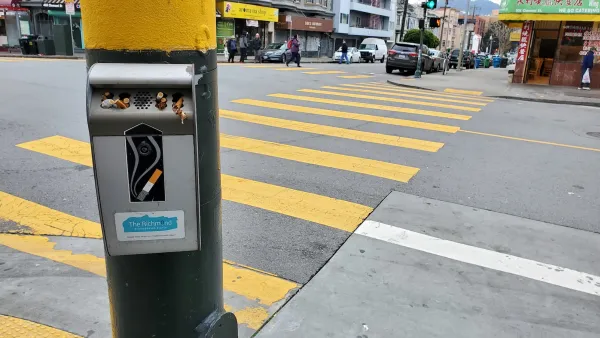
San Francisco weighs patio smoking ban
Business owners say the ban could force patrons onto sidewalks and disrupt long-standing bar culture, while proponents of the ordinance say second-hand smoke is a threat to patrons and workers.
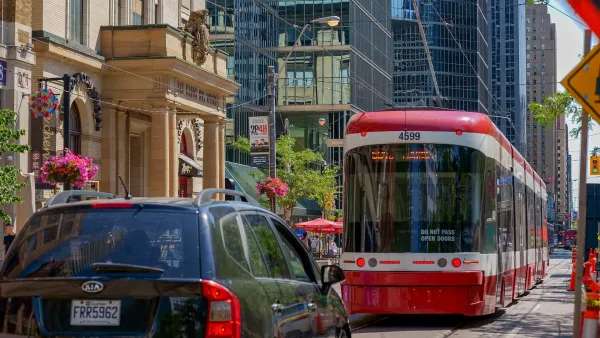
Toronto Man Beats Streetcar on Foot to Highlight Traffic Delays
Runner Mac Bauer says he hopes his project spurs the city to improve transit speed and reliability.

‘Grätzloasen’: The Urban Oases Vienna Pays its Citizens to Build
The Austrian capital offers grants of up to 5,000 Euros to residents who want to build their own parklets in curbside parking spaces.

Planetizen Federal Action Tracker
A weekly monitor of how Trump’s orders and actions are impacting planners and planning in America.

Amtrak, CN end decades-long dispute with eight-year agreement
The new operating agreement establishes an updated framework for the companies to work together, including processes to resolve disputes.

Northwest rail fans eager for Sept. 30 debut of Amtrak’s Airo fleet
Get ready for that new train smell and more seats. But they won’t go faster or run more frequently on the Cascades route in Washington and Oregon.

St. Louis Metro to test if single-car trains can reduce operating costs, maintain rider satisfaction
The pilot program will run from October to spring 2027, and begin with one single-car train operating on Metrolink’s Red and Blue lines.

Pennsylvania is building data centers in abandoned mines
Housing data centers in mines provides an alternative to destroying local forests and may spare residents from data centers’ noise and air pollution.

If Corpus Christi can’t revive desalination plant project, it may owe Texas $235 million
Earlier this month, city officials declined to pursue developing the plant for the second time in a year.

FREE Course: Walkable City 1: Why Walkability?
After describing his path towards focusing on walkability as the essence of good planning, Jeff Speck marches through his five principal reasons for making more walkable places.
Reinventing Malls: Planning Alchemy—Turning Gray Fields Into Gold
The course focuses on the opportunities and imperatives that shape reinvention of mall sites.

City of Thousand Oaks
City of Wisconsin Rapids
Harvard University Graduate School of Design
The Architects Foundation
University of Cincinnati Online
The Pocatello Development Authority
The Urban Renewal Agency of the City of Pocatello