Online car services like Uber and Lyft have waged highly publicized regulatory and political battles in NYC, D.C., and elsewhere. After the city sent out cease-and-desist letters to companies this week, L.A. has emerged as the newest battleground.


"Anyone keeping up with the battles between online car services and local taxi companies is familiar with this dynamic: Municipal regulators and cab services will use any legal outlet they can to bar new companies leveraging mobile networks from entering the marketplace," writes Tim Fernholz.
"The latest example is in Los Angeles, a city designed around automotive travel, which has been sparring with auto entrepreneurs practically since the technology was invented. LA’s transit agency sent cease and desist letters to Uber, the online car service, as well as Lyft and Sidecar, two community companies that connect car owners with people looking for a ride."
"One complaint from cabbies is that the new entrants are unsafe, since they don’t follow city regulations," explains Fernholz. "But the companies say that, as part of their agreement to be regulated by the state, they perform background checks on drivers, provide insurance and certify car safety."
"If Los Angeles can find an amicable compromise, it might once again take the lead in defining American car culture."
Read the full story: Internet car start-ups look to the new mayor of Los Angeles for a helping hand

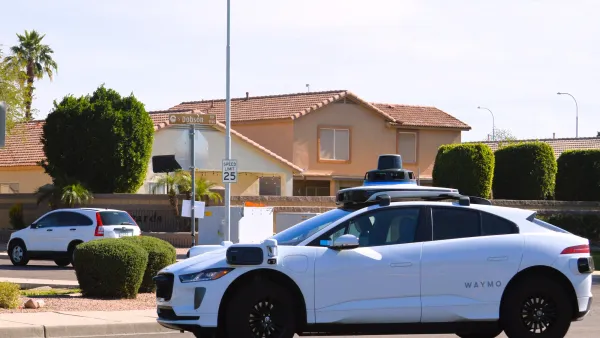
Uber and Waymo part ways in Phoenix
The companies ended a three-year pilot program, with Waymo saying it plans to keep its Phoenix robotaxi fleet available through its own app.
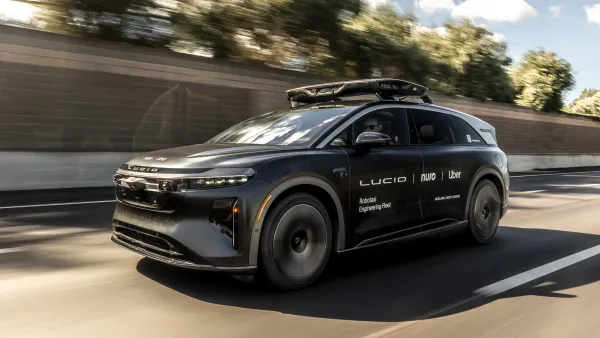
Uber commits $10B to AV fleet — while trashing Waymo
The ride-hailing giant is calling Waymo's model “less scalable” and “less reliable” than Uber’s hybrid approach mixing human drivers and AVs.
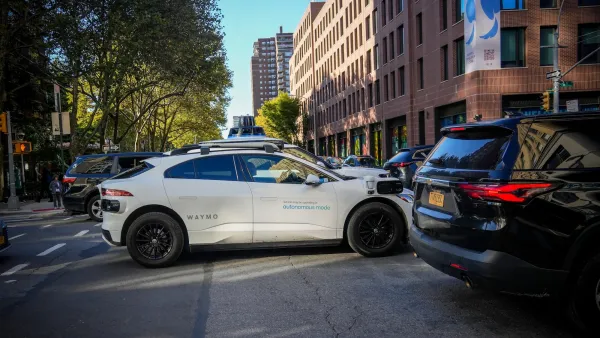
Uber says more Waymos are good for Uber too
The company believes robotaxis are spurring growth in the ride-hailing sector as a whole.

Planetizen Federal Action Tracker
A weekly monitor of how Trump’s orders and actions are impacting planners and planning in America.

Amtrak, CN end decades-long dispute with eight-year agreement
The new operating agreement establishes an updated framework for the companies to work together, including processes to resolve disputes.

Northwest rail fans eager for Sept. 30 debut of Amtrak’s Airo fleet
Get ready for that new train smell and more seats. But they won’t go faster or run more frequently on the Cascades route in Washington and Oregon.

St. Louis Metro to test if single-car trains can reduce operating costs, maintain rider satisfaction
The pilot program will run from October to spring 2027, and begin with one single-car train operating on Metrolink’s Red and Blue lines.

Pennsylvania is building data centers in abandoned mines
Housing data centers in mines provides an alternative to destroying local forests and may spare residents from data centers’ noise and air pollution.

If Corpus Christi can’t revive desalination plant project, it may owe Texas $235 million
Earlier this month, city officials declined to pursue developing the plant for the second time in a year.

FREE Course: Walkable City 1: Why Walkability?
After describing his path towards focusing on walkability as the essence of good planning, Jeff Speck marches through his five principal reasons for making more walkable places.
Reinventing Malls: Planning Alchemy—Turning Gray Fields Into Gold
The course focuses on the opportunities and imperatives that shape reinvention of mall sites.

City of Thousand Oaks
City of Wisconsin Rapids
Harvard University Graduate School of Design
The Architects Foundation
University of Cincinnati Online
The Pocatello Development Authority
The Urban Renewal Agency of the City of Pocatello