Last week, Mayor Bloomberg proposed sweeping changes to New York City's building code to better prepare the city's built environment for the increasing threats of rising seas and extreme storms that Hurricane Sandy made clear.


"Mayor Michael R. Bloomberg on Thursday proposed major changes to New York City’s building code, saying Hurricane Sandy showed that both commercial and residential properties needed additional safeguards against severe weather," reports Mireya Navarro. "Mr. Bloomberg unveiled the work of a task force whose recommendations, once put in place, would make the city a leader in the national effort to overhaul codes so that buildings would be more resilient to natural disasters."
"For now, at least, the city will not require extensive improvements to existing commercial and residential properties," adds Navarro. "Officials emphasized that the new rules would largely affect new construction and sizable renovations on existing buildings."
"Vicki Arroyo, executive director of the Georgetown Climate Center in Washington, a group that assists cities in adapting to climate change, said that taken as a whole, the proposals were the most significant in the nation."
Read the full story: Bloomberg Seeks to Redo Building Code in Sandy’s Wake
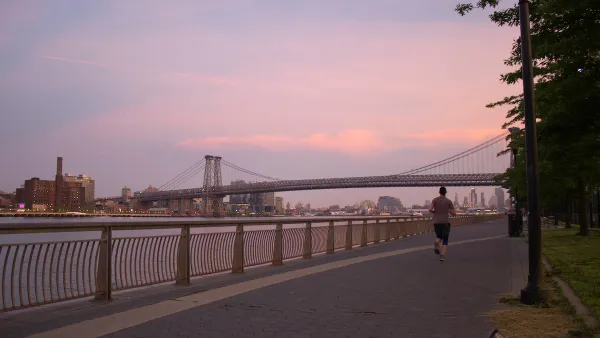
East River Floodgates Rising in NYC
A tour of new infrastructure designed to protect the city’s East Side from catastrophic flooding.

In Battery Park City, Public Infrastructure Meets Climate Resilience
A massive project underway in Lower Manhattan seeks to protect the shoreline from future flooding and mitigate the effects of climate change and rising sea levels.

Net Zero Development Coming to New York City
The project, which relies largely on geothermal energy to minimize its carbon footprint, will bring affordable housing and boost storm resilience to an area devastated by Hurricane Sandy.

Planetizen Federal Action Tracker
A weekly monitor of how Trump’s orders and actions are impacting planners and planning in America.

Eastern Nebraska is running out of electricity
Data centers and electrification are straining eastern Nebraska’s grid, throttling economic development.

Study reveals best places in the U.S. for cycling, walking
New research from Streetlight Data examines bicycle and pedestrian miles per capita in the 100 largest U.S. cities by population.

Federal government nominates new FTA administrator
Mark Aesch is currently the founder and CEO of a transportation management consulting firm.

Developers reveal $10 billion stadium plan as ‘Hail Mary’ to keep Bears in Chicago
The plan would also boast a public park, high- and mid-rise buildings and a youth sports complex.

As Texas embraces carbon storage, a Black community questions the risks
Texas now issues permits for companies to store carbon dioxide underground. East Texas residents fear safety risks, and skeptics doubt the climate benefits.

FREE Course: Walkable City 1: Why Walkability?
After describing his path towards focusing on walkability as the essence of good planning, Jeff Speck marches through his five principal reasons for making more walkable places.
Reinventing Malls: Planning Alchemy—Turning Gray Fields Into Gold
The course focuses on the opportunities and imperatives that shape reinvention of mall sites.

City of Charlotte
City of Rosemead
Rutgers University, Edward J. Bloustein School of Planning and Public Policy
University of Michigan School for Environment and Sustainability (SEAS)
Hunter College, City University of New York (CUNY)
The Architects Foundation
City of Cambridge
The Pocatello Development Authority
The Urban Renewal Agency of the City of Pocatello