The nationwide rebound in housing prices has been treated as welcome news. But should we be celebrating the growing presence of large investment firms in our communities, often at the expense of the ordinary buyer?


"The last time the housing market was this hot in Phoenix and Las Vegas, the buyers pushing up prices were mostly small time. Nowadays, they are big time — Wall Street big," reports Nathaniel Popper. "Large investment firms have spent billions of dollars over the last year buying homes in some of the nation’s most depressed markets. The influx has been so great, and the resulting price gains so big, that ordinary buyers are feeling squeezed out. Some are already wondering if prices will slump anew if the big money stops flowing."
"Some see the emergence of Wall Street buyers as a market-driven answer to the nation’s housing ills. Investment companies are buying up rundown homes at a time when ordinary people can’t or won’t."
"Yet some investment companies are already pulling back in the markets that have had the fastest growth," he cautions. "In Phoenix, the percentage of all house purchases involving investors fell to about 25 percent in March from a high of 36 percent last summer, according to the Campbell HousingPulse Survey. The same survey shows that investors have been increasing their presence in new areas like Florida and California."
Read the full story: Behind the Rise in House Prices, Wall Street Buyers
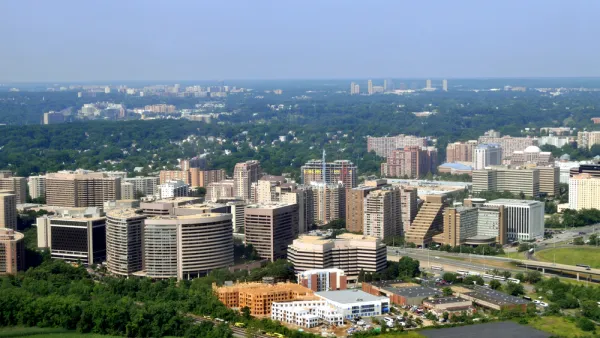
As Amazon's Arrival Approaches, Northern Virginia Housing Market Heats Up
Houses are in high demand and prices have soared since Amazon announced a new headquarters would be located in Arlington County, Virginia. The buyers, however, are not new Amazon workers.
The ‘Lock-In Effect’ Keeping Home Prices High
Housing prices dropped slightly last year, but first-time and middle-income buyers found little price relief due to the “lock-in effect” of the historically low interest rates in effect for more than a decade prior to 2022.
Rent Control Approved for Montgomery County
The Montgomery County Council has approved a new law that sets limits on how much landlords can raise rents from year to year.

Planetizen Federal Action Tracker
A weekly monitor of how Trump’s orders and actions are impacting planners and planning in America.

California plans to bury El Niño’s downpour
If the state plays its cards right, it may be able to store a billion acre-feet of El Niño’s water in aquifers.

Desperate measures: Advocates weigh draining Lake Powell to fill Colorado River
Draining the reservoir could reduce evaporation losses by a couple hundred thousand acre-feet.

Chicago voters approve permanent festival grounds, penalty for vacant property owners
Currently, major summer and fall festivals take over public parks for weeks at a time, drawing criticism from nearby residents

NYC votes to cut outdoor dining red tape, speed up permitting
New York City also voted to allow the Department of Transportation to begin work on urgent projects before notifying elected officials.

California appears to reject Prop. 45
The proposition would have expanded the projects that qualify for a streamlined environmental review, effectively paring down the California Environmental Quality Act.

FREE Course: Walkable City 1: Why Walkability?
After describing his path towards focusing on walkability as the essence of good planning, Jeff Speck marches through his five principal reasons for making more walkable places.
Reinventing Malls: Planning Alchemy—Turning Gray Fields Into Gold
The course focuses on the opportunities and imperatives that shape reinvention of mall sites.

City of Rosemead
Rutgers University, Edward J. Bloustein School of Planning and Public Policy
One Hundred Miles
Hunter College, City University of New York (CUNY)
The Architects Foundation
University of Cincinnati Online
City of Cambridge
Montrose County
The Pocatello Development Authority