Housing prices dropped slightly last year, but first-time and middle-income buyers found little price relief due to the “lock-in effect” of the historically low interest rates in effect for more than a decade prior to 2022.


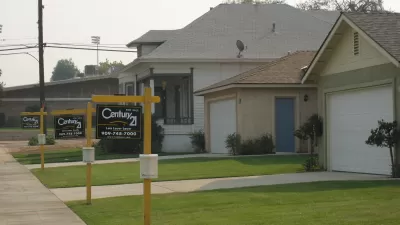
Writing for a paywalled article at Fortune, Lance Lambert describes the conflicting forces driving the housing market in 2023:
On one side, deteriorated affordability resulting from a spike in mortgage rates from 3% to over 6% in 2022, just after national home prices surged by more than 40% during the Pandemic Housing Boom, is exerting downward pressure on home prices. On the other side, the scarcity of existing inventory, exacerbated by the “lock-in effect,” as many homeowners are reluctant to sell and buy anew, fearing the tradeoff from a 2% or 3% mortgage rate to one in the 6% to 7% range, is exerting upward pressure on home prices.
According to data from the Federal Reserve Bank of Atlanta, the housing market was more expensive than any point since the height of the housing bubble in 2006 before rising interest rates produced a housing price correction last fall. The correction hasn’t been deep enough to bring large numbers of buyers into the market, however, due to the ongoing mismatch between supply and demand and a relative lack of affordable housing options on the market.
Also, the increasing interest rates have further reduced the number of homes on the market, the “lock-in effect” describes the hesitation of potential home sellers to double their interest rates.
“To better understand the lock-in effect, consider the fact that 91% of mortgage borrowers have an interest rate below 5%, including 70.7% with an interest rate below 4%. For those homeowners, it simply doesn't make a lot of sense to sell and purchase a property right now at a 6% or 7% mortgage rate,” adds Lambert. The lock-in effect is obviously having an effect, too. “According to Realtor.com, there were 26.2% fewer homes listed for sale In June 2023 than in June 2022, and 28.9% fewer than in June 2019,” reports Lambert.
Zillow and CoreLogic are both predicting that housing prices have already hit bottom and will continue to increase over the next few years. Analysts at those firms argue that the lack of inventory will overpower price decreases. “The scarcity of existing inventory, they say, leaves buyers with no choice but to drive prices higher,” reports Lambert.
FULL STORY: A fight erupts in U.S. housing market as deteriorated affordability clashes with the ‘lock-in effect’

Price Cuts Spread to More of the U.S. Housing Market
The insanity of the housing market during the pandemic seems to have peaked in an increasing number of U.S. cities, according to recent data.
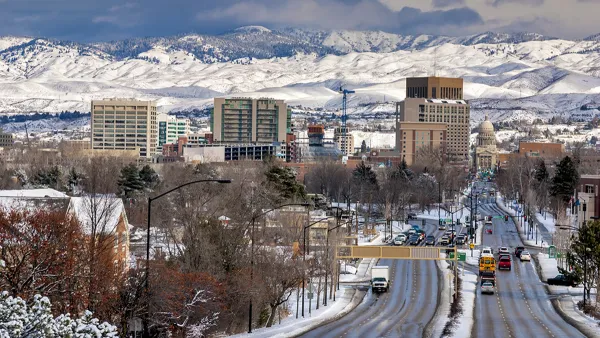
Housing Market Running Past the Labor Market in Idaho
Housing prices are outpacing wage growth in one of the fastest growing states in the country.
The Consequences of 'Runaway' Housing Prices
There's been no shortage of discussion and debate about what's causing the price of homes in the United States to skyrocket at record rates, but less discussion of the consequences for housing market trends on the broader economy.

The state-sanctioned urbicide of Austin
People don’t kill cities. Freeways do.

US to reduce Colorado River water deliveries to Mexico
A new Colorado Treaty amendment reduces Mexico’s Colorado River water allocation by 250,000 acre feet.

New Jersey’s second-largest city bans standalone data centers
Jersey City will continue to allow co-location facilities, such as those meant for research institutions that store their own data.

Amtrak not solely to blame for New Jersey commuter rail's unreliability, report finds
A new study from the Garden State Initiative found that NJ Transit’s budget grew 20% across a 4 year period, but reliability declined significantly over the same period.

EPA erases limits on planet-warming pollution from power plants
Under Monday’s plan, power plants would still have some limits on how much mercury, arsenic and other contaminants they can emit.

Phoenix announces new on-demand transit service, more frequent RAPID buses
Both new services will launch in October, and are part of Phoenix's Project Effective Access Solutions for Easing Congestion.

FREE Course: Walkable City 1: Why Walkability?
After describing his path towards focusing on walkability as the essence of good planning, Jeff Speck marches through his five principal reasons for making more walkable places.
Reinventing Malls: Planning Alchemy—Turning Gray Fields Into Gold
The course focuses on the opportunities and imperatives that shape reinvention of mall sites.

Eagle County Government
Harvard University Graduate School of Design
Nashville Planning Department
The Architects Foundation
University of Cincinnati Online
The Pocatello Development Authority
The Urban Renewal Agency of the City of Pocatello
Journal of the American Planning Association