Places Journal talks with New York Design Commissioner David Burney about the politics of urban design and planning.


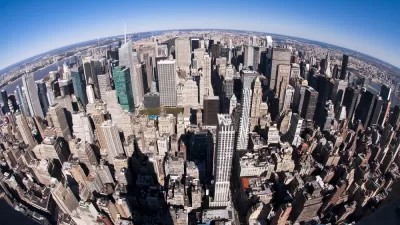
For almost a decade David Burney has been Commissioner of the Department of Design and Construction in New York City. In an interview with Places editor Nancy Levinson, he reflects on the urban design record of the Bloomberg years, focusing especially on PlaNYC, the ongoing post-Sandy recovery effort, and the potential for cities to take the lead in 21st-century sustainability planning.
"Increasingly it's been our cities that have taken the lead on critical issues, from gun control to immigration reform to economic stimulus to climate change," he says. "Given the migration of people into cities worldwide, this trend is sure to continue. We might even be in a de facto transition to a society dominated by economically and politically powerful cities — a contemporary version of the great city-states that arose in the 13th century and ruled Europe until the consolidation of modern nation-states a few centuries later."
Read the full story: An Interview with David Burney: On New York and the 21st-Century City-State
On the Waterfront in Post-Sandy New York
On Places, Tom Vanderbilt surveys the landscape and politics of New York City after Hurricane Sandy, focusing on both early response and long-range planning.

The Perils of TEDification
On Places, Simon Sadler explores the magical thinking and many contradictions of the TED Talks.
A Design and Planning To-Do List for NYC's Next Mayor
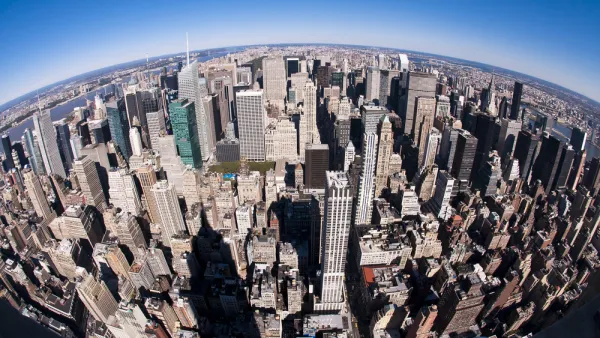
Over the past 12 years, New York has been transformed. For the better in some instances (bike lanes, pedestrian plazas), and perhaps not in others (unaffordability). Michael Kimmelman suggests how to build on the successes and correct the problems.

Planetizen Federal Action Tracker
A weekly monitor of how Trump’s orders and actions are impacting planners and planning in America.

California plans to bury El Niño’s downpour
If the state plays its cards right, it may be able to store a billion acre-feet of El Niño’s water in aquifers.

Desperate measures: Advocates weigh draining Lake Powell to fill Colorado River
Draining the reservoir could reduce evaporation losses by a couple hundred thousand acre-feet.

Los Angeles just elected an urban planner as its mayor
Transportation analysts are optimistic that Raman will be more aggressive in addressing transit issues than Bass.

Mamdani’s pied-à-terre tax survives legal challenge
A panel of judges found that the plaintiffs failed to demonstrate injury as a result of New York City's implementation of the tax.

Eastern Nebraska is running out of electricity
Data centers and electrification are straining eastern Nebraska’s grid, throttling economic development.

FREE Course: Walkable City 1: Why Walkability?
After describing his path towards focusing on walkability as the essence of good planning, Jeff Speck marches through his five principal reasons for making more walkable places.
Reinventing Malls: Planning Alchemy—Turning Gray Fields Into Gold
The course focuses on the opportunities and imperatives that shape reinvention of mall sites.

City of Rosemead
Rutgers University, Edward J. Bloustein School of Planning and Public Policy
One Hundred Miles
University of Michigan School for Environment and Sustainability (SEAS)
Hunter College, City University of New York (CUNY)
The Architects Foundation
City of Cambridge
Montrose County
The Pocatello Development Authority