The Chinese government has been employing a bottom-up approach to sustainability through pilot programs in individual cities, boosting investment in clean energy by 20 percent since last year.


On a trip to China, Michael Schmitz observed how the growing, centralized economic giant has been deploying localized sustainability measures to its cities.
Last year, China surpassed the U.S. nearly twofold in clean energy investment, which reached $65.1 billion, up 20 percent from last year.
Electric vehicle deployments are a large part of its sustainable strategy. While the central government aims to deploy 1,000 EVs to each of 13 pilot cities, participants are expected to meet and surpass this goal with Shenzen expected to reach 24,000 by the end of the program.
Creating local carbon markets and enforcing its Three Star Green Building rating system in pilot cities, while following through on analyzing results, are other strategies the Chinese government is using to foster a bottom-up sustainability approach in the country.
Read the full story: What Chinese cities can teach US about sustainable innovation

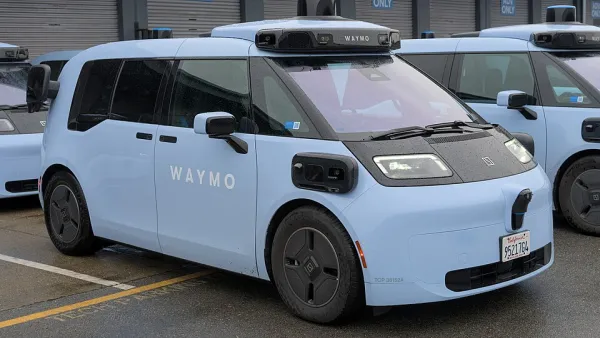
Waymo’s Ojai robotaxis from China now able to pick up all riders
Steep tariffs and tight federal laws haven’t stopped Waymo from purchasing over 3,200 vehicles from Zeekr, a Chinese manufacturer.

Swapping your gas car for an EV is greener than keeping it, research shows
An EV repays the 'carbon debt' caused by building it after 4,400 miles.

DC Installing Public, Curbside EV Chargers in All Wards
DDOT hopes the pilot program will make EV charging easier and more accessible for residents in denser neighborhoods and apartment dwellers.

Planetizen Federal Action Tracker
A weekly monitor of how Trump’s orders and actions are impacting planners and planning in America.

Amtrak, CN end decades-long dispute with eight-year agreement
The new operating agreement establishes an updated framework for the companies to work together, including processes to resolve disputes.

Judges permit Denver to divert 77,000 acre feet from the Colorado River for reservoir expansion
Overuse and climate change have caused the Colorado River’s water levels to plummet.

Philadelphia to invest $2 billion into upgrading city airports as PHL places last in customer satisfaction
Modernizations to Philadelphia's airports will include baggage system upgrades and a new automated parking garage guidance system.

The LA housing policies making developers turn away from the city
Despite LA’s housing shortage, developers say the city’s "mansion-tax" and pandemic-era policies make it an unappealing place to build housing.

New density bill would require 7 California cities to establish regional transit hubs
The bill would also require major cities in California to permit high-rise residential buildings.

FREE Course: Walkable City 1: Why Walkability?
After describing his path towards focusing on walkability as the essence of good planning, Jeff Speck marches through his five principal reasons for making more walkable places.
Reinventing Malls: Planning Alchemy—Turning Gray Fields Into Gold
The course focuses on the opportunities and imperatives that shape reinvention of mall sites.

City of Wisconsin Rapids
Harvard University Graduate School of Design
KFH Group Inc.
The Architects Foundation
University of Cincinnati Online
The Pocatello Development Authority
The Urban Renewal Agency of the City of Pocatello