An annual analysis of global cities assesses public transit, technology, and sustainability.


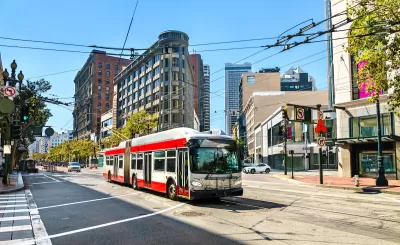
An analysis from the Oliver Wyman Forum and the University of California, Berkeley ranks San Francisco at the top of its Urban Mobility Readiness Index, which assesses “how well people and goods can move through a city and to surrounding population centers.”
As Magdalena Del Valle explains in Bloomberg CityLab, “Other cities in the top five, including Paris, Munich and Amsterdam, saw robust public transportation systems and strong universities that collaborate successfully with the private sector.”
The analysis looks at dozens of metrics related to sustainability, public transit, and technology. Singapore ranked first in public transit, while Helsinki led in sustainable mobility.
According to del Valle, a heightened focus on technology in this year’s analysis pushed U.S. cities to the top of the list despite their poor performance in public transit and bike and pedestrian infrastructure ratings. “San Francisco, which landed in 24th place in public transit and 18th in sustainable mobility, scored points for its EV adoption and the infrastructure it is working to set up for air taxis. Similarly, New York rose to eighth place from 12th last year, and Boston and Los Angeles made it into the top 15.”
FULL STORY: San Francisco, Paris Named Best Cities for Urban Transportation

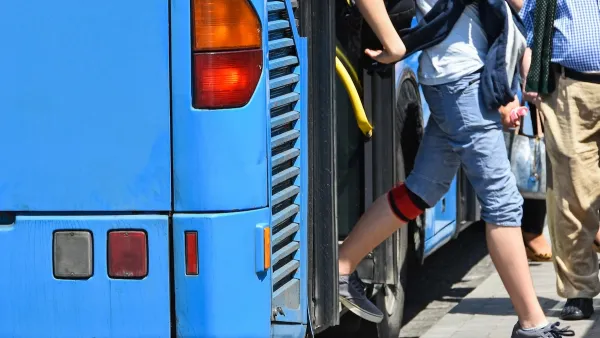
Opinion: Make Buses More Like Sidewalks
Sidewalks are an intuitive, low-cost, and easily accessible mobility tool. Can local buses function in the same way?

Preparing Transportation Systems for the ‘Silver Tsunami’
More Americans than ever will age beyond their safe ability to drive. How will they meet their mobility needs in a car-centric society?
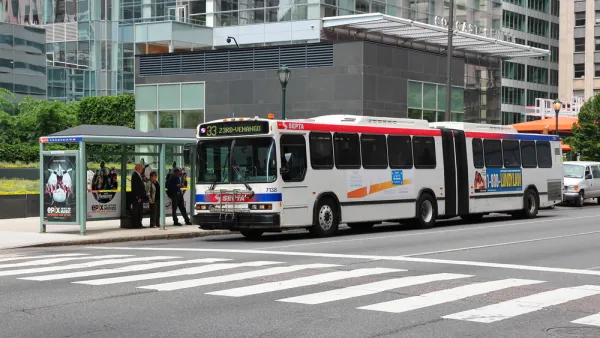
Philadelphia Councilmember Proposes Transit Access Fund
The plan would allocate 0.5 percent of the general fund toward mobility subsidies for low-income households.

The state-sanctioned urbicide of Austin
People don’t kill cities. Freeways do.

US to reduce Colorado River water deliveries to Mexico
A new Colorado Treaty amendment reduces Mexico’s Colorado River water allocation by 250,000 acre feet.

New Jersey’s second-largest city bans standalone data centers
Jersey City will continue to allow co-location facilities, such as those meant for research institutions that store their own data.

Amtrak not solely to blame for New Jersey commuter rail's unreliability, report finds
A new study from the Garden State Initiative found that NJ Transit’s budget grew 20% across a 4 year period, but reliability declined significantly over the same period.

EPA erases limits on planet-warming pollution from power plants
Under Monday’s plan, power plants would still have some limits on how much mercury, arsenic and other contaminants they can emit.

Phoenix announces new on-demand transit service, more frequent RAPID buses
Both new services will launch in October, and are part of Phoenix's Project Effective Access Solutions for Easing Congestion.

FREE Course: Walkable City 1: Why Walkability?
After describing his path towards focusing on walkability as the essence of good planning, Jeff Speck marches through his five principal reasons for making more walkable places.
Reinventing Malls: Planning Alchemy—Turning Gray Fields Into Gold
The course focuses on the opportunities and imperatives that shape reinvention of mall sites.

Eagle County Government
Harvard University Graduate School of Design
Nashville Planning Department
The Architects Foundation
University of Cincinnati Online
The Pocatello Development Authority
The Urban Renewal Agency of the City of Pocatello
Journal of the American Planning Association