Did the rezoning of the Williamsburg waterfront backfire? Stephen Jacob Smith reflects on the lack of transition between the neighborhood's skyscraping waterfront and its low-rise inland, a missing middle mandated by recent upzoning.


"As Vishaan Chakrabarti, a principal at SHoP Architects, was unveiling the Southside Williamsburg master plan they designed for Two Trees, he evoked the image of Manhattan’s skyline. 'Just like in the dead center of New York,' he told the assembled group of reporters, 'we have this parabolic moment—there’s this moment of exuberance that happens' as the towers rise on the waterfront, culminating in the towers at the Domino site. The tallest will reach 598 feet, or about 60 stories, making it taller than any other building in the borough.
“And that,” he continued, “that’s the stuff of postcards all around the world.”
"But despite the best efforts of SHoP and Two Trees, the plan does not succeed in aping the natural parabolic shape of an organic thicket of towers found in midtown, downtown or even downtown Brooklyn. Nor could it—Williamsburg’s new planning regime, instituted in the 2005 rezoning and reinforced in 2009, makes sure of that it."
Read the full story: Schizo Skyline: Warring Williamsburg Mandates Leave Waterfront Out of Whack
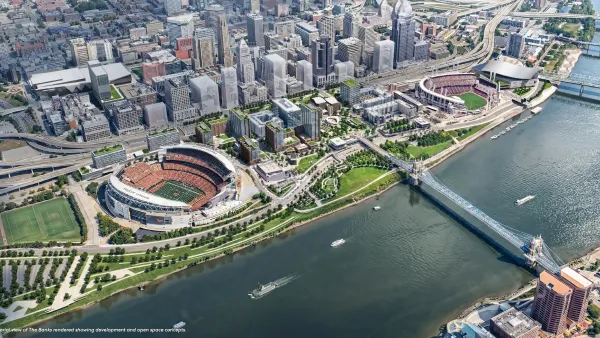
Cincinnati upzoning plan paves way for revitalized waterfront district
The city hopes to kickstart new development on five vacant lots in the riverfront entertainment district.
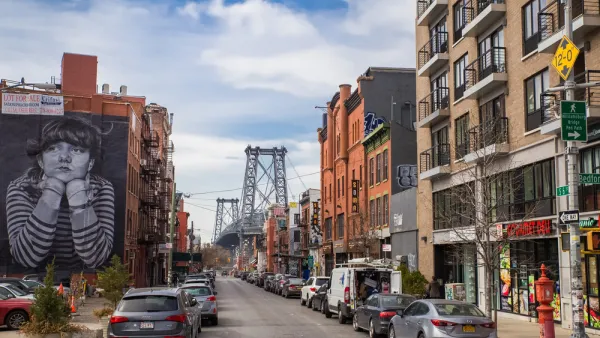
Opinion: Wealthy Residents Are Opposing Brooklyn Development to Protect Their Own Interests
Residents are arguing that a Williamsburg development would negatively affect the neighborhood. But it’s a grassroots effort to protect the status quo in a neighborhood where gentrification benefited them.
Advocates Push to Study Racial Impacts of NYC Rezoning
Neighborhood rezonings that disproportionately displace minority residents could violate the Fair Housing Act, advocates say.

Planetizen Federal Action Tracker
A weekly monitor of how Trump’s orders and actions are impacting planners and planning in America.

Eastern Nebraska is running out of electricity
Data centers and electrification are straining eastern Nebraska’s grid, throttling economic development.

Move over, LA: St. Louis gears up for Olympics, invests millions in downtown redevelopment
The Missouri city will host the 2028 Olympic soccer group stage and knockout matches.

Dallas releases zoning code overhaul to officials
The drafted overhaul is over 400 pages long.

NYC renovations for dangerous, ‘mercilessly crammed’ street delayed until 2027
Construction was supposed to begin this fall.

San Diego’s Midway Rising project gets greenlight from city council
The project looks to become the largest affordable housing development in California's history.

FREE Course: Walkable City 1: Why Walkability?
After describing his path towards focusing on walkability as the essence of good planning, Jeff Speck marches through his five principal reasons for making more walkable places.
Reinventing Malls: Planning Alchemy—Turning Gray Fields Into Gold
The course focuses on the opportunities and imperatives that shape reinvention of mall sites.

City of Rosemead
Rutgers University, Edward J. Bloustein School of Planning and Public Policy
One Hundred Miles
University of Michigan School for Environment and Sustainability (SEAS)
Hunter College, City University of New York (CUNY)
The Architects Foundation
City of Cambridge
The Pocatello Development Authority
The Urban Renewal Agency of the City of Pocatello