With yesterday's announcement that Interior Secretary Ken Salazar will soon step down, the three top environmental posts in the federal government are waiting to be filled. The vacancies are further muddling the administration's second term agenda.


The vacancies at the top of the Interior Department, the Environmental Protection Agency and the National Oceanic and Atmospheric Administration will likely add to the questions surrounding Obama’s commitment to dealing with climate change and other environmental problems in his second term. And to compound matters, says , "the administration has a limited amount of time to press a second-term environmental agenda before the next election cycle begins."
However, the vacancies are allowing environmental activists and business interests to project their wishes for Obama's second term on the empty desks in D.C.
"Activists say they are optimistic that President Obama can pursue some ambitious environmental policy goals," writes Eilperin. “This clearly doesn’t reach the level of gun control or immigration, but I feel it’s on the table in a way it wasn’t in the first term,” said William Meadows, counselor to The Wilderness Society.
"By contrast, American Petroleum Institute President Jack Gerard said a new slate of agency heads could 'adjust some of the more extreme positions taken early on' during the administration. 'The potential is there for a reset button, to turn the focus to job growth and economic recovery,' he said."
"Obama’s environmental legacy is likely to be defined by how he handles climate change issues — including whether to permit the Keystone XL pipeline extension or impose carbon limits on existing power plants," says Eilperin. "His choices to head the three agencies also will affect decisions ranging from what kind of offshore drilling will take place in the Arctic to whether gold mining can proceed in Alaska’s Bristol Bay watershed."
"White House spokesman Clark Stevens reiterated Obama’s intention to tackle climate change, calling it 'among his top priorities in his second term' along with 'enhancing energy security.'”
Read the full story: Salazar departure leaves ‘green’ posts vacant
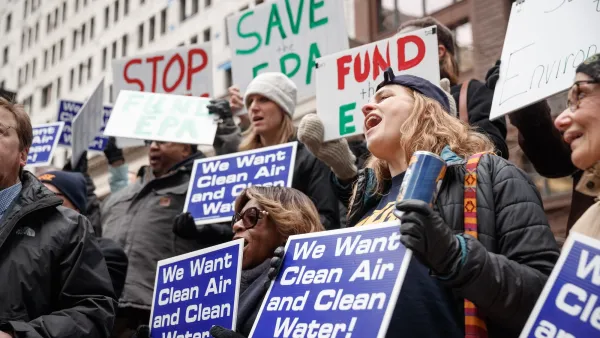
EPA Guts Emissions Regulations
The agency is eliminating the endangerment finding that underpins the agency’s authority to regulate greenhouse gas emissions.
EPA Plans “Largest Deregulatory Action” in History
The agency plans to repeal a key 2009 rule that underpins the government’s authority to regulate greenhouse gas emissions.
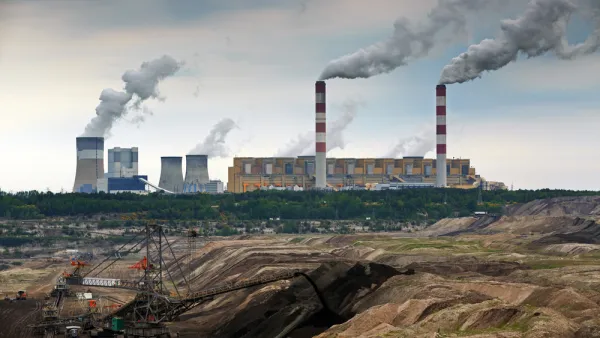
Ways the EPA Can Still Fight Climate Change
Despite the Supreme Court’s recent decision to limit the EPA’s ability to regulate emissions from power plants, the agency still has a range of tools at its disposal for enforcing pollution controls and reducing harmful emissions.

Planetizen Federal Action Tracker
A weekly monitor of how Trump’s orders and actions are impacting planners and planning in America.

California plans to bury El Niño’s downpour
If the state plays its cards right, it may be able to store a billion acre-feet of El Niño’s water in aquifers.

Desperate measures: Advocates weigh draining Lake Powell to fill Colorado River
Draining the reservoir could reduce evaporation losses by a couple hundred thousand acre-feet.

Chicago voters approve permanent festival grounds, penalty for vacant property owners
Currently, major summer and fall festivals take over public parks for weeks at a time, drawing criticism from nearby residents

NYC votes to cut outdoor dining red tape, speed up permitting
New York City also voted to allow the Department of Transportation to begin work on urgent projects before notifying elected officials.

California appears to reject Prop. 45
The proposition would have expanded the projects that qualify for a streamlined environmental review, effectively paring down the California Environmental Quality Act.

FREE Course: Walkable City 1: Why Walkability?
After describing his path towards focusing on walkability as the essence of good planning, Jeff Speck marches through his five principal reasons for making more walkable places.
Reinventing Malls: Planning Alchemy—Turning Gray Fields Into Gold
The course focuses on the opportunities and imperatives that shape reinvention of mall sites.

City of Rosemead
Rutgers University, Edward J. Bloustein School of Planning and Public Policy
One Hundred Miles
Hunter College, City University of New York (CUNY)
The Architects Foundation
University of Cincinnati Online
City of Cambridge
Montrose County
The Pocatello Development Authority