Friday marked a milestone in the effort to bridge the gap between NYC's century-old subway system and emerging technologies; "a leap forward for a service that has lagged behind its peers both at home and abroad in adopting new technologies."


Ted Mann reports on the release last week of the New York Metropolitan Transportation Authority's Subway Time app for passengers with iPhones and iPod Touch devices. The app, which provides minutes-to-arrival times for trains on seven lines, "will allow at least some riders to plan their commute by the minute for the first time in the system's 108-year history," says Mann.
"For the subway system's 5.5 million daily riders, however, the launch of the new app also lays bare the ways aging infrastructure and a slow pace of investment have left the transit network far behind contemporaries in other cities. The new app covers only about a third of the subway system, and agency officials acknowledged that it will likely take years of work and hundreds of millions of dollars in new investment before conveniences increasingly common elsewhere are standard in the Big Apple."
"'I think the proliferation of transit apps is one of the most exciting things to happen to this industry,' said Michael Melaniphy, president of the American Public Transportation Association. He hoped the software would 'demystify' the process of navigating train and bus systems for rookie riders."
Read the full story: Next Stop for New York Subway: An App to Track Trains
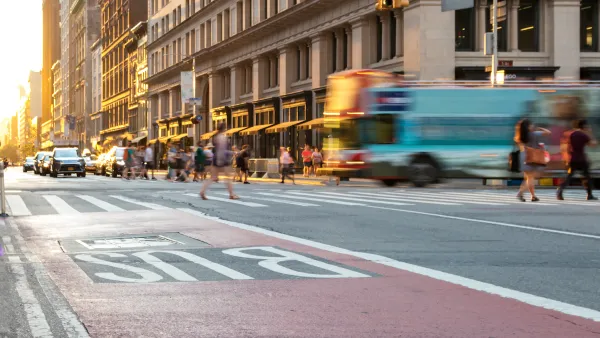
New York Officials Back Down on Bus Lane Plans
Proposed bus improvements in the Bronx are the latest casualty of opposition.
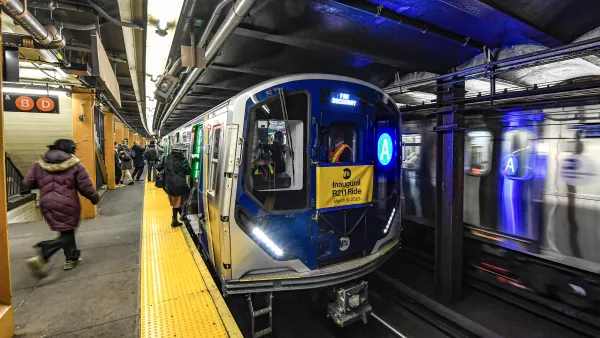
Fancy New Subway Cars Join the New York Subway System
New York has been planning on adding these new subway cars for years, finally achieving their goal in March 2023. More than a thousand of the new R211 trains will be running in New York within two years if all goes according to plan.
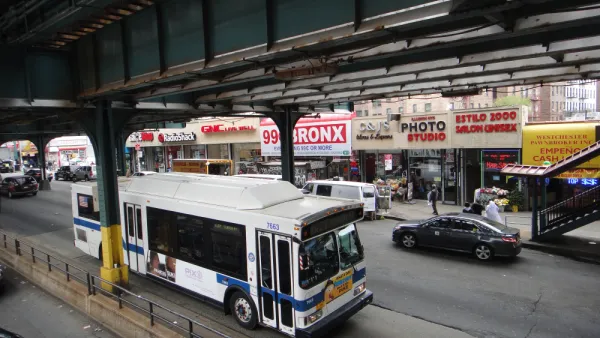
Changes to Local Service in the Bronx Benefit Bus Speeds, Ridership
Another example of how improving bus service design can benefit transit riders and transit systems emerges in New York City. More such local system redesigns are on the way soon in the Big Apple.

Planetizen Federal Action Tracker
A weekly monitor of how Trump’s orders and actions are impacting planners and planning in America.

California plans to bury El Niño’s downpour
If the state plays its cards right, it may be able to store a billion acre-feet of El Niño’s water in aquifers.

Desperate measures: Advocates weigh draining Lake Powell to fill Colorado River
Draining the reservoir could reduce evaporation losses by a couple hundred thousand acre-feet.

Los Angeles just elected an urban planner as its mayor
Transportation analysts are optimistic that Raman will be more aggressive in addressing transit issues than Bass.

Mamdani’s pied-à-terre tax survives legal challenge
A panel of judges found that the plaintiffs failed to demonstrate injury as a result of New York City's implementation of the tax.

Eastern Nebraska is running out of electricity
Data centers and electrification are straining eastern Nebraska’s grid, throttling economic development.

FREE Course: Walkable City 1: Why Walkability?
After describing his path towards focusing on walkability as the essence of good planning, Jeff Speck marches through his five principal reasons for making more walkable places.
Reinventing Malls: Planning Alchemy—Turning Gray Fields Into Gold
The course focuses on the opportunities and imperatives that shape reinvention of mall sites.

City of Rosemead
Rutgers University, Edward J. Bloustein School of Planning and Public Policy
One Hundred Miles
University of Michigan School for Environment and Sustainability (SEAS)
Hunter College, City University of New York (CUNY)
The Architects Foundation
City of Cambridge
Montrose County
The Pocatello Development Authority