WAMU's Michael Pope reports on an Alexandria, VA's plan to level the playing field for bikes, pedestrians and cars by taking out curbs.


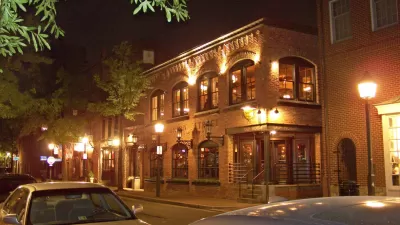
Based on the European concept of shared streets, city leaders in Alexandria have proposed a street design that would level the street from building face to building face. The open street is meant to create uncertainty, and greater alertness, for drivers. The city's consultant, Dan Goodman, says, "The basic idea of the shared street is that it's designed in a way that allows for the safe sharing of the space between all of the different modes so bikes and cars and pedestrians all have access to that space."
The plan, still in a preliminary design stage, seems counterintuitive to many Alexandrians.
"It shows a remarkable faith in human nature to expect this to happen, and I'm sure we'd like it to be true. But is it true or is it just a case of the emperor's new clothes?" asks Poul Hertel.
Business leaders along the street in question seem to favor the idea, however. Eager to increase foot traffic, business owner Judy Manor says, "We live in a changing world. Cars are becoming less dominant. People don't own cars as much. One of the reasons people come to live in Alexandria in part is because you can be here without a car."
Read the full story: Alexandria Street To Be Equal Opportunity For Cars, Bikes And Pedestrians

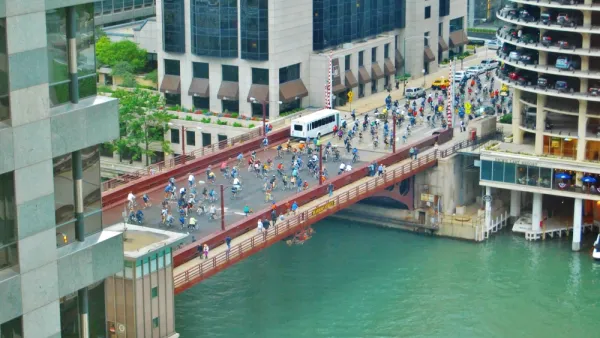
Chicago Dismantles Leland 'Slow Street' Three Months Early
Citing neighborhood concerns, the city is ending the Slow Street program on Leland Street as more parks and beaches reopen, but advocates want to see more permanent traffic calming measures.
Can I Be a Libertarian for Bike Lanes?
Discussing the trade-offs between making government leaner and making traffic safer.
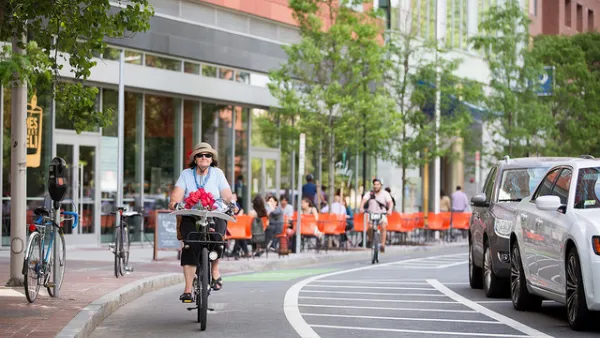
A Non-Cyclist's Case For Bike Lanes
I don't bike, but I still feel safer on streets with bike lanes. This essay explains why.

Planetizen Federal Action Tracker
A weekly monitor of how Trump’s orders and actions are impacting planners and planning in America.

California plans to bury El Niño’s downpour
If the state plays its cards right, it may be able to store a billion acre-feet of El Niño’s water in aquifers.

Chicago breaks ground on $3 billion megadevelopment
The new neighborhood, titled Foundry Park, will one day host 3,700 residences.

California High-Speed Rail Authority CEO resigns after $600,000 scandal
Under Ian Choudri, the authority used taxpayer dollars to fund first class flights and trips to nightclubs.

Want to study the Missouri River? Soon, you may need unanimous approval from 10 states
Legislation would require 10 governors’ permission to study or build projects moving water outside the basin.

Desperate measures: Advocates weigh draining Lake Powell to fill Colorado River
Draining the reservoir could reduce evaporation losses by a couple hundred thousand acre-feet.

FREE Course: Walkable City 1: Why Walkability?
After describing his path towards focusing on walkability as the essence of good planning, Jeff Speck marches through his five principal reasons for making more walkable places.
Reinventing Malls: Planning Alchemy—Turning Gray Fields Into Gold
The course focuses on the opportunities and imperatives that shape reinvention of mall sites.

City of Rosemead
Rutgers University, Edward J. Bloustein School of Planning and Public Policy
One Hundred Miles
Hunter College, City University of New York (CUNY)
The Architects Foundation
University of Cincinnati Online
City of Cambridge
Montrose County
The Pocatello Development Authority