One of the last major developments of Las Vegas's recent building boom, MGM's $8.5 billion CityCenter opened during the depths of the recession. Three years later, after slashing prices for hotel rooms and condos, the clouds are beginning to lift.


Alison Gregor examines the shifting fortunes of the 67-acre CityCenter project, one of the largest privately financed developments in the United States, which opened in late 2009 just as the Las Vegas's tourism and housing industries crashed.
"Nearly three years since it opened, CityCenter is seen as, at best, a
qualified success," says Gregor. "A majority of the hotel rooms have been filled, but
at much lower room rates than originally planned. Condominium sales have
not taken off, though, and the units that have sold have gone at big
discounts. Many luxury retailers have moved into the shopping center,
but about 12 percent of the mall is still vacant."
Although experts believe that CityCenter has "finally been fully absorbed by the local economy," in a city known for splashy excess, it may be quite a long time before a project of a similar magnitude appears on the Strip.
Read the full story: Las Vegas Project Survives a Case of Bad Timing
A New Frugality Invades Las Vegas
Frugality is probably not the first word one would associate with a city known for sin and excess. But in the wake of the global financial crash, Matthew Garrahan examines how Las Vegas is pursuing a conservative path to recovery.
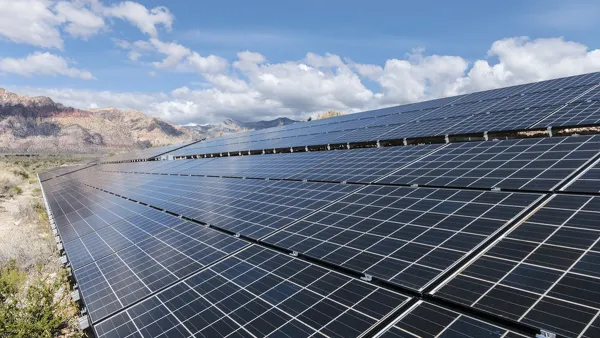
Las Vegas Solar Arrays and the Future of Power Utilities
Casinos are energy intensive and often located in areas with specific resource constraints and surpluses (i.e., Las Vegas), thus they offer a perfect case study for the future of solar energy.
Norman Foster-Designed Tower to be Demolished in Las Vegas
Around the corner from buildings by Daniel Libeskind and Rafael Vinoly (just to name two) in the CityCenter section of the Las Vegas Strip, a never-complete building, designed by Forster + Partners, stood empty for years. Not for long.

Planetizen Federal Action Tracker
A weekly monitor of how Trump’s orders and actions are impacting planners and planning in America.

California plans to bury El Niño’s downpour
If the state plays its cards right, it may be able to store a billion acre-feet of El Niño’s water in aquifers.

Desperate measures: Advocates weigh draining Lake Powell to fill Colorado River
Draining the reservoir could reduce evaporation losses by a couple hundred thousand acre-feet.

Los Angeles just elected an urban planner as its mayor
Transportation analysts are optimistic that Raman will be more aggressive in addressing transit issues than Bass.

Mamdani’s pied-à-terre tax survives legal challenge
A panel of judges found that the plaintiffs failed to demonstrate injury as a result of New York City's implementation of the tax.

Eastern Nebraska is running out of electricity
Data centers and electrification are straining eastern Nebraska’s grid, throttling economic development.

FREE Course: Walkable City 1: Why Walkability?
After describing his path towards focusing on walkability as the essence of good planning, Jeff Speck marches through his five principal reasons for making more walkable places.
Reinventing Malls: Planning Alchemy—Turning Gray Fields Into Gold
The course focuses on the opportunities and imperatives that shape reinvention of mall sites.

City of Rosemead
Rutgers University, Edward J. Bloustein School of Planning and Public Policy
One Hundred Miles
University of Michigan School for Environment and Sustainability (SEAS)
Hunter College, City University of New York (CUNY)
The Architects Foundation
City of Cambridge
Montrose County
The Pocatello Development Authority