A look at negotiations between developer Forest City Ratner and New York City's Housing and Development Corporation around the Atlantic Yards project shows that there will be less housing units set-aside for low-income families than promised.


"Announced in 2005 during a time of rising rents, an explosion of luxury condos, and gentrification pressures in Central Brooklyn, Forest City Ratner's promise of 2,250 'affordable' units in the Atlantic Yards project was a political masterstroke. Announced with the support of the community group ACORN, it gained kudos from numerous elected officials, like Council Member (and now Public Advocate) Bill de Blasio."
However, as "[t]he much-delayed first housing tower..., where half the 363 units have long been promised for "affordable housing," seems poised to get millions in city housing bonds," it's becoming apparent that promises for the amount of family-sized units, and their affordability, will fall well short of promises made by the developer.
Thanks to Nekoro Gomes
Read the full story: Agency, Developer Wrestle Over Atlantic Yards Affordability
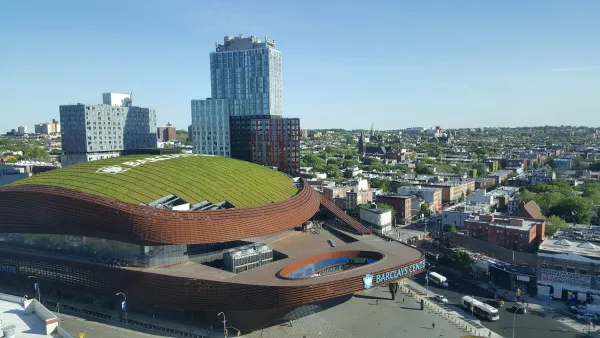
NYC's New Atlantic Yards Plan Would Bring Taller Towers and Raise Income Limits
The area around Barclays Center could get 10,000 new housing units, with those deemed affordable available to households making as much as $200,000.
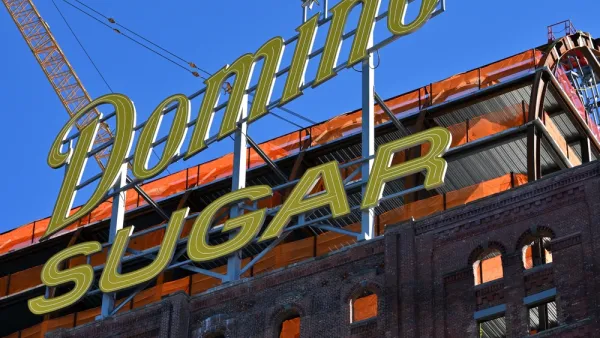
Bitter Irony Behind Brooklyn’s Sweet Domino Sugar Sign
A new feature on the Brooklyn waterfront is a reminder that Domino Sugar has made several unsavory appearances in the history of Puerto Rican communities.

New York Parking Is a Pricey but Valued Amenity
In a city where owning a car can be an expensive burden, off-street parking spaces are still highly desired commodities.

Planetizen Federal Action Tracker
A weekly monitor of how Trump’s orders and actions are impacting planners and planning in America.

Washington state to charge fee to drivers with fuel-efficient cars
Revenue from the fee will go towards supporting the state’s highways.

Study reveals best places in the U.S. for cycling, walking
New research from Streetlight Data examines bicycle and pedestrian miles per capita in the 100 largest U.S. cities by population.

Mamdani unveils his ‘most ambitious bus lane project’ so far
The city has added two new bus lanes, which it expects to speed up tens of thousands of bus riders’ commutes.

New Jersey and New York suggest $10.3 billion budget for transit
Some of the budget is dedicated to replacing Manhattan's Midtown Bus Terminal.

States split over EPA’s proposal to drop greenhouse gas rules for power plants
The proposed rule drew over 165K comments, including from officials, health and environmental groups, and private citizens.

FREE Course: Walkable City 1: Why Walkability?
After describing his path towards focusing on walkability as the essence of good planning, Jeff Speck marches through his five principal reasons for making more walkable places.
Reinventing Malls: Planning Alchemy—Turning Gray Fields Into Gold
The course focuses on the opportunities and imperatives that shape reinvention of mall sites.

City of Charlotte
City of Rosemead
Rutgers University, Edward J. Bloustein School of Planning and Public Policy
University of Michigan School for Environment and Sustainability (SEAS)
Hunter College, City University of New York (CUNY)
The Architects Foundation
University District Partnership
City of Cambridge
The Pocatello Development Authority