In a city where owning a car can be an expensive burden, off-street parking spaces are still highly desired commodities.


Parking in New York City is costly and difficult to come by, writes Ronnie Koenig. "But for some New Yorkers, an unused space in a parking garage or an extra spot in the driveway is a valuable piece of real estate and an easy way to earn extra income."
While ride sharing has decreased the demand for parking throughout the city, dedicated, off-street parking spots are still sought-after amenities.
Parking spaces come with hefty price tags—an average of $280,000 by one estimate. But property owners not using their spaces can rent them out to tenants and neighbors, and residents are more than willing to pay the rental fees, says Koenig:
Trish Martin has rented a spot in a garage around the corner from her home in Park Slope, Brooklyn for nearly 30 years and she doesn’t regret a penny of the money she has spent on it. "When my kids were young, I would drive into Manhattan with them for hockey practice and then back to Brooklyn. Parking was miserable — I’d be driving in circles for 45 minutes and I’d feel like crying," she recalled. "I thought: There’s got to be a better way."
People who own or rent spots say it is money well spent, saving them time and the hassle of dealing with dents and other risks that come from parking on city streets. "Those who are willing to pay for a parking spot argue that having a private spot can be life-changing," adds Koenig.
FULL STORY: Parking So Prime, the Car Is Optional

One Pandemic Real Estate Bet: Condos for Cars
The possibility of many more urban dwellers driving than ever before, even in transit-rich locations like New York City, is still very real.
What Happens If Parking Structures Become Obsolete?
An architect makes the case for future-proofing new parking garages so they can easily shift to other uses in a future with fewer cars.
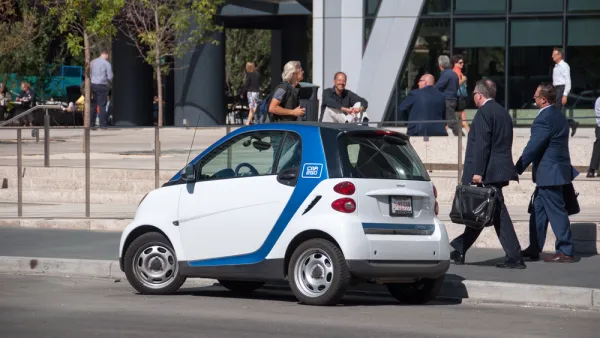
New York Parking Pilot Favors Car Share
New York is the latest city that will prioritize shared uses when it divvies up public parking spaces.

The state-sanctioned urbicide of Austin
People don’t kill cities. Freeways do.

US to reduce Colorado River water deliveries to Mexico
A new Colorado Treaty amendment reduces Mexico’s Colorado River water allocation by 250,000 acre feet.

New Jersey’s second-largest city bans standalone data centers
Jersey City will continue to allow co-location facilities, such as those meant for research institutions that store their own data.

Amtrak not solely to blame for New Jersey commuter rail's unreliability, report finds
A new study from the Garden State Initiative found that NJ Transit’s budget grew 20% across a 4 year period, but reliability declined significantly over the same period.

EPA erases limits on planet-warming pollution from power plants
Under Monday’s plan, power plants would still have some limits on how much mercury, arsenic and other contaminants they can emit.

Phoenix announces new on-demand transit service, more frequent RAPID buses
Both new services will launch in October, and are part of Phoenix's Project Effective Access Solutions for Easing Congestion.

FREE Course: Walkable City 1: Why Walkability?
After describing his path towards focusing on walkability as the essence of good planning, Jeff Speck marches through his five principal reasons for making more walkable places.
Reinventing Malls: Planning Alchemy—Turning Gray Fields Into Gold
The course focuses on the opportunities and imperatives that shape reinvention of mall sites.

Eagle County Government
Harvard University Graduate School of Design
Nashville Planning Department
The Architects Foundation
University of Cincinnati Online
The Pocatello Development Authority
The Urban Renewal Agency of the City of Pocatello
Journal of the American Planning Association