Amtrak is considering where to build stations in Philadelphia for high-speed rail. One of the options is a new station in Market East, an underdeveloped part of downtown. Leadership sees the project as a potential catalyst for new building.


Amtrak officials will hold public meetings on alternatives for high-speed rail stations in Philadelphia this week. One alternative would see the city's historic neoclassical 30th Street Station left out of the mix, in favor of a new downtown station on Market Street, east of City Hall, reports Paul Nussbaum. Officials seem to prefer constructing a new station both to avoid "speed-killing curves" along the existing 30th Street Station alignment and to stimulate development in the Market East section of downtown.
30th Street Station boosters feel the historic station, which opened in 1933 and was "touted by Trains Magazine last year as 'America's Finest Railroad Station,'" is still a preferable option. "It's cheaper, more aesthetic, and it's the best station in America. It just needs respect," said Scott Maits, vice president of the Delaware Valley Association of Rail Passengers.
According to Nussbaum, planners estimate "The cost of a new station in Center City, another new station at Philadelphia International Airport, and a 10- to 12-mile tunnel linking the two and continuing north of Center City would be at least $3 billion."
The potential to catalyze development in Market East is seen as a worthwhile investment by supporters. Robert Yaro, University of Pennsylvania professor and president of the Regional Plan Association in New York City, "said a Market East high-speed rail station would be a 'transformational investment,' attracting new development to the neighborhood."
"Market East could start to pull its weight in the Center City economy," Yaro said.
Thanks to Stuart Andreason
Read the full story: New rail stations, tunnel to airport eyed for Philadelphia
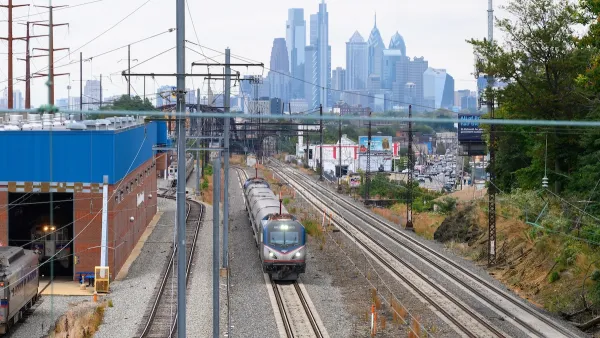
Loss of SEPTA Funding Could Kill Amtrak’s Fifth Busiest Line
The Philadelphia transit agency’s funding challenges could eliminate its contributions to Amtrak’s Keystone Service linking Philly and NYC.
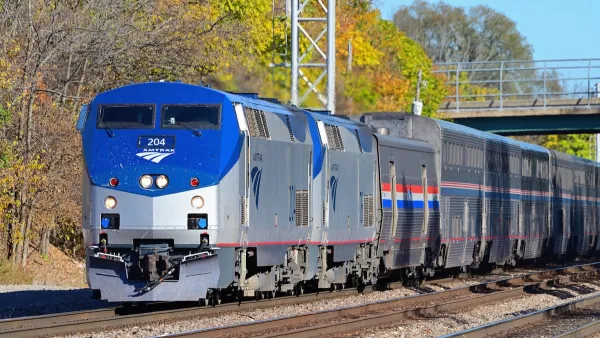
Amtrak Cutting Jobs, Funding to High-Speed Rail
The agency plans to cut 10 percent of its workforce and has confirmed it will not fund new high-speed rail projects.
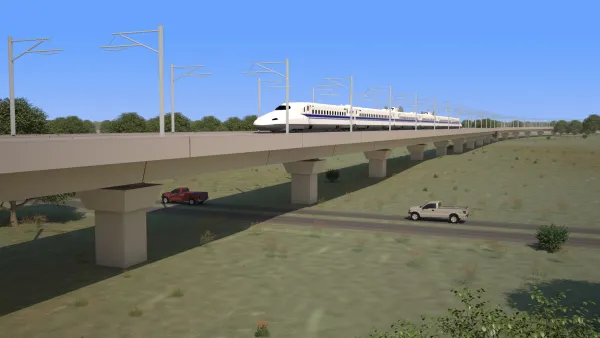
Texas High-Speed Rail Awarded $63.9M Federal Grant
In August, Amtrak received a $63.9 million grant from the FRA to continue its work to identify a high-speed rail corridor between Dallas and Houston.

Planetizen Federal Action Tracker
A weekly monitor of how Trump’s orders and actions are impacting planners and planning in America.

Eastern Nebraska is running out of electricity
Data centers and electrification are straining eastern Nebraska’s grid, throttling economic development.

Study reveals best places in the U.S. for cycling, walking
New research from Streetlight Data examines bicycle and pedestrian miles per capita in the 100 largest U.S. cities by population.

DSA members accuse Mamdani of 'abandoning values' over housing redevelopment
New York City's mayor plans to replace about 2,000 units of public housing with private, mixed-income housing.

All sides of BRT debate unhappy with CDOT’s most recent move
The Colorado Department of Transportation is no longer considering center-running bus lanes for Colorado Boulevard.

Massachusetts bogs generate both power, and cranberries
Putting solar panels above farmland is one way Massachusetts is advancing toward its goal of net-zero carbon emissions by 2050.

FREE Course: Walkable City 1: Why Walkability?
After describing his path towards focusing on walkability as the essence of good planning, Jeff Speck marches through his five principal reasons for making more walkable places.
Reinventing Malls: Planning Alchemy—Turning Gray Fields Into Gold
The course focuses on the opportunities and imperatives that shape reinvention of mall sites.

City of Rosemead
Rutgers University, Edward J. Bloustein School of Planning and Public Policy
One Hundred Miles
University of Michigan School for Environment and Sustainability (SEAS)
Hunter College, City University of New York (CUNY)
The Architects Foundation
City of Cambridge
The Pocatello Development Authority
The Urban Renewal Agency of the City of Pocatello